
.svg)
Shelving, Lighting, and Safety Requirements for Residential Mailrooms


The traditional mailroom has evolved into an area that must be capable of receiving and handling the relentless growth of e-commerce. The mailroom is now a package room, which serves as the final, critical staging area in the last-yard delivery process. For property managers, this transformation can be a source of workflow friction and liability risk.
When package volume soars past the capacity of an outdated or poorly designed space, disarray ensues. Packages get lost, staff productivity plummets as employees spend hours searching for parcels, and disorganized aisles become liability hazards. According to industry reports, package delivery has become a centerpiece issue among property managers.
This guide provides the practical, safety-focused strategies for tackling this challenge from the ground up. We will define the essential shelving, lighting, and safety requirements needed to transform your mailroom into a secure, efficient, and professionally managed asset.
Shelving Solutions: Standardizing Storage and Durability

The shelving you choose is an important factor in preventing packages from getting lost. Durable, standardized shelving enables clear zone labeling, facilitates quick scanning, and forms the core of an organized system.
Comparing Optimized Shelving Types
Residential mailrooms manage a wildly varied stream of parcels. A mixed approach utilizing two primary types is usually recommended: modular wire shelving for standard items, and heavy-duty metal racks for oversized boxes. For maximum flexibility, especially during peak seasons, consider using reconfigurable modular racks that can be easily adjusted to accommodate different parcel sizes and volumes.
Essential Configuration Principles for Safety and Efficiency
Effective shelving design is an exercise in ergonomics and safety, ensuring that staff can place items and residents can retrieve them without strain or risk of injury.
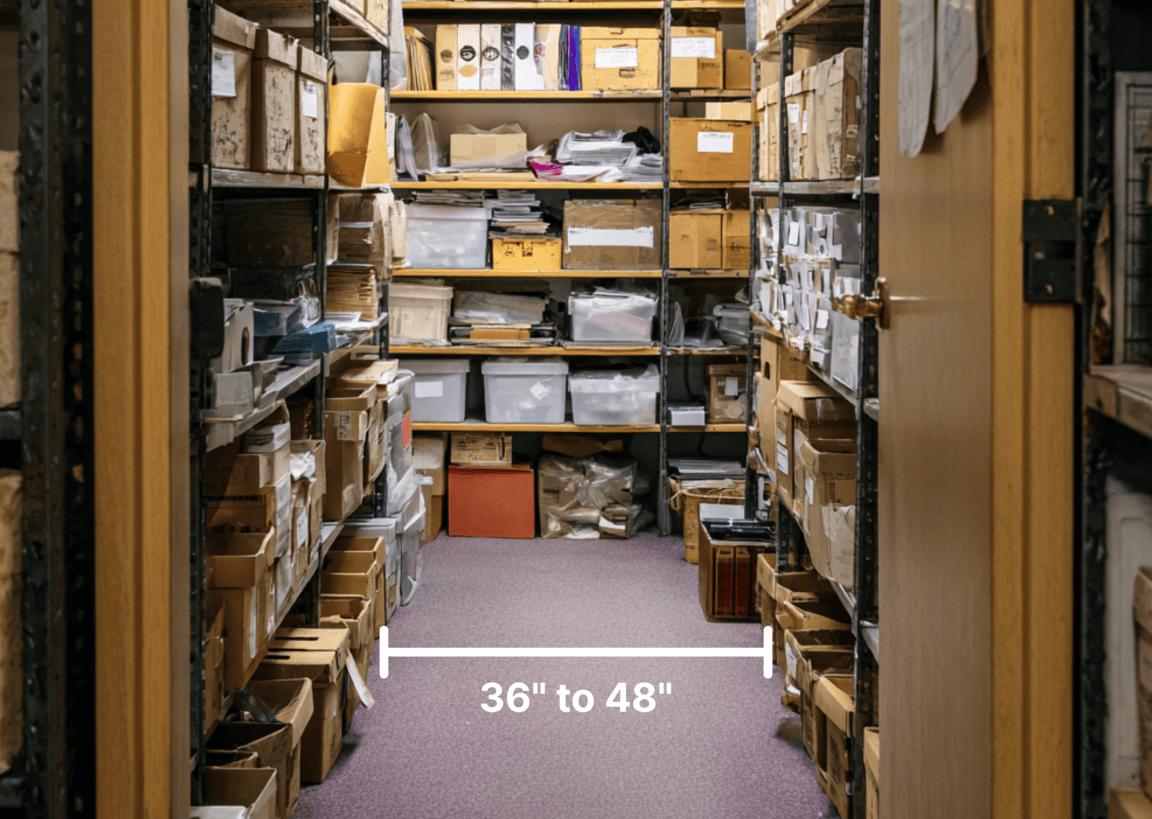
- Shelf Depth (Preventing Lost Packages):
- Requirement: Limit shelf width to 36 to 48 inches.
- Why: Shallower shelving ensures every package is visible and accessible for quick scanning and retrieval.
- Shelf Height (Ergonomics and Safety):
- Requirement: The top usable shelf should be no higher than 5 feet 8 inches (72 inches) from the floor.
- Why: This height minimizes the risk of musculoskeletal injury. Furthermore, for added safety, it is recommended to store heavier loads on lower shelves to minimize strain during lifting.
- Organization:
- Requirement: Implement a large, clearly visible, and consistent zone labeling system (e.g., A1-A5, B1-B5).
- Why: Clear labeling is foundational for seamless software integration and searchability.

Safety and Compliance: Minimizing Liability with Smart Layout
Liability in a package room is not just about theft. It can also involve trip-and-fall hazards. Adopting smart layout standards is essential for reducing this risk.
Determining Necessary Aisle Width
A critical safety measure is ensuring adequate aisle space. Narrow, cluttered aisles obstruct movement, particularly for staff using hand trucks or residents carrying bulky items.
- Recommended Clear Width: Maintain a minimum clear aisle width of 36 to 48 inches.
- Why: While specific package room codes may vary, adopting the standard clear width requirement for commercial and industrial settings ensures ample room for two people to pass safely and complies with general fire and egress guidelines. This width directly minimizes the risk of liability claims resulting from accidents.
B. Fire and Emergency Access
- Requirement: All shelving units must maintain a minimum distance from sprinkler heads (usually 18 inches, depending on jurisdiction) and must not obstruct exit routes or emergency equipment
- Best Practice: Use non-combustible materials (metal/wire) for shelving, and avoid storing excess cardboard boxes in the area.
C. Secure Access Control
Physical security is crucial for both parcel safety and resident privacy.
- Requirement: Integrate robust, lockable access control (keypads, fobs) to restrict entry to authorized staff, carriers, and residents.
- Recommendation: Install high-definition video surveillance with a clear view of all entry/exit points, as well as all shelving aisles, as a key deterrent and accountability measure.
Lighting Requirements: Visibility for Scanning and Deterrence
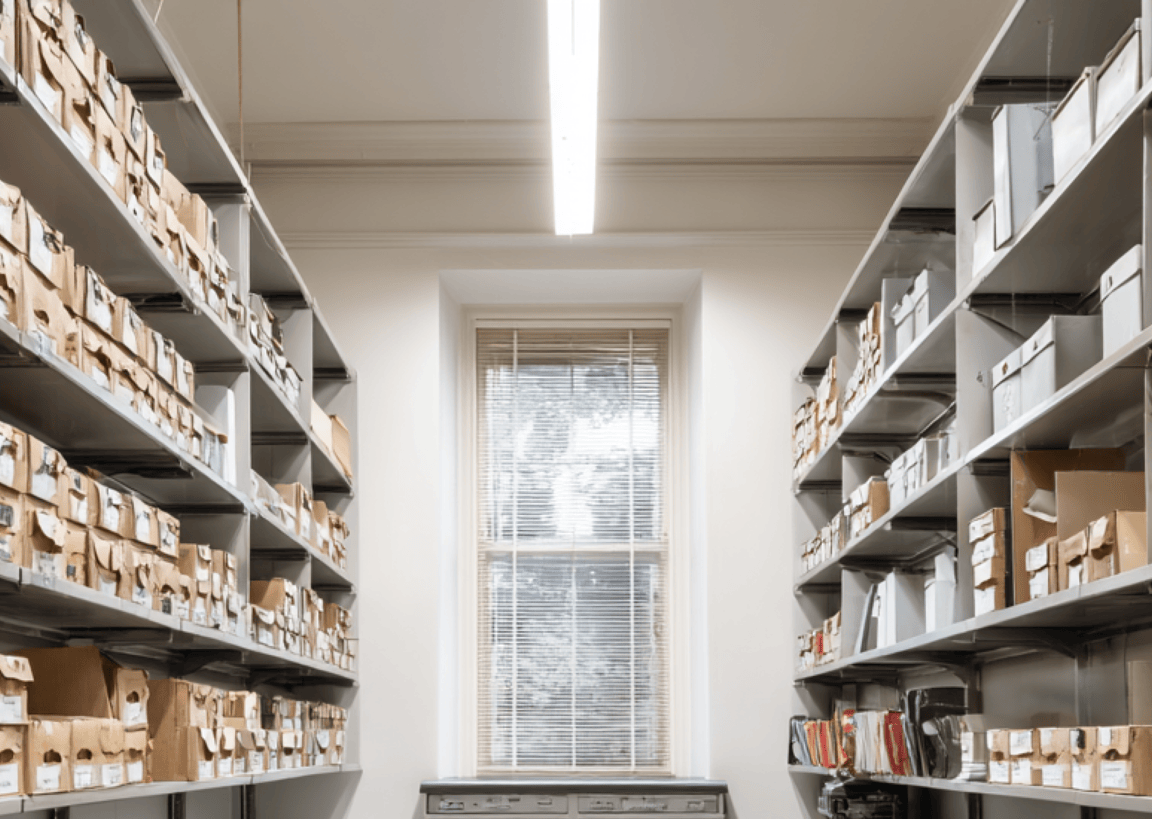
Poor lighting in a mailroom is a triple threat. It causes eye strain for staff, increases the likelihood of scanning errors, and provides cover for theft. Optimizing illumination is non-negotiable for an efficient and safe package room.
Maximizing Visibility and Accountability
- Light Type and Intensity (Lumens):
- Requirement: Utilize white LED lighting with a color temperature of 4000K to 5000K (Cool White/Daylight) to maximize visual acuity. The recommended light level for reading and detailed work in a package room setting is typically between 30 to 50 foot-candles (300 to 500 lux).
- Why: White light provides high-fidelity color representation, which is crucial for staff reading small labels and for ensuring video surveillance footage is clear and accurately reflects events.
- Shadow Elimination and Overlap:
- Requirement: Ensure light fixtures are positioned to create overlapping illumination. Avoid placing single fixtures only in the main aisle, which leaves the shelf faces and floor corners in shadow.
- Why: Shadows hinder quick scanning and provide hiding spots for lost packages. From a security standpoint, shadows can compromise the effectiveness of surveillance, reducing the deterrent effect.
Efficiency and Safety Features
- Motion-Sensor Activation:
- Recommendation: Install motion-sensor or occupancy-sensor lighting that activates upon entry.
- Why: This saves energy by ensuring the lights are only on when the room is occupied. It also acts as an automatic visual alert and deterrent when someone enters the secured area.
- Emergency Lighting:
- Requirement: Mandate battery-backup emergency lighting over all exit routes and in key areas of the room.
- Why: Complies with fire and life safety codes, ensuring safe egress for staff and residents in the event of a power failure, particularly critical if the room is secured behind an electronic lock.
Combining Hardware and Software in the Mailroom
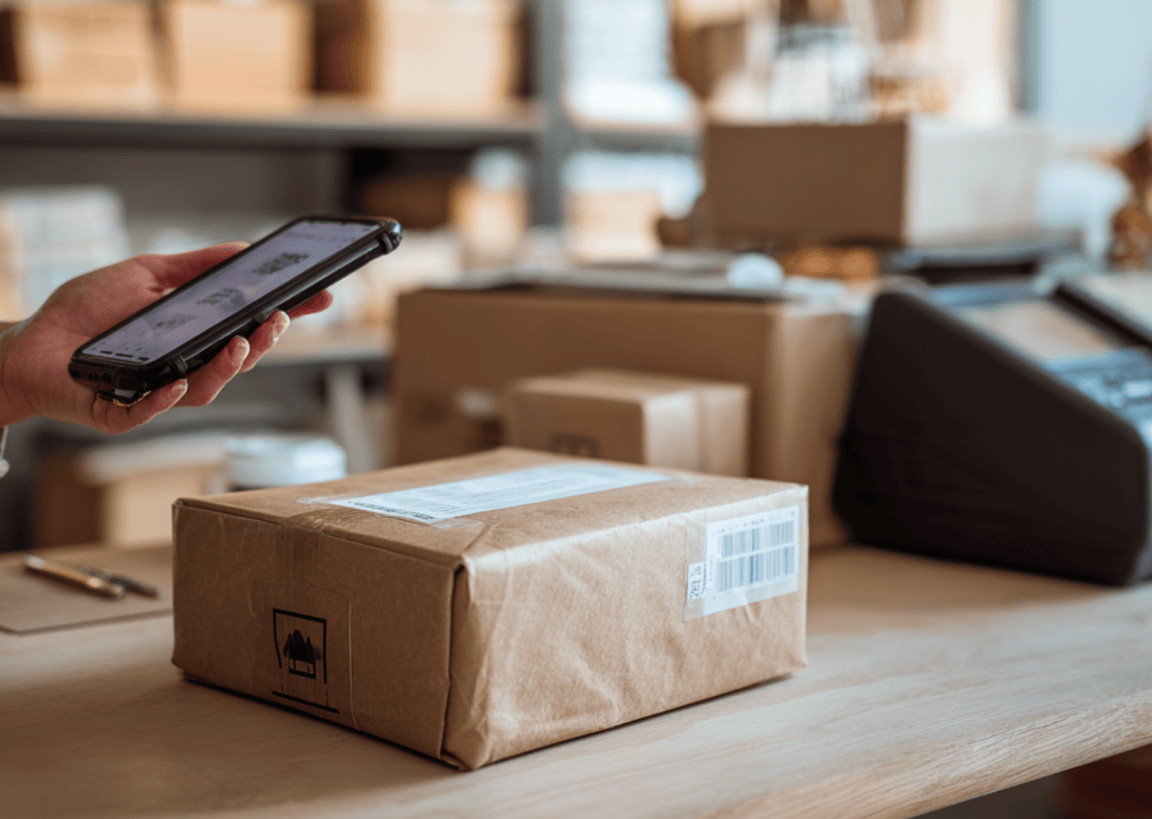
You now have a guide for a physically organized, compliant, and safe mailroom. The durable shelving is in place, the aisles are clear, and the lighting is optimized for scanning. You have successfully solved the hardware problem.
However, even the most perfectly designed physical space cannot solve the management problem, such as the manual tracking, the resident communication, and the audit trail.
Bridging the Gap with Technology
The final step in achieving professional residential mailroom management is to integrate your new physical infrastructure with dedicated parcel management software. Technology provides the essential layer of digital organization:
- It logs which specific, clearly labeled shelf the package is on.
- It generates an immediate, automated notification to the resident.
- It creates an indisputable chain of custody audit trail from delivery to retrieval.
This software integration eliminates the need for staff to hunt for items and makes package retrieval a quick, secure, and self-service process.
Ready to combine your new, organized mailroom infrastructure with a powerful parcel management system? Eliminate manual errors, guarantee resident satisfaction, and achieve a perfect audit trail by exploring Parcel Tracker and completing your last-yard solution.


.svg)

