4 Strategies to Reduce Dispute Resolution Time in Freight Delivery Logs


A single disputed delivery can tie up staff for days, delay payment, and strain a client relationships. Many of these claims involve cargo worth less than the hours spent resolving them. Delays usually come from missing proof of condition and receipt, or from records scattered across disconnected systems. Four strategies shorten the path from claim to resolution and limit liability exposure.
Why Freight Delivery Disputes Take So Long to Resolve
Common triggers include "not received" claims, concealed damage, quantity discrepancies, and disputed delivery times. Each one depends on evidence of what happened at handoff.
Several habits stretch the timeline. People must locate, scan, and email paper records. Handwritten notes arrive illegible or incomplete. Carrier, forwarder, and consignee trade messages with no single source of truth. Email threads multiply as each party requests the same attachment again.
Liability adds pressure. Under most carrier and forwarder frameworks, the party that can't show cargo condition at handoff often bears the burden. Reliable parcel management and freight handling both begin with evidence captured at the moment of delivery, well before any claim arrives.
Strategy 1: Use Photo Verification at Every Handoff to Prove Cargo Condition

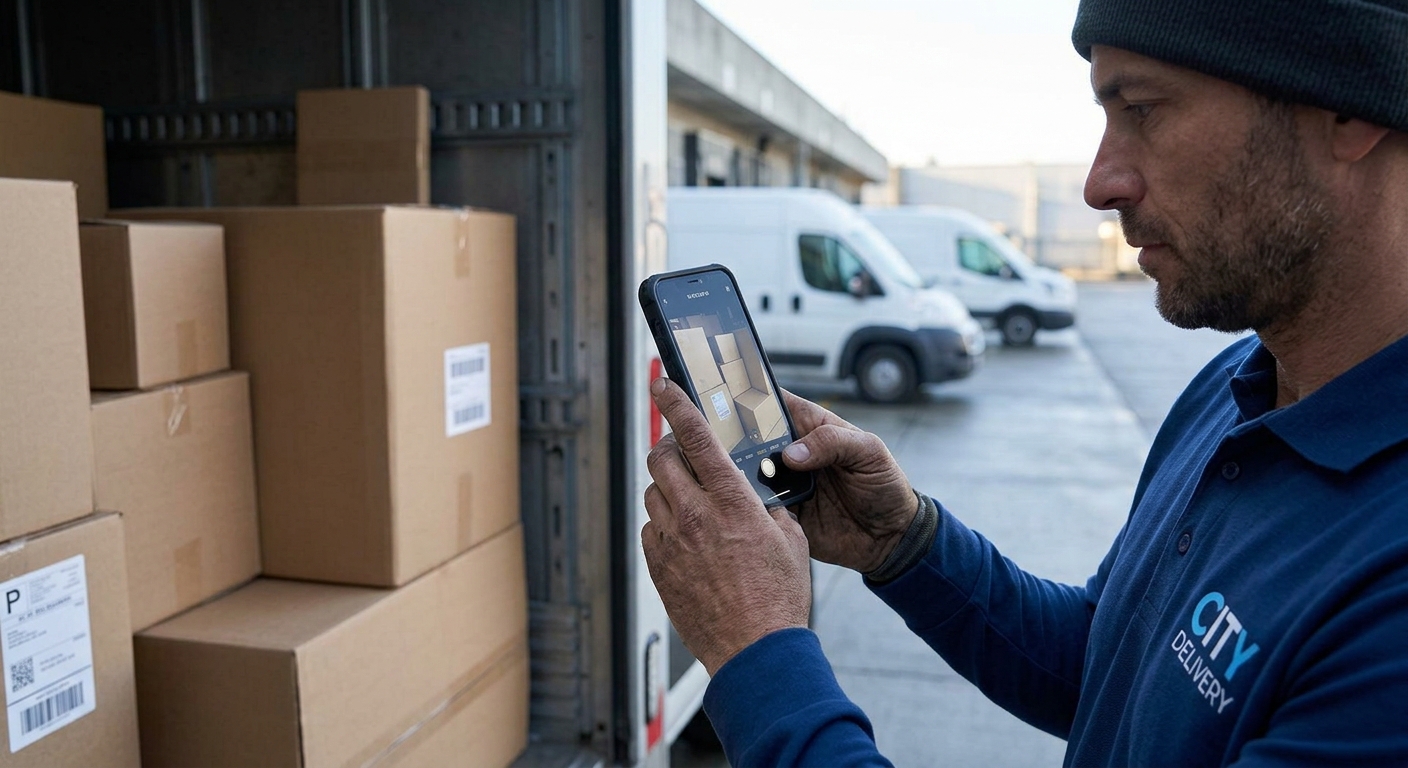
Timestamped images settle "damaged in transit" versus "damaged after delivery" questions quickly, often without a lengthy investigation. Photograph the following at pickup and delivery:
- Outer packaging condition
- Labels and seal numbers
- Pallet configuration and load stability
- Any visible damage, shot both close up and wide
A consistent checklist, such as four sides plus the label, keeps coverage uniform across drivers. Choose tools that automatically stamp the date, time, and location, and attach every image to the shipment record so none end up in personal phone galleries.
Consider a consignee who claims the cartons were crushed. Pickup photos show intact packaging, while delivery photos show the damage noted at the dock. Responsibility becomes clear within minutes.
Strategy 2: Capture Digital Signatures to Establish Reliable Proof of Receipt

Paper signatures get lost, smudge easily, and often lack a printed name or timestamp. Digital capture automatically records the signer's name and a timestamp, ties the signature to a specific shipment ID, and gives everyone involved in a claim instant access.
Require receivers to note shortages or damage before they sign. A clean receipt then stands firm if questions surface later. A signed acknowledgment also moves the conversation from "did it arrive?" to "what was the condition?", which the photo record can answer.
Strategy 3: Store Delivery Records in Searchable Cloud Logs for Retrieval in Minutes

Searching email threads, shared drives, and filing cabinets can consume hours per claim. A well-built cloud log shortens that effort considerably. Look for these capabilities:
- Search by tracking number, consignee, driver, or delivery date
- Images and signatures stored with driver notes on one record
- Simultaneous access for dispatch and claims teams
- Retention that covers the full claim filing window
- An edit history so entries withstand scrutiny
With these in place, claims teams can assemble a complete evidence package in minutes. Mailroom teams apply the same logic to inbound parcel management, where a searchable record settles "I never got it" questions just as quickly.
Strategy 4: Standardize Delivery Log Entries to Remove Ambiguity

Free-form notes like "box a bit dinged" mean different things to different readers. Standard fields give every entry the same shape, making records easier to compare and defend. A strong template includes:
- A condition rating
- Piece count and seal number
- Receiver name
- Predefined damage categories such as crushed, wet, torn, or open
Make these fields mandatory before a delivery can be closed out. Brief training for drivers and dock staff, supported by a short checklist and a few sample entries, builds consistency fast. Clear entries also cut the clarifying questions that stall disputes.
How the Four Strategies Work Together to Speed Claims
Each strategy covers a different gap in the evidence chain:
- Photos prove condition.
- Signatures prove receipt.
- Standardized entries remove ambiguity.
- Cloud logs make the full record retrievable in minutes.
Adopting only one tactic leaves gaps. For example, photos stored on drivers' phones still force claims teams to chase files across devices. A combined approach closes those gaps.
Track progress with a few metrics:
- Average days to resolve a claim
- Percentage of deliveries with complete photo and signature records
- Time needed to assemble an evidence package
- Share of claims resolved without escalation
Teams handling inbound parcel management can borrow these same measures to gauge how quickly package disputes close.
Build Your Evidence Trail Before the Next Dispute Starts
The fastest dispute is the one you can resolve with documentation already in hand. Start by auditing your last five disputed deliveries and noting which evidence was missing. That review points to the first strategy worth adopting.
The same principles apply to inbound packages at the final stage of delivery. Mailroom teams that photograph and log each package and collect a signature avoid "I never got it" disputes too. Tools like Parcel Tracker make that documentation routine. Strong records protect your business, speed up claims, and keep customer relationships intact.
Expert FAQ: Freight Delivery Log Disputes
How do photo verification and digital signatures reduce freight disputes?
Timestamped photos prove cargo condition while digital signatures prove receipt, together shortening freight dispute resolution time.
What should a freight delivery log include?
Shipment ID, condition, piece count, seal number, receiver name, timestamp, photos, and signature for each handoff.
Why do searchable cloud logs speed up freight claims?
Claims teams retrieve complete evidence by tracking number in minutes, avoiding hours of searching emails and paper files.
What is the main liability risk in lost or damaged cargo claims?
The party unable to prove cargo condition at handoff often bears the burden of liability.