

What Belongs in an Effective Office Parcel Management Policy for Employees?

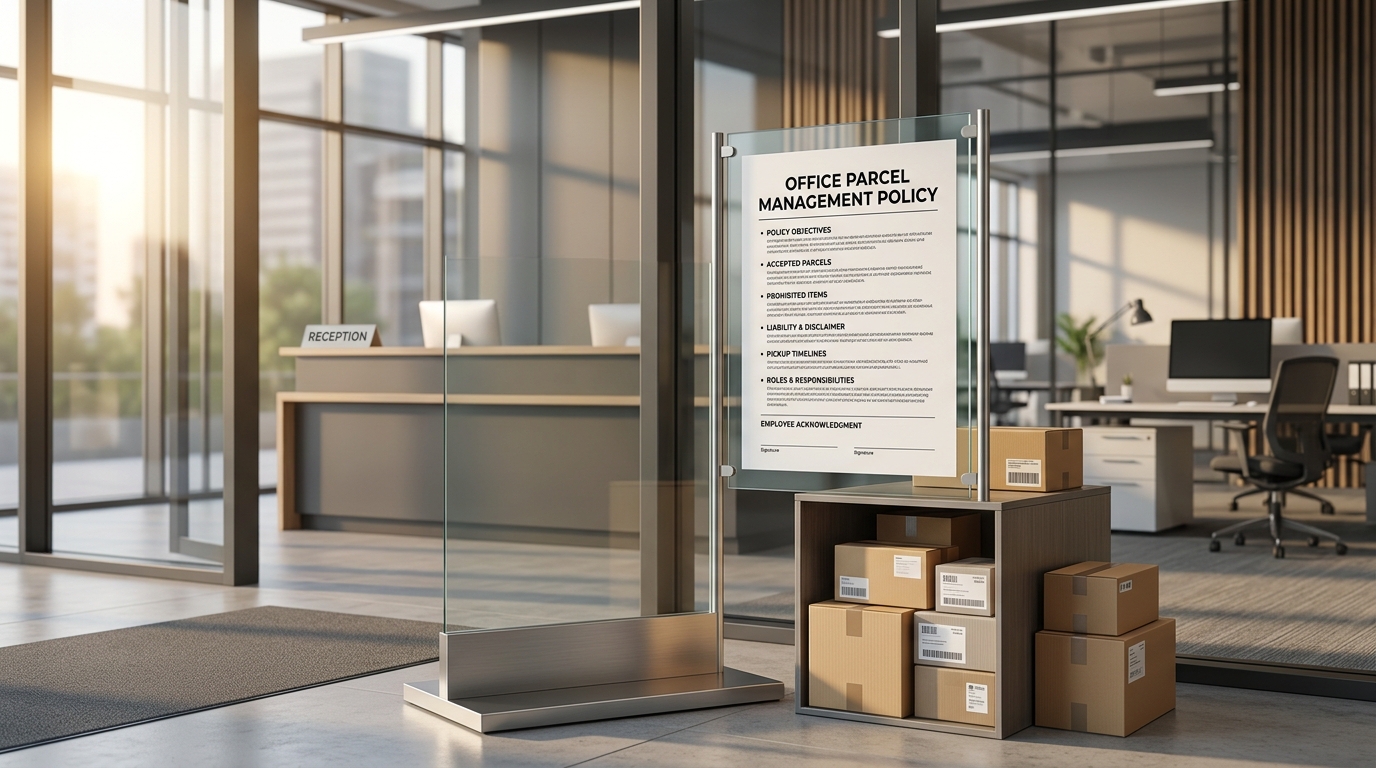
Online shopping rarely pauses at the office door. Reception desks and supply closets often double as personal delivery depots, and one busy week before a holiday can fill every shelf with retail orders and gift boxes.
Without written rules, client contracts and equipment shipments sit beside someone's new running shoes. Front-desk staff field a steady stream of "has my package arrived?" questions, and nobody knows who to ask about a missing item. A clear policy settles these matters before they arise.
This guide covers the components of a workable policy: separating business-critical deliveries from personal ones, wording a liability disclaimer, setting pickup deadlines, and assigning roles and enforcing the rules. Sample clauses appear throughout so you can adapt the language to your own workplace, and a quick-reference checklist near the end summarizes the essentials.
Why Your Workplace Needs Written Rules for Employee Packages
Parcel volumes have grown steadily as online retail has become part of daily life, and employees naturally see the office as a safe address with someone on hand to sign for deliveries. Offering that convenience feels like a small perk until volume climbs.
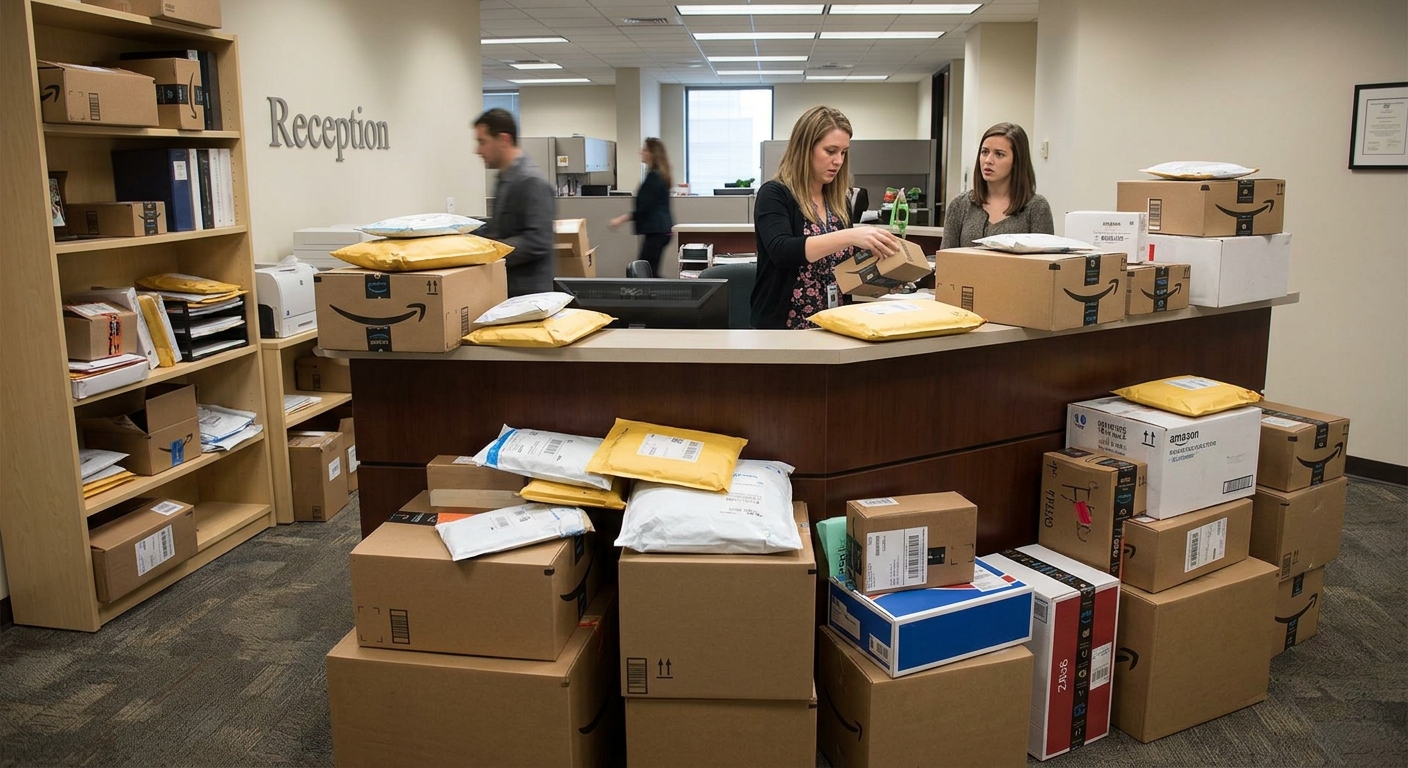
Consider an office with no policy. Receptionists spend part of each day searching shelves and walking packages to desks. Walkways narrow as boxes pile up near the front entrance, which creates a safety concern and gives visitors a poor first impression. A contract, a replacement laptop, or a client sample can sit unnoticed under a stack of personal orders. When something goes missing or arrives damaged, the company finds itself in a dispute with an employee over who should cover the loss.
Sound parcel management sets clear expectations from the start. The policy protects the business and the staff who handle packages, and it tells employees exactly what to expect when they use the office as a delivery address.
The principles here apply whether you run a dedicated mailroom with several clerks or a single front-desk coordinator. Good mailroom management at any size rests on clear definitions, recorded arrivals, and a written policy that provides both.
Drawing the Line Between Business-Critical Deliveries and Personal Packages
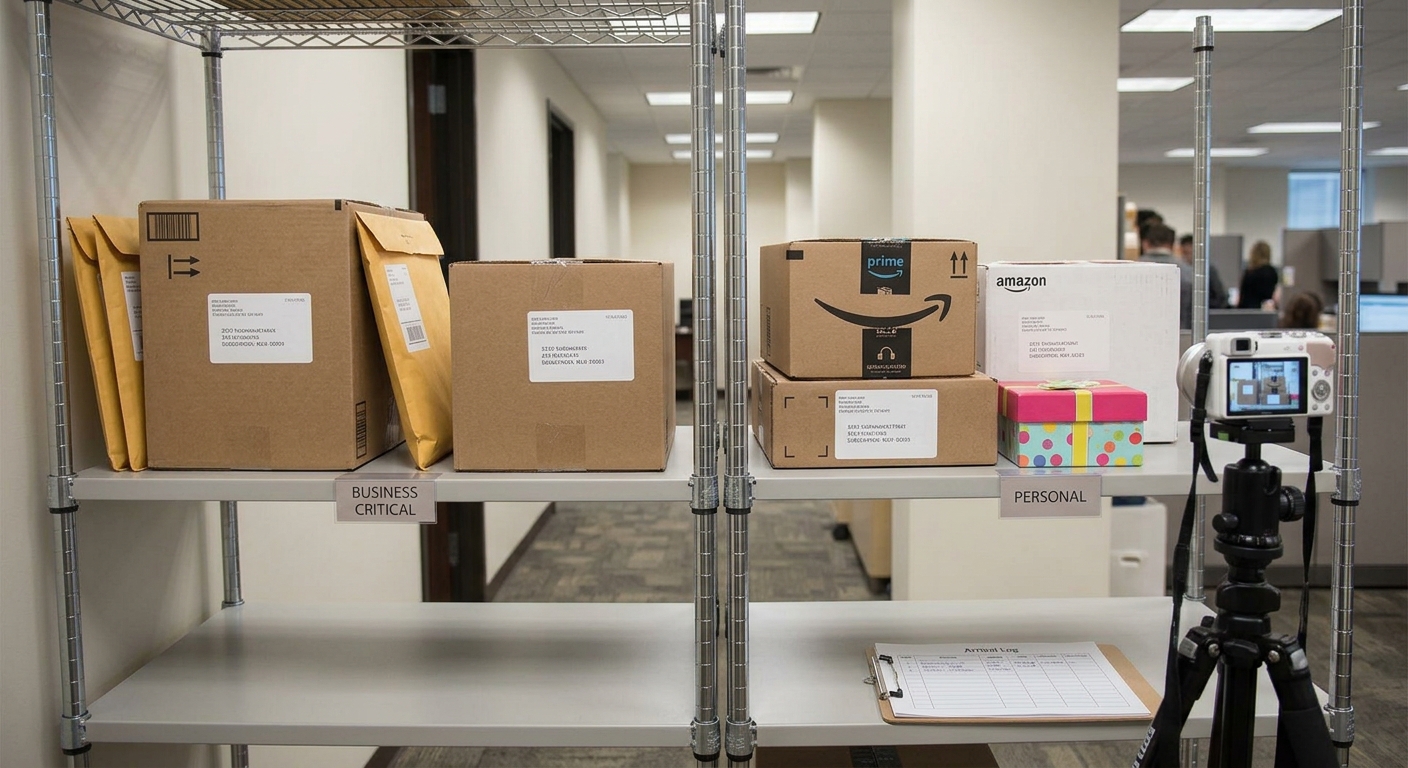
The policy's first job is to define two categories so staff never have to guess which pile a package belongs in.
- Business-critical deliveries: client documents, equipment orders, office supplies, legal or financial mail, and product samples
- Personal deliveries: retail orders, gifts, subscriptions, and grocery or meal-kit boxes
Once the categories exist, add a priority rule. Log and process business deliveries first, ideally within the hour they arrive, and let personal packages follow once the business queue clears. Staff then have a ready answer whenever workloads collide.
Deciding How Much Personal Delivery to Allow
Companies take several approaches, and the right one depends on available space, staffing, and building security. The main options are:
- Open access with limits. Employees may receive personal packages freely, subject to the item restrictions and pickup deadlines in the policy. This suits offices with generous storage and a staffed front desk.
- Per-employee caps. Each person may have a set number of packages waiting at one time, such as two or three. A cap keeps any single employee from filling the shelves.
- Size and weight restrictions. Redirect oversized furniture, large appliances, and heavy boxes to the employee's home. Staff avoid lifting injuries, and storage space stays available for typical parcels.
- Full prohibition with exceptions. Decline personal deliveries except in situations like remote workers who don't have a safe delivery address at home. This works for high-security buildings and very small teams.
Items That Should Never Arrive at the Office
A restricted list protects safety and keeps staff out of awkward situations. Common entries include:
- Perishables, such as groceries and meal kits that spoil before collection
- Hazardous materials, including chemicals and bulk shipments of batteries
- Alcohol and other age-restricted goods
- Weapons and ammunition
- Anything requiring the named recipient's own signature, since reception staff cannot sign on an employee's behalf
Addressing Requirements
Ask employees to include their full name and department on every label, plus a line such as "Personal Delivery" so the package is recognized on sight. A consistent label format lets staff sort incoming items in seconds and keeps personal orders apart from company purchases.
Sample Policy Language
Business-critical deliveries include client documents, equipment, office supplies, legal or financial mail, and samples. Personal deliveries include retail orders, gifts, subscriptions, and grocery items. Business deliveries are processed first. Personal packages are accepted under the terms of this policy, and employees must label them with their full name, department, and the words "Personal Delivery."
Writing a Liability Disclaimer for Lost or Damaged Personal Items
A company that accepts personal packages should avoid becoming an unintended insurer of its employees' online orders. A clear disclaimer sets that boundary in advance and spares everyone an uncomfortable conversation later.
Once employees read and acknowledge the disclaimer, they know the office accepts their packages as a favor and that they must track each shipment. Plain language and visible placement, such as the handbook and the onboarding packet, make the disclaimer far more effective.
What a Solid Disclaimer Covers
- Personal packages are accepted as a courtesy extended to employees
- Loss, theft, damage, and delay carry no liability for the company
- Shipment tracking and insurance for valuable items rest with the employee
- Packages must be claimed within the stated pickup window
- A signature or digital acknowledgment confirms each employee has read the policy
Shared Responsibility
Employees play a role in keeping their own orders safe. Carrier delivery notifications let them know when a package is due, and shipping valuable items to a home address or a secure pickup locker keeps expensive items off an office shelf. A short reminder in the policy encourages both habits.
Documentation Habits That Prevent Disputes
Good records settle most disagreements before they begin. Staff should follow a consistent routine for every package:
- Log each parcel on arrival with the date, carrier, recipient, and tracking number.
- Photograph or note any visible damage before the package is stored.
- Store the item in the designated holding area right away.
- Record who collected it and when, ideally with a signature or digital confirmation.
Sample Disclaimer
The company accepts personal packages for employees as a courtesy and assumes no liability for the loss, theft, damage, or delay of any personal item. Employees are responsible for tracking their shipments and insuring valuable items, and they must collect packages within the stated pickup window.
Have legal counsel or HR review the final wording, since liability rules vary by region and by employment agreement.
Setting Pickup Windows That Keep Reception Areas Clear
A pickup deadline keeps shelves available and walkways open. Most offices settle on 24 to 72 hours for standard parcels, with shorter limits for items that take up more room. A workable set of limits looks like this:
- Envelopes and small boxes: 72 hours
- Medium and large boxes: 48 hours
- Bulky or oversized items: 24 hours
- Packages received during a known absence: an extended hold arranged in advance
Collection Hours
Limit pickups to set blocks, such as mid-morning and mid-afternoon, so reception staff are not interrupted all day. A posted schedule also lets employees plan their trips to the front desk around meetings and deadlines.
Escalation Steps for Unclaimed Packages
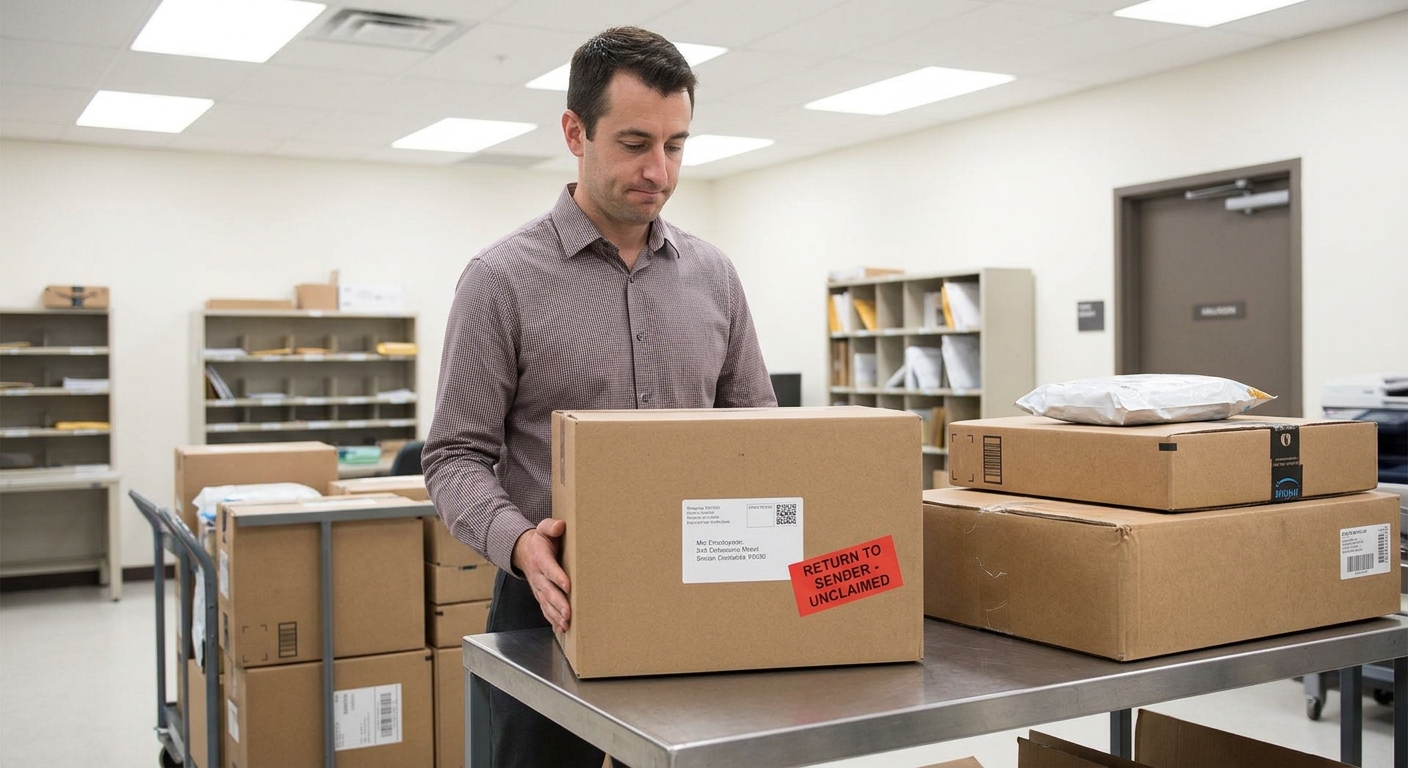
A predictable sequence of reminders gives employees every chance to collect their items and gives staff a defensible process if a package stays behind.
- Arrival notification goes out as soon as the package is logged.
- A reminder follows halfway through the pickup window.
- A final notice is sent 24 hours before the deadline.
- The defined outcome takes effect once the window closes: the package is returned to the sender, moved to a longer-term holding area, or disposed of according to company policy.
Designated Storage
Choose a specific location for personal packages, such as a labeled shelf unit or a locked cage in the mailroom, and keep it separate from the zone used for business parcels. Reception desks make poor storage because they crowd the area visitors see first and make it harder to supervise who handles what.
Handling Absences
Pickup deadlines need flexibility for real-life situations. The policy should address:
- Vacations: employees may request an extended hold before they leave, or ask a colleague to collect on their behalf with written permission
- Sick leave: the pickup clock pauses until the employee returns, up to a maximum number of days
- Remote-work days: employees arrange a collection day or ask for the package to be returned to the sender
- Departing employees: any package that arrives after a last day is refused or returned
Sample Pickup Clause
Personal parcels must be collected from the designated holding area within 72 hours of the arrival notice (48 hours for large boxes and 24 hours for oversized items). Parcels left past the pickup window will be returned to the sender or handled per company policy.
Assigning Roles, Sending Notifications, and Enforcing the Policy
A policy works best when each group knows its own part.
Receiving staff log arrivals, store packages in the right zone, send notifications, and record pickups.
Employees label their orders correctly, track their shipments, and collect packages on time.
Managers reinforce the policy with their teams and address repeated lapses as they come up.
HR and legal teams review the disclaimer wording and update the policy as regulations change.
Notification Methods
Choose a method employees already check throughout the day, whether email or a workplace chat message. Each notice should include the recipient's name, the carrier, the arrival date, and the pickup deadline so that nobody needs to ask the front desk for details.
Handling Repeat Lapses
A graduated response keeps enforcement fair and predictable:
- A friendly reminder after the first missed deadline
- A written warning if the pattern continues
- A temporary suspension of personal delivery privileges
- Permanent removal of those privileges for persistent offenders
Rolling Out the Policy
Introduce the policy during onboarding and add it to the employee handbook. Post a summary near the pickup area where employees will see it every time they collect a package. Send seasonal reminders ahead of peak shopping periods, when volume surges, and review the policy once a year to confirm the limits and deadlines still match actual package volume.
Choosing How to Log and Track Packages From Arrival to Pickup
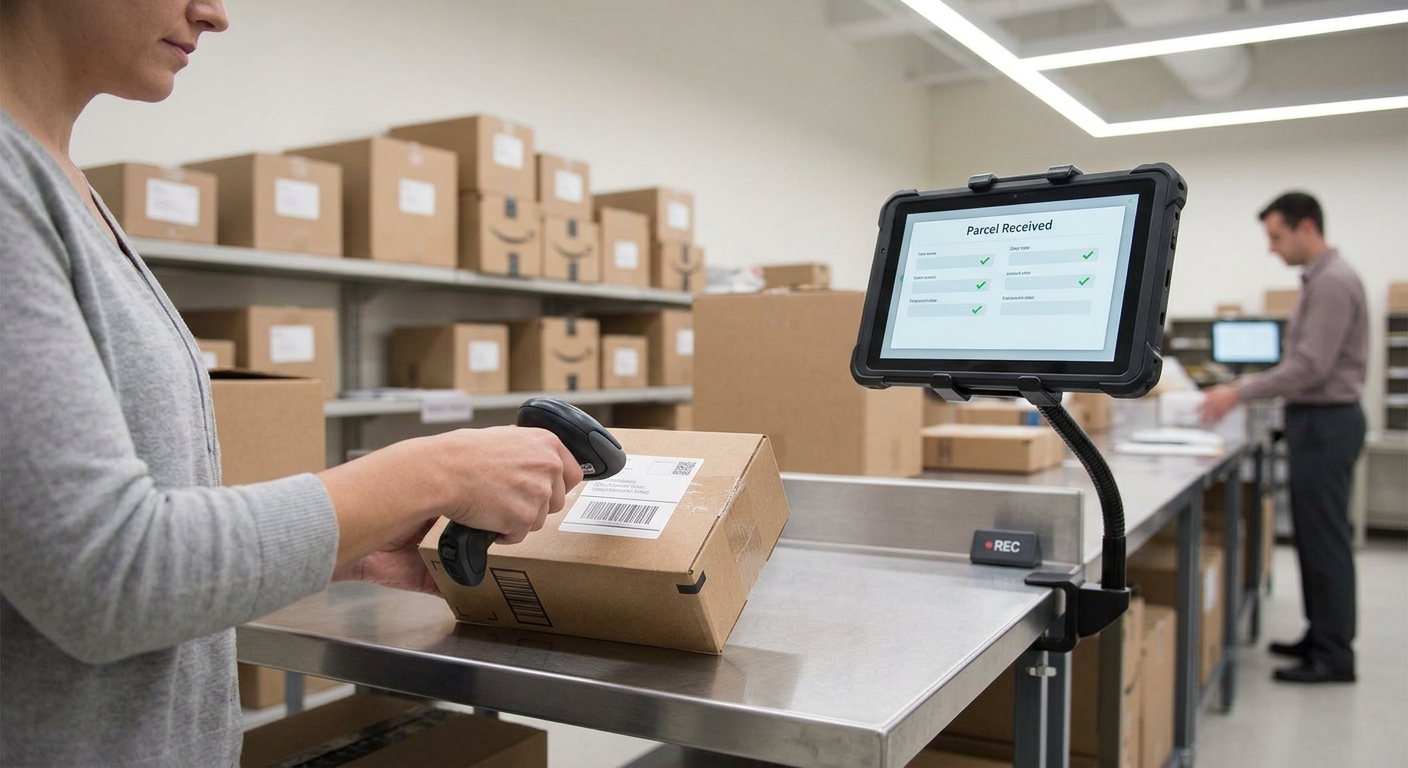
Every policy clause depends on accurate records. A disclaimer holds up better when the log shows exactly when a package arrived, and staff a enforce a pickup deadline only if they know how long each item has been waiting.
Small offices often begin with a shared spreadsheet or a paper logbook, which works well at low volume. As deliveries increase, manual entries slow receiving staff, notifications lag, and gaps appear in the record. Dedicated mailroom software can scan labels, automatically log arrivals, notify recipients, and capture signatures at pickup. Pairing a written policy with a package-handling system keeps the rules and records aligned.
Quick-Reference Checklist for Your Employee Package Policy
Use this list to confirm your policy covers the essentials before you publish it:
- [ ] Definitions of business-critical and personal deliveries
- [ ] Allowed and restricted items
- [ ] Package limits and size rules
- [ ] Liability disclaimer with employee acknowledgment
- [ ] Pickup window and escalation steps
- [ ] Designated storage location
- [ ] Notification process and responsible staff
- [ ] Enforcement steps and an annual review date
Putting Your Employee Package Policy to Work
A strong policy draws clear lines between business and personal deliveries, limits the company's liability, and keeps reception areas free of clutter. Each section supports the others: definitions shape what staff accepts, disclaimers set expectations for loss, and pickup deadlines keep the shelves moving.
Consistency shapes daily habits, and consistency depends on knowing where every package is at any moment. As your volume grows, software like Parcel Tracker can automate logging, recipient notifications, and pickup records so the policy runs smoothly with minimal extra effort from your team.
Start with the sample clauses above, adjust the limits and timeframes to suit your office, and share the finished policy with every employee.
Frequently Asked Questions About Employee Package Policies at Work
Can employees receive personal packages at work?
Yes, when the company chooses to allow it. State clearly that the service is a courtesy extended by the employer, and set limits on the number of packages, sizes, and item types.
Is an employer liable for lost or stolen personal packages?
A clear liability disclaimer that employees acknowledge greatly reduces the company's exposure. Have legal counsel or HR review the wording, since rules differ by location.
How long should an office hold personal packages?
A 24- to 72-hour window is typical, with shorter limits for bulky items. Pair the deadline with reminder notices and a defined outcome for unclaimed parcels.
What items should be banned from office delivery?
Common exclusions include perishables, hazardous materials, alcohol, weapons, and anything that requires the recipient's own signature.
How can companies track personal and business packages efficiently?
Log every parcel on arrival and notify recipients automatically. Spreadsheets handle low volume well, and dedicated mailroom software scales better as deliveries increase.


