.svg)
Outsource vs. In-House Mailroom Operations

Managing internal facility distribution requires a constant balance between resource allocation and service speed. Physical receiving hubs routinely experience shifting workloads driven by e-commerce expansion and flexible working patterns. Modern commercial spaces require clear visibility, reliable chain of custody, and predictable resource spending.
Facility leaders frequently reassess how incoming assets move through their buildings. Evaluating whether internal employees or dedicated service providers should manage daily sorting helps maintain smooth administrative functions while keeping organizational expenses aligned with actual output.
Defining In-House and Outsourced Models

In-house setups rely entirely on internal company staff to clear loading docks, organize envelopes, and carry out desk handoffs. Organizations maintain full authority over hiring decisions, shift assignments, and workplace policies. Facilities teams handle equipment maintenance contracts, purchase hardware, and establish internal delivery routes.
Outsourced setups delegate physical handling to specialized business process vendors or facilities management firms. Third-party contractors provide trained site personnel, manage daily schedules, maintain service level agreements, and supply coverage during staff absences.
Effective strategy relies heavily on robust mailroom management practices. Both internal teams and third-party vendors depend on clear logging workflows to verify item arrival times and recipient sign-offs across complex corporate footprints.
Financial Analysis of Facility Services

Understanding full service expenses requires examining both fixed baseline commitments and recurring variable support charges.
- Internal Wages and Compensation: Employing internal personnel requires allocating funds for base salaries, performance bonuses, overtime pay, and severance packages.
- Employee Benefits and Perks: Facility leaders budget for healthcare premiums, retirement contributions, disability coverage, paid parental leave, paid time off, and wellness perks.
- Recruitment and Retraining Costs: Internal staffing requires ongoing investments in job platform listings, HR recruitment hours, candidate background checks, initial onboarding, and continuing safety certifications.
- Hardware Acquisition and Maintenance: Maintaining proprietary sorting areas requires leasing postage meters, buying folder-inserters, purchasing industrial scales, funding hardware service contracts, and covering repair calls.
- Software Licensing and IT Integration: Internal models carry ongoing costs for proprietary receiving software subscriptions, database maintenance, user seat licensing, and dedicated IT support hours.
- Outsourced Monthly Contract Rates: Third-party vendor agreements consolidate site labor, management oversight, substitute coverage, basic equipment, and specialized training into a single predictable line item.
- Administrative Offloading Benefits: External contracts transfer the financial burden of managing staff turnover, processing payroll, handling workplace injury claims, and absorbing idle labor hours during low-volume periods to the vendor.
External agreements provide budget stability by converting shifting administrative tasks into fixed recurring line items. Internal setups carry baseline salary requirements regardless of incoming daily volume, making per-item handling costs fluctuate during quieter periods.
Security Protocol and Liability Oversight

Protecting high-value items, legal documents, checks, and confidential HR files requires rigorous receipt tracking. Strong internal frameworks protect company assets through consistent logging routines.
- Internal Oversight Advantages: Dedicated staff members maintain long-term familiarity with corporate culture, employee name variations, executive preferences, and internal security protocols. Direct supervisors maintain full oversight over daily handling procedures.
- Internal Risk Points: Small internal teams experience single points of failure when primary receivers take sick leave, creating potential logging backlogs, unmonitored drop zones, and unassigned delivery tasks.
- Internal Liability Exposure: Internal handling mistakes, damaged items, or lost check shipments fall under company financial responsibility, requiring internal investigation and cost absorption.
- Vendor Risk Controls: Outsourced firms offer structured background checks, standardized audit trails, specialized chain-of-custody procedures, secure keycard protocols, and vendor-backed insurance policies.
- Vendor Service Level Guarantees: Third-party contracts enforce precise delivery windows, package processing metrics, and financial penalties for lost items or missed SLAs.
- Vendor Space Access: External personnel working in restricted corporate areas require secure badge management, defined entry boundaries, escort rules for sensitive zones, and non-disclosure agreements.
Comprehensive parcel management frameworks keep incoming inventory visible. Precise physical handoffs prevent lost deliveries regardless of who mans the receiving counter.
Scalability and Hybrid Work Alignment

Hybrid working patterns create variable arrival schedules for corporate mailrooms. Mid-week delivery spikes often follow Mondays with lower volume, requiring flexible distribution schedules.
Outsourced providers offer flex-staffing models that adjust headcount according to seasonal peaks, sudden business expansions, or building occupancy changes. Vendors redistribute staff across clients, maintaining steady throughput during volume surges without increasing permanent payroll.
Internal teams often face capacity limits during peak periods, leading to temporary item accumulations, cluttered floor spaces, and delayed employee pickups. Modern facilities address these volume shifts through digital receiving protocols, automated notifications, dedicated parcel lockers, and consolidated pickup points.
Strategic Selection Criteria
Each path offers distinct advantages based on building footprint, daily intake volume, and internal administrative capacity.
Benefits of In-House Setup
- Complete direct control over personnel, daily priorities, and workplace culture.
- Immediate alignment with internal company updates, organizational restructuring, and executive preferences.
- Dedicated focus on highly specialized document workflows, legal confidentiality, and proprietary handling.
- Unfiltered transparency into staff performance, scheduling, and facility utilization.
- Long-term institutional knowledge retention among permanent staff members.
Drawbacks of In-House Setup
- Ongoing responsibility for recruitment, training, shift coverage, and turnover management.
- Capital commitments for equipment leases, hardware updates, and maintenance agreements.
- Higher labor allocation relative to output during low-volume seasons or remote work days.
- Vulnerability to unexpected operational shutdowns during team-wide illnesses or sudden resignations.
- Administrative overhead required from HR, finance, and facility managers to oversee basic mailroom operations.
Benefits of Outsourced Setup
- Predictable contract costs that simplify annual budgeting and financial forecasting.
- Vendor responsibility for staffing gaps, turnover, sick leave coverage, and basic job training.
- Rapid scaling capability during high-volume periods, holiday rushes, or corporate events.
- Access to specialized vendor expertise, industry benchmark metrics, and modern operational workflows.
- Transfer of operational liabilities and worker compensation risks to the service provider.
Drawbacks of Outsourced Setup
- Reliance on third-party service level agreements, external oversight, and vendor stability.
- Need for active vendor management to maintain quality standards and review monthly performance metrics.
- Required onboarding procedures, site safety training, and security clearance for third-party personnel.
- Potential turnover among vendor staff leading to periodic re-learning of facility geography and personnel names.
- Contractual rigidities that require formal scope modifications for extra services outside the baseline SLA.
Decision Framework for Your Mailroom

Choosing the right structure depends on organizational priorities:
Retain an in-house model when processing specialized internal documents, maintaining low incoming volume, or utilizing established facility infrastructure. Choose an outsourced model when managing multi-tenant buildings, navigating unpredictable delivery surges, or seeking predictable monthly service costs.
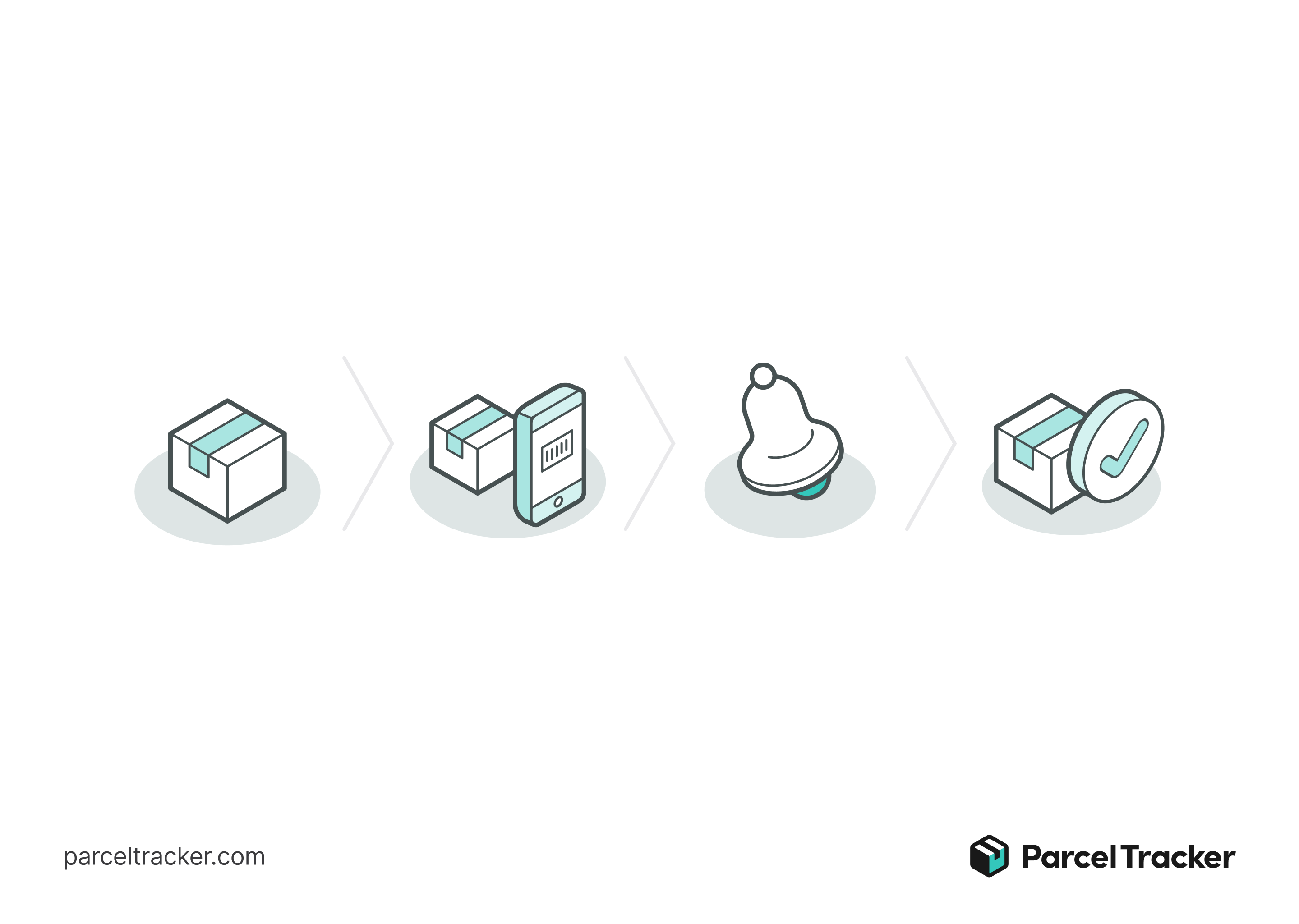
Regardless of your staffing model, modern receiving hubs require clear digital accountability to eliminate missing deliveries. Facilities teams maintain seamless accountability and automated recipient alerts using specialized tracking software like Parcel Tracker.
Expert FAQ
What is the primary difference between in-house and outsourced mailroom management?
In-house uses internal employees and owned equipment; outsourcing uses third-party vendors and staff under fixed service level agreements.
Why do corporate parcel volumes fluctuate significantly in hybrid workplaces?
Irregular employee office attendance creates unpredictable delivery schedules, variable package arrivals, and unpredictable receiving bottlenecks.
How does outsourcing mailroom operations reduce direct facility expenses?
Outsourcing replaces unpredictable staffing overhead, benefits, equipment leases, and recruitment costs with a predictable fixed contract.
What security risks exist when using third-party personnel for sensitive mail?
Third-party personnel increase external access risks, requiring clear access controls, strict background checks, and vendor-backed liability coverage.
How do automated tracking tools improve both operational models?
Digital tracking systems automate receiving logs, streamline chain-of-custody records, speed up notifications, and eliminate lost parcel liabilities.



.svg)