

Secure Parcel Management During Extended Year-End Holiday Office Closures


Carriers keep their routes running through Christmas and New Year even when offices close. For many buildings, that means packages arrive at quiet loading docks and sit at empty reception desks for ten days or longer. Year-end is also the busiest stretch of the shipping calendar, so volume climbs just as staffing hits its lowest point of the year.
Unattended parcels face theft, weather exposure, and the everyday risk of misplacement. Items that need a signature or carry a deadline add further pressure, since legal documents and medical supplies lose value with every day they sit unnoticed. Good parcel management gives each package a known location, a named custodian, and a record of every handoff.
Before the Break: Building a Parcel Plan for the Closure Period
Audit Expected Deliveries and Carrier Holiday Schedules
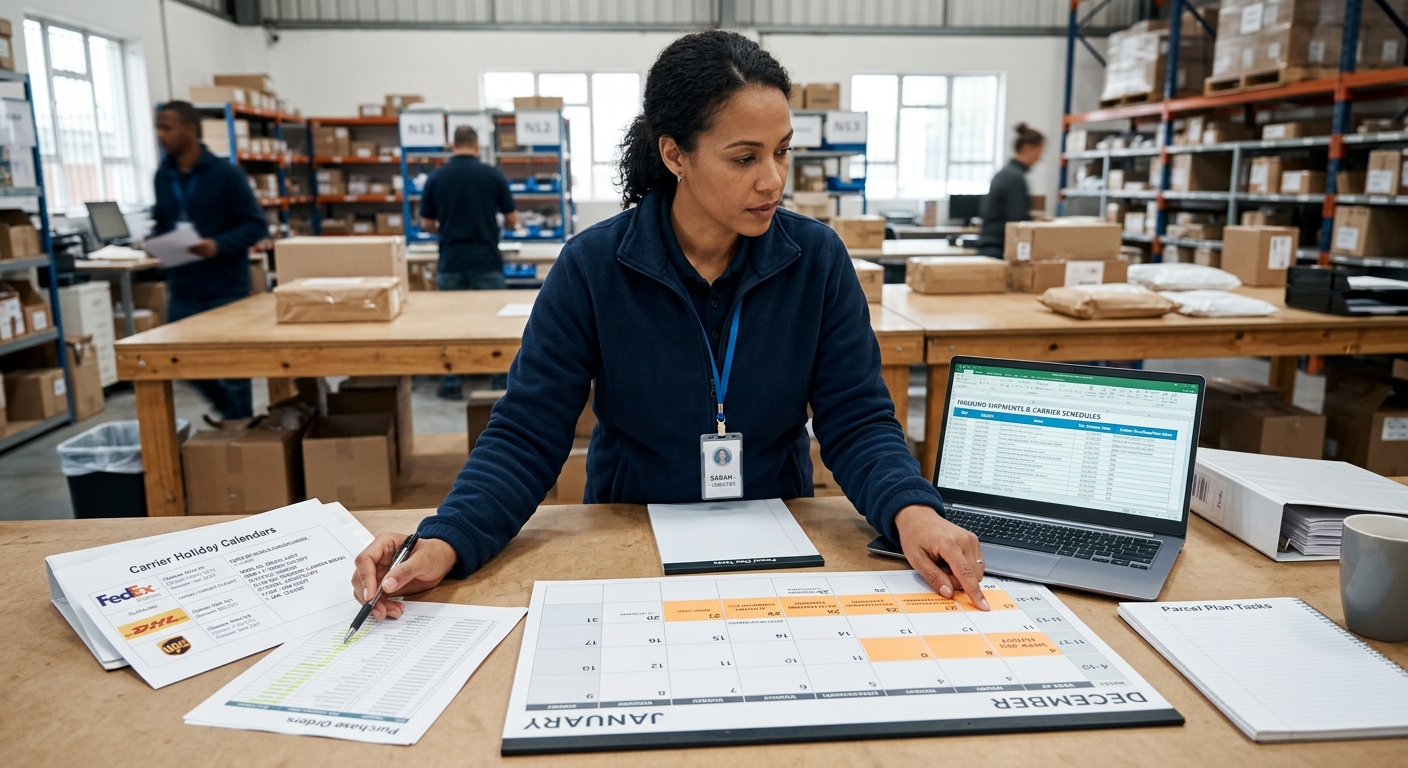
Start four to six weeks before the closure. A thorough audit is the foundation of parcel management for any extended break. Carriers publish holiday service calendars, and the details differ by carrier and service level. Some skip Christmas Day and New Year's Day entirely, while others run reduced routes or limit service to express and freight. Pull each carrier's published schedule and mark the dates on a shared calendar so everyone works from the same picture.
Next, gather every source of expected inbound volume. Include open purchase orders, recurring supply orders, subscriptions that ship physical goods, and warranty replacements. Ask procurement and finance to export open orders with promised delivery dates, and ask department heads to flag anything due between the last working day and the first day back.
Outbound activity deserves a review as well. Pause or reschedule scheduled pickups and pending customer shipments so outgoing packages don't sit waiting for a driver at an empty building.
Once the list is complete, sort each item into one of two groups: must arrive during the closure, or can wait until reopening. The second group is usually larger than people expect, and moving those items out of the closure window reduces everyone's workload.
Communicate Closure Dates to Carriers, Vendors, and Staff
Clear communication removes most surprises. Work through these steps at least three weeks ahead:
- Send suppliers the closure dates and ask them to avoid scheduling shipments during the break wherever possible.
- Update delivery instructions in carrier portals and vendor accounts, so drivers see current notes.
- Set a cutoff date for personal and non-urgent orders, a remind staff that the office cannot guarantee safe receipt during the break.
- Name one point of contact for delivery questions and publish that person's details to all staff and key vendors.
- Share the closure dates with building management so security and concierge teams know what to expect.
Choose a Delivery Strategy: Hold, Redirect, or Accept
Every expected shipment needs a plan. Three approaches cover most situations:
- Hold at the carrier. Many carriers offer hold-for-pickup at a depot or retail partner, redelivery scheduling, and intercept services for shipments already in transit. This suits low-urgency items and offices with no on-site coverage.
- Redirect to an alternate location. Options include a staffed neighboring office, a parcel locker, a third-party receiving service, or an employee-approved secondary address for business items. This fits time-sensitive shipments that must be received during the break.
- Accept with controls. Deliveries arrive at the office and go into a secured room managed by building staff or a skeleton crew. This works when shipments cannot be moved, and coverage is in place.
Most offices use a mix of these approaches. Record the chosen strategy for each vendor or delivery in a shared document so the person covering any given day knows what to expect and what to do.
During the Closure: Protocols for Handling Carrier Deliveries Safely
Set Up a Secure, Designated Drop-Off Point
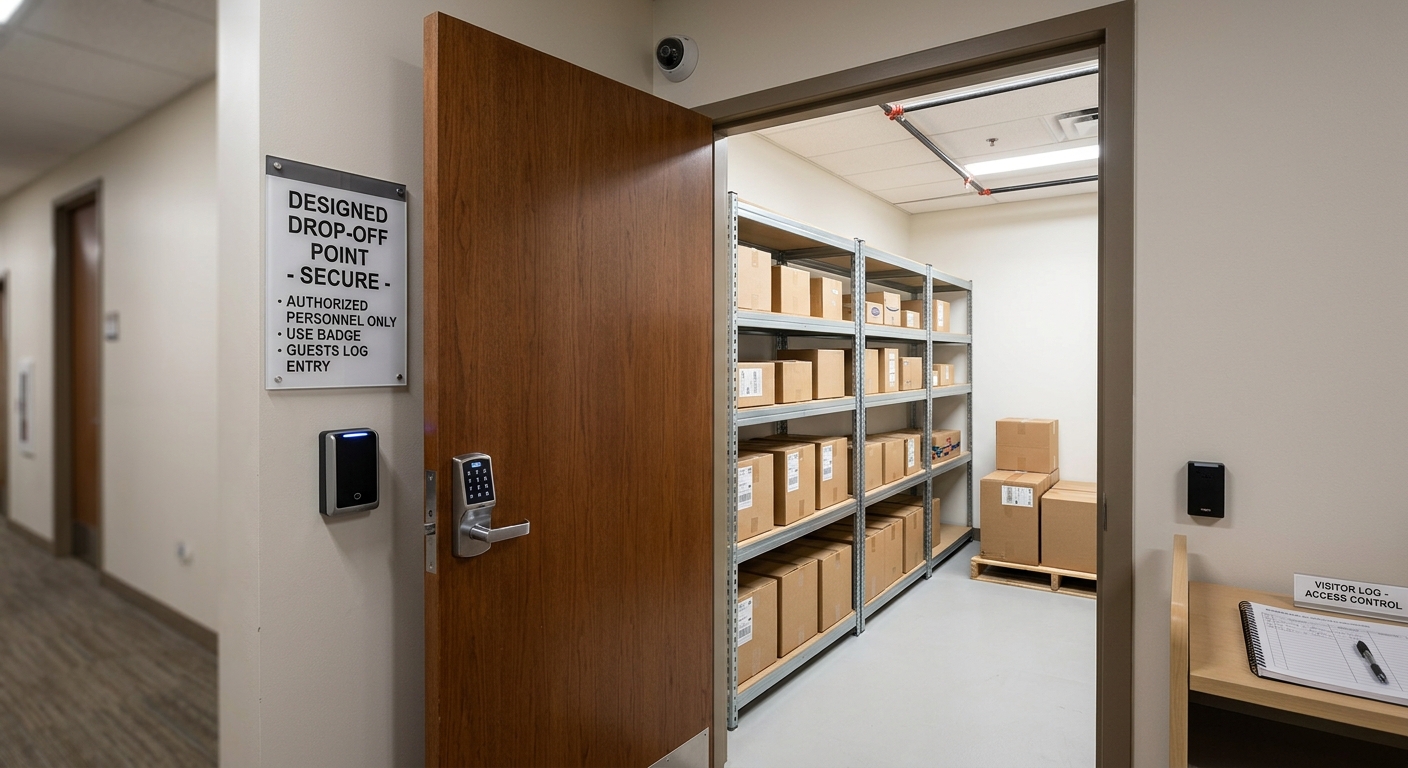
A parcel left in a lobby or on a doorstep is visible to anyone passing by. A designated drop-off point removes that exposure. When choosing the location, look for these qualities:
- A lockable door with restricted access
- Camera coverage of the entrance and interior
- Climate stability, away from exterior doors, ceiling pipes, and heating vents
- Shelving or pallets that keep packages off the floor
- Proximity to the building entrance, so covering staff spend minimal time alone in an empty space
Access control matters as much as the room itself. Keep the list of key or badge holders short, log every entry with a name, date, and time, and deactivate temporary badges once the break ends. If the drop-off point sits in a shared area, consider a locked cabinet or cage inside it for anything valuable.
Create a Chain-of-Custody Process for Every Package
Chain of custody means a clear record of who held a package at each point. A short, consistent routine makes this achievable even for staff who rarely handle deliveries:
- Record the carrier, tracking number, date and time of receipt, and number of pieces.
- Photograph the package as received, capturing the label and any visible damage.
- Note the condition in the log and promptly report visible damage to the carrier and sender.
- Place the package in a secure area and record its shelf or bin location.
- Notify the recipient or designated contact when the item is time-sensitive.
- After the break, release the package only against a signature or ID confirmation.
A paper log on a clipboard works if the routine stays consistent, though a shared digital log lets remote managers see activity in real time.
Handle Signature Requests and Missed Deliveries
Decide before the break who may sign for packages and under what conditions. Building security or concierge staff may accept standard parcels under the building's policy, yet high-value items or restricted packages often require a named employee. Write these rules down and share them with the carriers and building teams who need them.
When nobody is available to sign, the driver leaves an attempted-delivery notice. Carriers typically allow a limited number of attempts before returning a shipment to the sender, so collect these notices with each check and photograph them. Then schedule redelivery for a date after reopening, or arrange pickup at the carrier facility. Review delivery preferences, such as authority to leave, in advance, because a driver who leaves a package without a signature creates a custody issue that's difficult to document later.
Protecting High-Value, Sensitive, and Time-Critical Packages
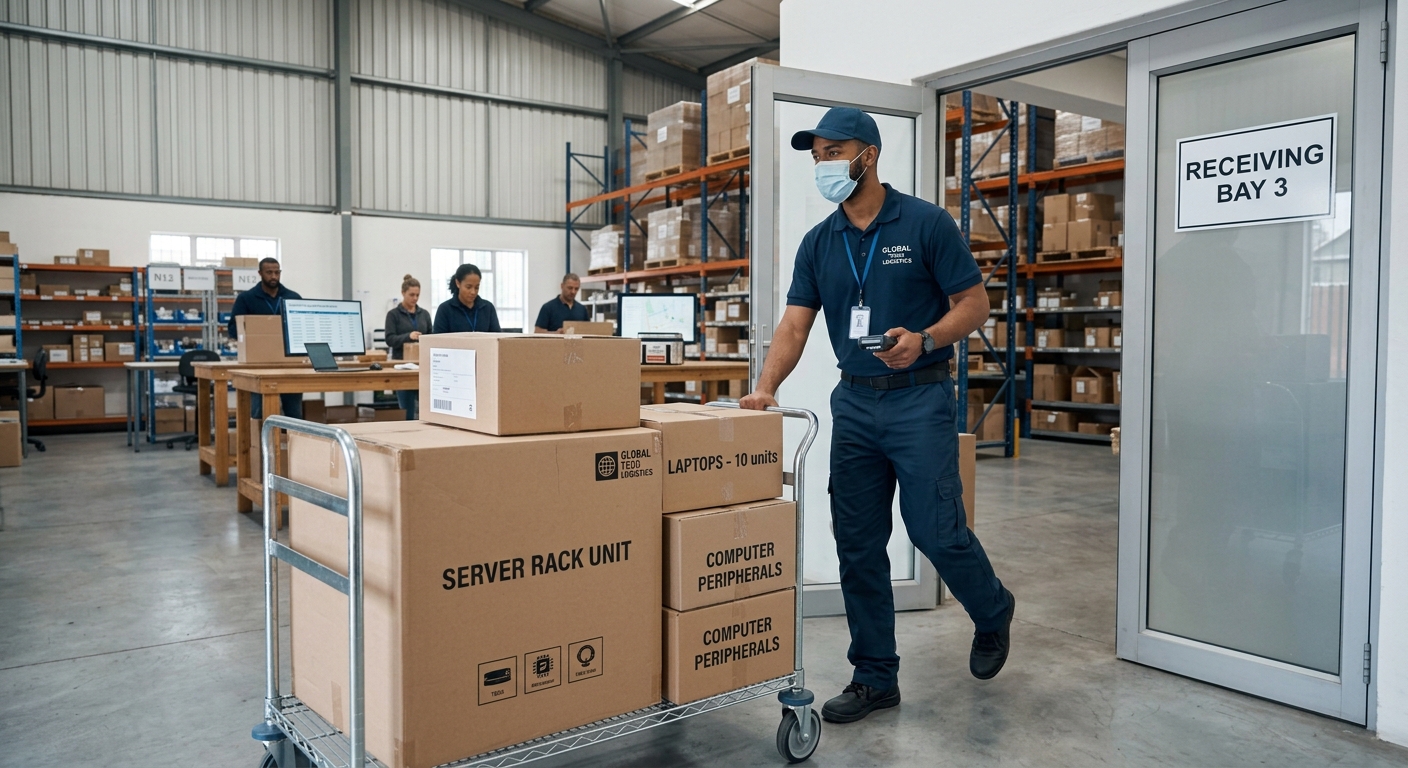
Identify Which Packages Need Extra Protection
Not every box needs vault-level care, so define a clear threshold early. Candidates for extra protection include:
- Electronics and IT equipment
- Laboratory, medical, or pharmaceutical materials
- Financial instruments and legal documents
- Regulated or controlled items
- Client property held on behalf of customers
- Any shipment above a declared-value limit set by your policy
Flagging works best when it starts before the package arrives. Ask vendors to send advance shipping notices for sensitive orders, set tracking alerts for flagged shipments, and keep a shared watchlist of tracking numbers so the covering employee can recognize them at once. Parcel management for sensitive items rests on this early identification, since a package nobody expects is a package nobody protects.
Storage and Security Measures for High-Value Items
Store high-value items in a locked cabinet or cage inside the secured drop-off area, accessible to one or two named key holders. Mailroom camera coverage should include the storage point. Tamper-evident seals on cabinets, along with a signed handoff on release, give the organization a defensible record if a question arises later.
Insurance deserves a check before the break. Review the declared value on inbound shipments, confirm what the carrier covers once a package is delivered, and ask your own insurer how unattended storage during a closure affects coverage. Issues found in November are far easier to fix than those found in January.
Special Handling for Perishable and Time-Sensitive Shipments
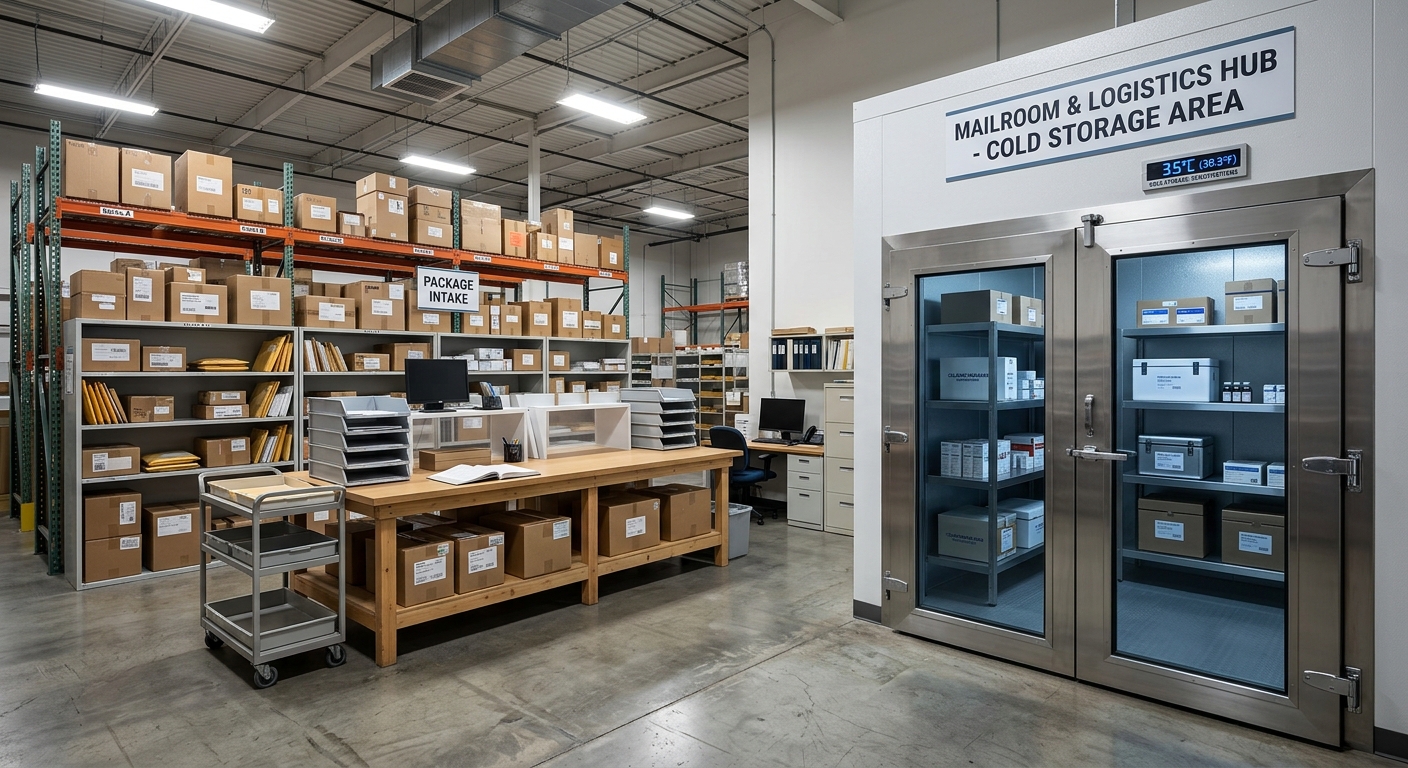
Temperature-sensitive items need a written plan. Where possible, redirect them to a location with staff and refrigeration. If they must arrive at the office, designate a refrigerator or climate-controlled space, keep a temperature log, and make sure the covering employee knows the maximum safe holding time.
For critical packages that arrive when nobody is on site, define an escalation ladder in advance. The covering employee contacts the facilities lead, who contacts the department owner, who can authorize an emergency pickup or redirect. Printing the names and phone numbers on one page keeps the process quick when time matters.
Understand Carrier Claim Windows and Documentation Requirements
If a package arrives damaged or goes missing, the photos and log entries recorded during the break become the foundation of any claim. Carriers set their own claim deadlines, which can range from a few days to several weeks depending on the service and the type of loss, so check the terms for each carrier you use. Quick reconciliation after the break, covered below, keeps those windows open.
Skeletal Staff Coverage: Who Checks What, and When
Design a Fair and Effective Coverage Schedule
A workable schedule starts with the delivery calendar. Plan checks for each day a delivery day and add a least one check on other days, so notices and surprise arrivals are caught early. Rotate responsibility among volunteers, and assign a named backup for each slot. Good parcel management during a closure depends on a plan that specifies names, dates, and times.
Participation stays healthy when the arrangement feels fair. Voluntary sign-up works well for many teams, and time off in lieu, a modest stipend, or both recognize the effort. Short check-in windows of thirty to sixty minutes keep the commitment manageable.
Safety deserves attention too. Entering an empty building alone carries its own risks, so encourage a check-in message on arrival and departure, or pair staff for checks involving high-value deliveries. Where the building has a security desk, ask the guard to note when covering staff arrive and leave.
Give Covering Staff a One-Page Parcel Guide
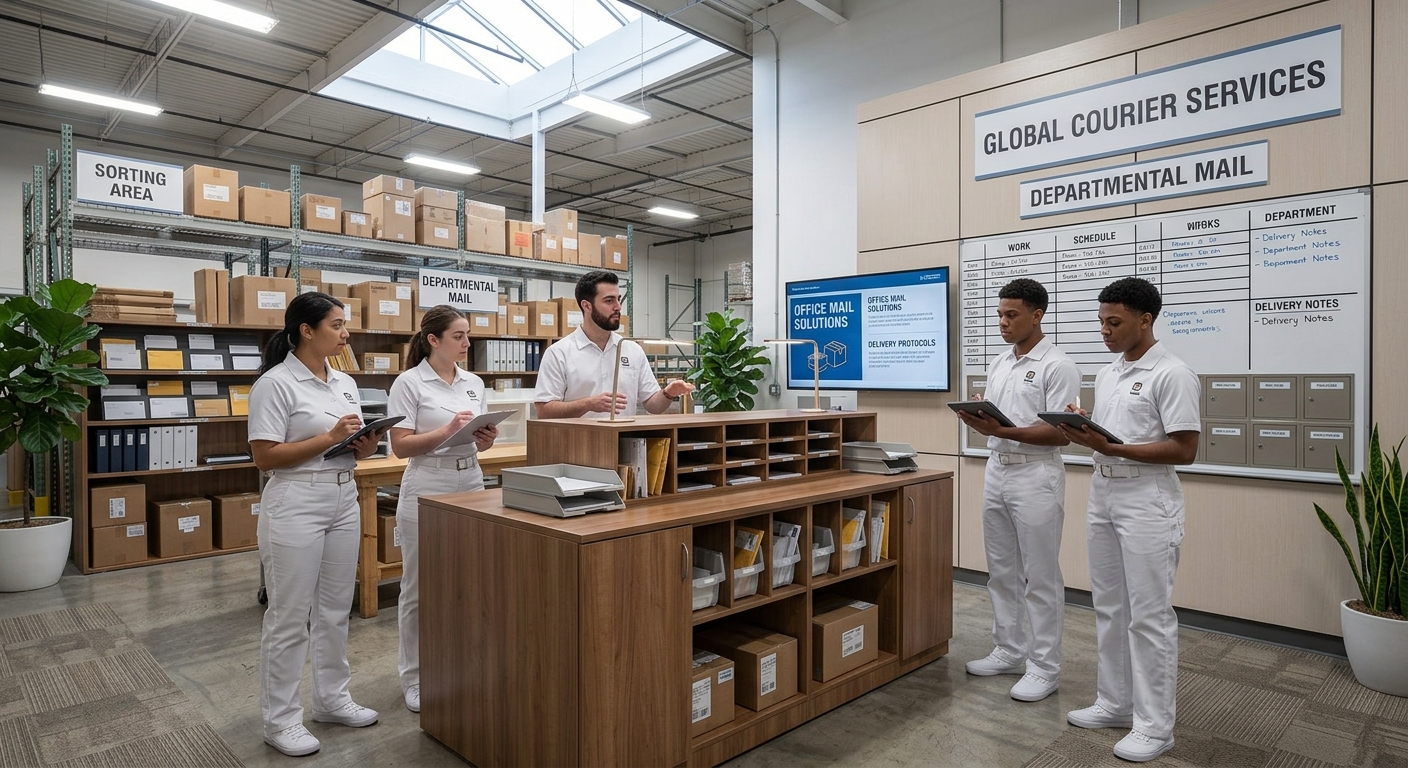
People covering the break may rarely touch the mailroom, so a one-page guide helps them work with confidence. Include these elements:
- The location of the secured drop-off point and exactly how to get in
- The logging steps, with a sample entry
- A contact list covering facilities, security, the delivery point of contact, and after-hours numbers
- Instructions for wet, damaged, or suspicious packages, including a reminder to leave them unopened and call building security
- The escalation path for time-critical or high-value arrivals
- Alarm and lighting procedures for entering and leaving
A short fifteen-minute walkthrough before the break, with a practice log entry, builds familiarity and exposes any unclear steps.
Coordinate With Building Security and Facilities Teams
Building teams often decide what happens to a package before an employee ever sees it. Confirm whether guards or concierge staff accept deliveries, what liability they assume, and where they store them. Share closure dates and the names of covering staff so no one mistakes them for an intruder when they arrive on a holiday.
Cleaning crews, maintenance contractors, and patrol schedules all affect the drop-off point. Make sure the parcel room is either off-limits or covered by a documented sign-in process. Ask facilities about heating setbacks during the break, since low temperatures can damage certain products. A single shared contact sheet that includes building security keeps everyone aligned.
After the Break: Reconciling Packages and Closing the Loop
Run a Reconciliation Against Your Delivery Log
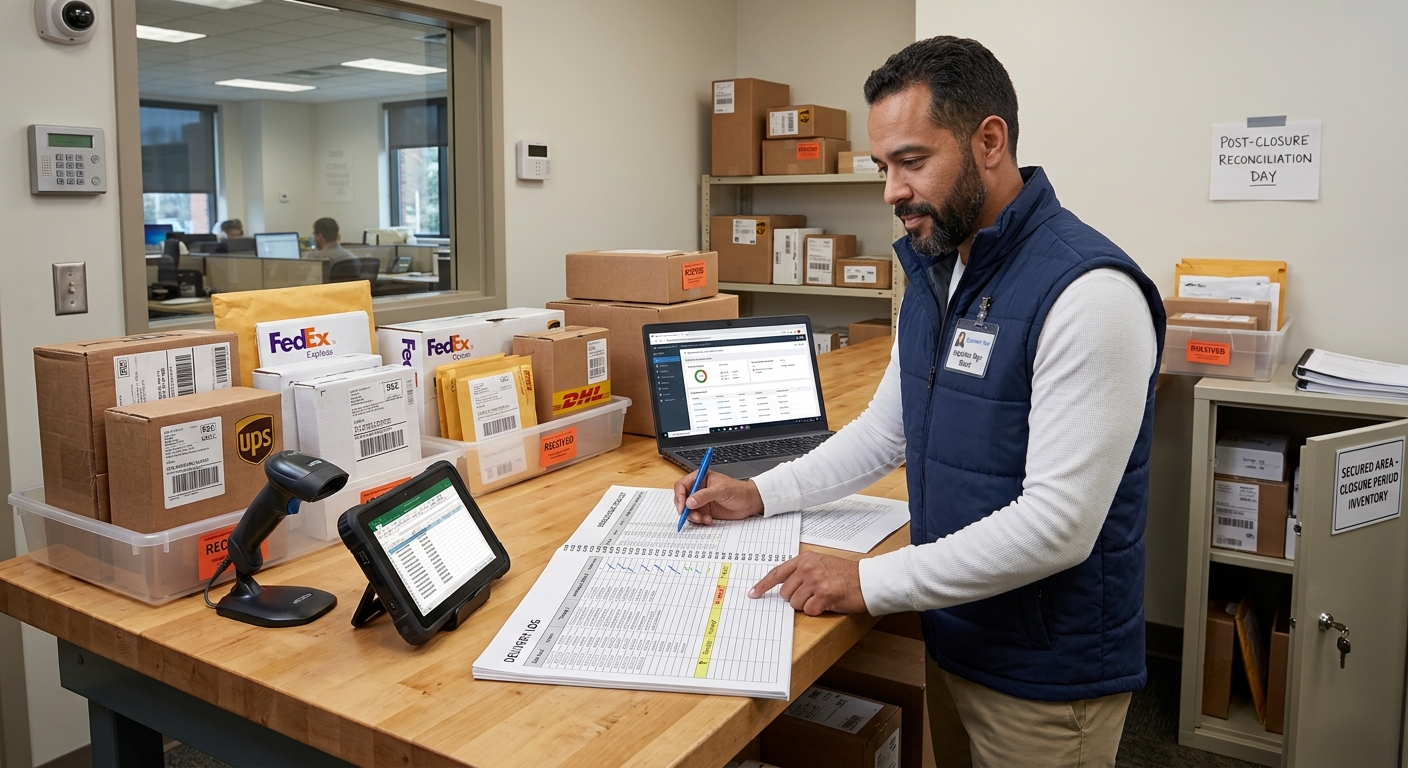
The first working day back is the time to confirm that every package is accounted for. Follow this sequence:
- Compare the delivery log against the physical inventory in the secured area.
- Compare both against carrier tracking histories for the closure period to catch any item marked delivered that never reached the room.
- Investigate discrepancies the same day, starting with the covering staff and building security.
- File carrier claims for damaged or missing items while the claim window remains open.
- Close out the log with a signed confirmation from the person who completed the reconciliation.
Prompt reconciliation also gives the best chance of recovering a misdelivered package, since drivers and neighboring tenants remember recent events more clearly.
Notify Recipients and Prioritize Distribution
Sort the backlog by urgency. Time-critical items go first, followed by high-value packages, then standard parcels and mail. Send recipient notifications as you process items, and record each pickup with a signature or confirmation. Clearing the secured room within the first few days restores normal operations and removes the temptation to let packages linger.
Capture Lessons Learned for Next Year's Closure
A short debrief held within a week of reopening produces the best material for next year's plan. Useful questions include:
- How did actual volume compare with the audit forecast?
- Where did coverage, access, or communication fall short?
- Which carriers performed reliably, and which caused extra work?
- How much time did covering staff spend, and was the compensation appropriate?
- Which playbook instructions needed clarification?
Update the guide and contact sheet while the experience is fresh, and set a calendar reminder for early autumn so planning begins before the busiest weeks arrive.
Making Next Holiday Season's Parcel Handling Calmer and More Secure
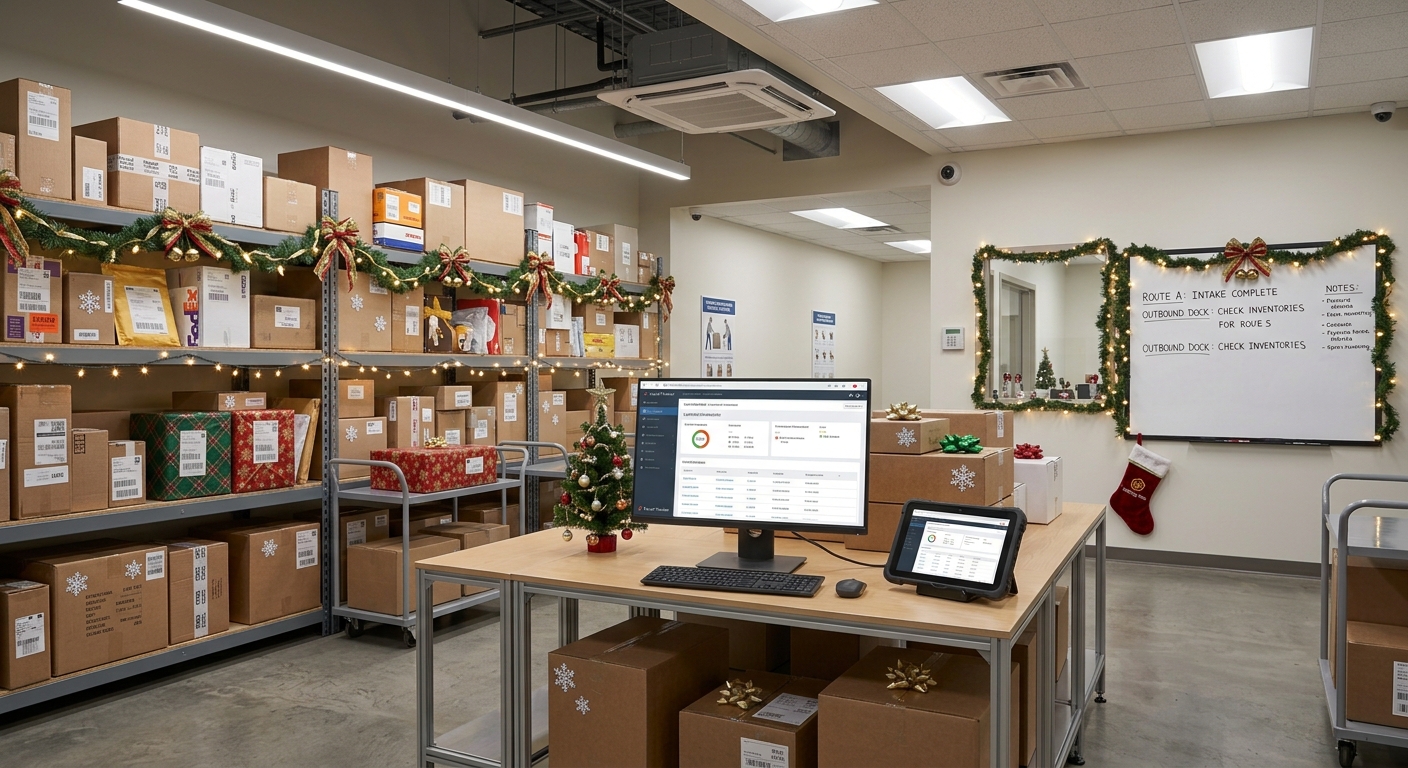
Offices that handle year-end closures well share a few habits. They audit deliveries early, choose a strategy for each shipment, keep a secured drop-off point, record custody at every step, and give covering staff clear instructions. Repeated each year and refined with each debrief, the process delivers more protection than any single tool or tactic.
Digital logging and automated recipient notifications make closure-period tracking easier to manage and audit, especially for teams with several buildings or a high volume of inbound packages. Organizations ready to move beyond paper logs can explore mailroom management software such as Parcel Tracker.
The best time to start is well ahead of the first holiday shipment. A plan finished in October lets the break begin with confidence.
Expert FAQ: Year-End Package Security During Office Closures
How far in advance should offices plan for holiday closure deliveries?
Begin four to six weeks before closure to review carrier holiday schedules, notify vendors, and select a delivery strategy.
What is the safest way to receive packages during an office closure?
Use a locked, camera-covered drop-off room with limited key access, a delivery log, and photos of every package.
How should high-value packages be stored over the holidays?
Keep them in a locked cabinet or cage with camera coverage, tamper-evident seals, and signed handoffs on release.
Why is a chain-of-custody log important during holiday closures?
It documents who held each package and its condition, supports carrier claims, and helps quickly resolve missing items.
What should skeleton staff do when a time-critical package arrives?
Log and photograph it, secure it, then contact the facilities lead through the written escalation path for pickup or redirect.


