
.svg)
The University & PBSA Mailroom Space Crisis: How to Solve Parcel Overcrowding?


University and PBSA (Purpose-Built Student Accommodation) managers face challenges in the mailroom throughout the year. However, the difficulties are amplified during peak times, such as move-in week or the holiday season. This is when the mailroom can get cluttered due to a surge in deliveries. As a result, it becomes a drag on your payroll and a threat to resident satisfaction.
You are paying valuable receptionists, porters, and residential staff to perform low-value, high-error logistics work, essentially providing concierge wages for package sorting. While they’re hunting for parcels, students are stuck in long lines and growing frustrated with delayed deliveries. This can become a bigger problem in terms of wasted resources and negative reputation due to the use of a manual system in a demanding modern world.
Once you realize the real reason for this, you can start figuring out ways to solve parcel overcrowding in your mailroom. The brutal reality is that a slow and outdated parcel management processes are choking your existing physical space.
Getting Everything Delivered
The volume of personal deliveries flowing onto your campus mailroom or into your buildings is a permanent change, solidifying the mailroom as a crucial student amenity.
In the US, online delivery results in the shipment of 22.4 billion packages annually. For residential managers, this translates to almost every person on site receiving intense volume.
The average resident receives 66 packages each year. This flood of goods, combined with aggressive market competition from carriers like Amazon Logistics and a 22.6% growth in independent carriers, means your teams must handle unpredictable schedules and varying package sizes on a daily basis.
Manual Failures and Amplified Retrieval Lag
The most direct cause of parcel overcrowding is retrieval lag, which is the slow speed of packages leaving the shelves. Every minute a parcel sits waiting, it wastes valuable space. This lag or dwell time is a failure of traditional, manual methods:
- Manual Logging Causes Errors and Delays: Staff who are logging parcels by hand or using fragmented systems introduce a lot of human error. These errors (misspelling a name, logging the wrong parcel) mean staff must spend precious time searching for misplaced items, which adds to lag.
- Lancaster University staff reported spending "five to six hours a day, if not more" on manual parcel administration, largely due to time wasted searching and verifying.
- Manual Notification Delays Collection: After logging, staff must rely on archaic and time-consuming methods like manually sending an email, updating a physical bulletin board, or worse, manually looking for the recipient. This process adds hours to the package's dwell time, increasing the retrieval lag and ensuring shelves stay full longer.
The Peak Problem: This existing retrieval lag is then catastrophically amplified when volume spikes, which is a predictable certainty during periods like:
- Move-In/Orientation: Mass delivery of essentials and supplies (August-September).
- Black Friday/Cyber Monday: Major holiday shopping spikes (Late November).
- Pre-Holiday Rush: Shipping of gifts and winter break essentials (Early to Mid-December).
During these peaks, volume can surge by 25% to 30%. This surge amplifies the manual errors and the delay in notification, resulting in massive overcrowding and creating two critical consequences:
- Wasting Money: Your valuable staff are pulled from their primary duties to manage the chaos. Therefore, you pay for them to do less important tasks.
- Damaged Reputation: Service quality plummets. Vita Student struggled with manual logging, which probably got worse on busy periods, affecting student experience when it matters most.
What is a Smart Solution?
Eliminating overcrowding requires both a digital solution to accelerate turnover and physical planning to optimize every square foot of space.
Scan, Notify, Retrieve
Mailroom management software, such as Parcel Tracker, acts as an accelerator. It applies digital speed to maximize the capacity of your existing physical space.
1. Rapid Scan (Maximized Accuracy)

Staff use a mobile app to instantly scan the carrier label on a package upon arrival. The system automatically identifies the recipient using your resident list.
- Benefit: This speed is crucial for preventing volume from piling up before it's even logged. Going back to our previous examples, Lancaster University achieved a 6x faster parcel logging rate. Vita Student achieved 99% logging accuracy, eliminating time wasted on searching for mislogged items.
2. Instant Notify (Zero Lag)
The system automatically sends a notification (email or SMS) to the student the very second the parcel is logged and ready for collection. This immediately starts the collection clock.
3. Secure Retrieve (Accelerated Turnover)
When the student arrives, staff quickly scan their ID or a personalized QR code to verify pickup and instantly close the log.
- Benefit: Fast collection is the only way to meet peak demand. The University of York reported 6x faster collections, and Lancaster University reported 5x faster collections.
Optimizing Physical Layout for Flow
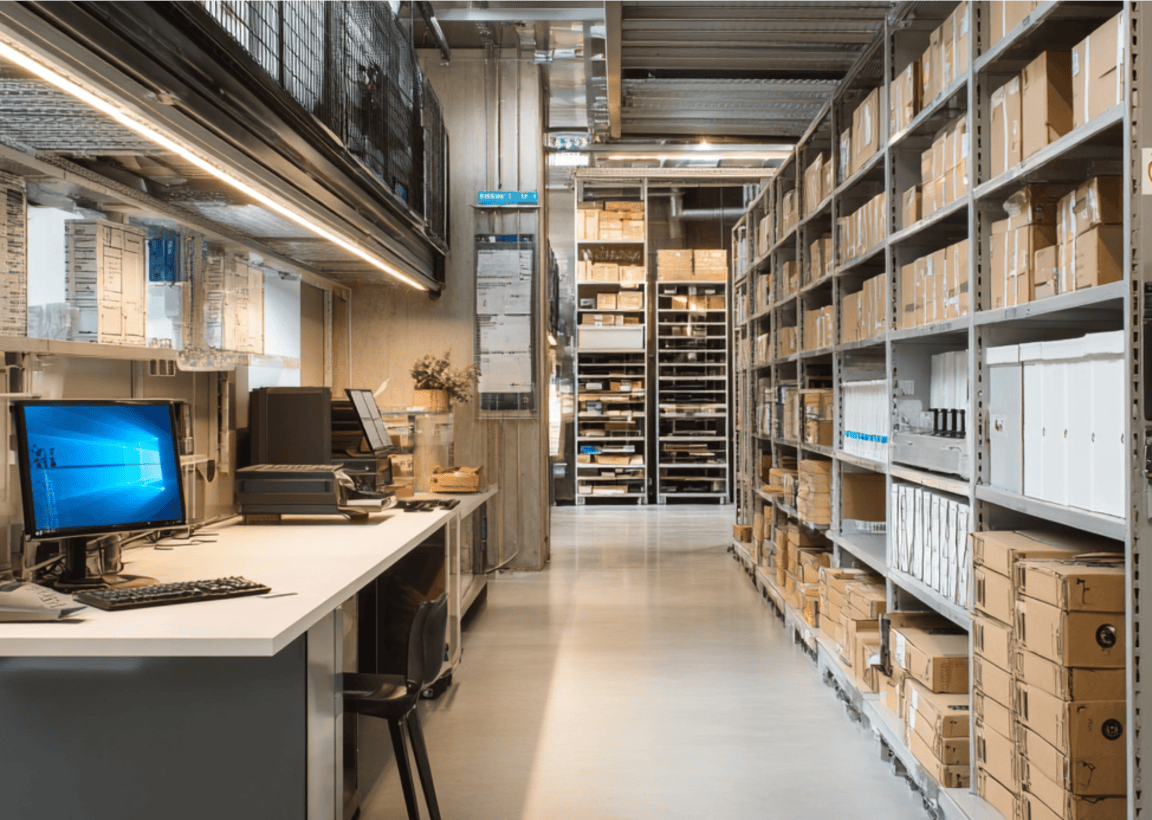
While digital tools speed up the parcel management process, you must design your physical space to support speed. A well-organized layout minimizes retrieval time and maximizes storage capacity, especially when volume surges.
Key layout improvements focus on creating distinct zones:
- Receiving Zone: A dedicated, clutter-free space for staff to quickly log incoming parcels (using a mobile scanner/app) before moving them to storage.
- Storage Zone: Shelving must be clearly labeled and organized in alphabetical, numerical, or size category order. Using vertical space is critical.
- Retrieval Zone: A designated area where students can safely queue and quickly complete the pickup transaction without disrupting staff who are logging new deliveries.
Tip for Small Spaces
If your mailroom is cramped, utilize rolling shelving units or mobile carts. This allows staff to pull the entire shelf/cart containing the requested parcel right to the retrieval window, reducing walking time and making every inch of the storage room easily accessible.
The Time-to-Space ROI
The hours saved through the adoption of mailroom management software are a return on investment (ROI) that frees up staff, reduces payroll strain, and immediately reduces physical clutter.
- Vita Student: Annual savings of approximately 18,434 hours
- Staff are refocused entirely on resident support, not logistics.
- Lancaster University: Annual savings of 7,542 hours
- Significant payroll savings and increased capacity for core duties.
- University of York: Annual savings of 1,300 hours
- Mailroom capacity is consistently maintained, even during periods of high volume.
If the mailroom layout is optimized in these examples, you can expect additional savings.
Data-Driven Decisions for the Future

Solving today’s space problem is important, but preventing tomorrow’s crisis is vital. The software provides an indisputable digital delivery log that is essential for planning and justifying long-term budget requests.
The software gives you powerful data points for decision-makers:
- True Volume & Growth Trends: You can easily demonstrate the scale of the operation (e.g., the University of York scans 340,000 parcels annually) to justify the need for new space or equipment.
- Peak Demand Analysis: The software provides granular, date-specific data to pinpoint the exact days and weeks when peak volume hits your specific campus. This is essential for justifying temporary staffing or the activation of overflow space for events like move-in.
- Infrastructure ROI: By tracking metrics like Average Retrieval Time and Locker Usage/Turnover Rate, you can provide data-driven justification for investing in physical assets and prove their effectiveness after installation.
Making Space in the University or PBSA Mailroom
The constant pressure on mailrooms is not going away. For University and PBSA leaders, implementing a smart mailroom management solution is a necessity. This combination of digital speed and intelligent physical design is the most cost-effective way to maximize existing space, eliminate labor waste, and elevate the student service experience, even when the inevitable peak volume hits.


.svg)

