
.svg)
What is Dormant Mail/Parcel Policy?


The increase in package delivery has transformed residential and commercial mailrooms from simple drop-off points into complex last-yard delivery hubs. While the focus is often on efficient intake, the management of items that are never claimed presents a persistent issue.
This is where the dormant mail/parcel policy becomes an essential, non-negotiable component of modern mailroom management and property management.
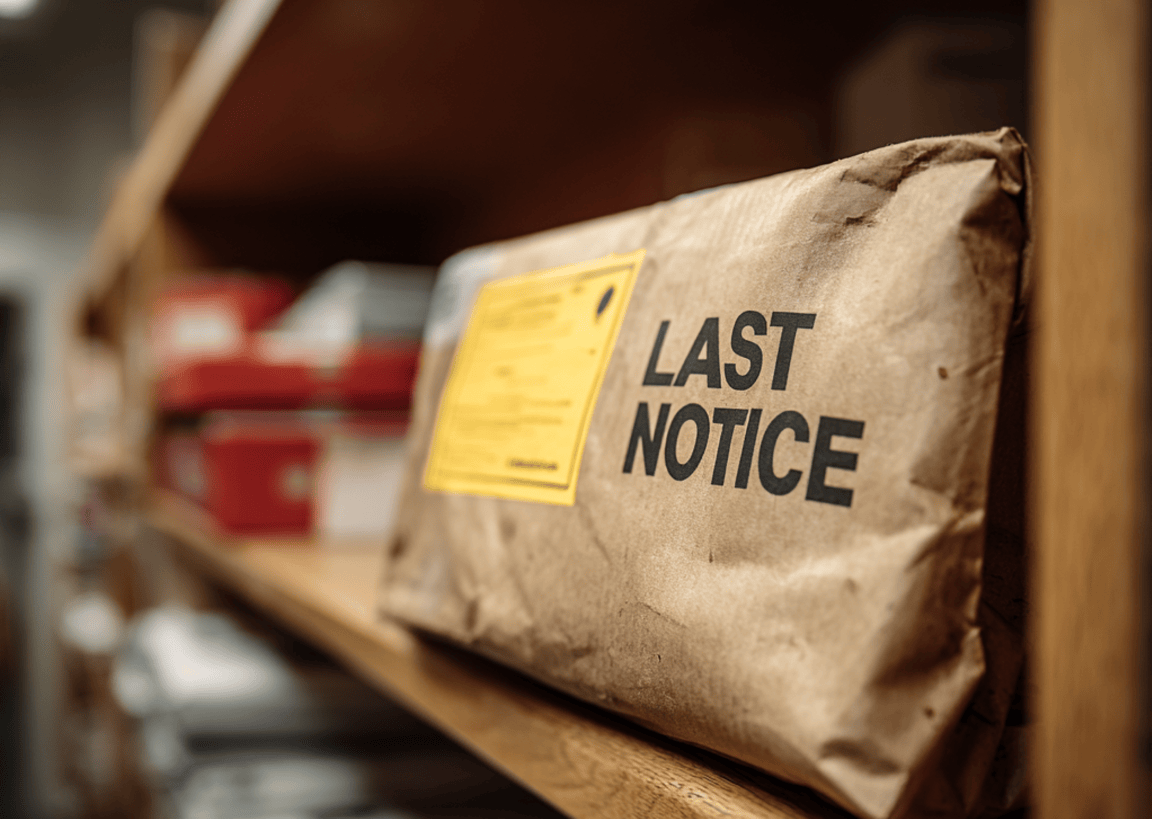
Dormant Parcel Policy
A dormant mail/parcel policy is a formal set of written rules and procedures that govern the handling, tracking, and eventual disposition of packages that remain uncollected by the intended recipient after a specified notification period.
It answers the question, “What happens to the package the resident never picks up?”
For facilities that manage high volumes of mail and parcels (such as university dormitories, apartment complexes, or corporate offices), this policy is a vital tool for risk mitigation and liability control.

Importance of Dormant Mail/Parcel Policies
Failing to address the issue of unclaimed mail results in liabilities. A well-defined policy addresses several key logistical challenges:
1. Space and Operational Efficiency
Unclaimed packages accumulate rapidly, eating into finite mailroom square footage and creating clutter that can pose fire or safety hazards. A policy ensures items cycle out of the mailroom, freeing up space and staff time currently dedicated to managing stale inventory.
2. Risk Mitigation and Liability
Every unclaimed package represents a liability for the property manager. By clearly defining and adhering to a holding period and disposition process, the organization limits its legal and financial responsibility for abandoned property.
3. The "End of Semester" Challenge
The most critical time for any mailroom, especially those serving universities, is the end of a semester or a lease term. With residents moving out, a surge of unclaimed packages is inevitable. The dormant mail and parcel policy provides a clear, defensible timeline that aligns with tenancy agreements, ensuring these items are properly dealt with before or immediately after the recipient vacates.
Components of an Effective Dormant Parcel Policy
A solid policy hinges on two elements: a clear notification cycle and a legally sound disposition protocol.

Defining the "Dormant" Clock
The process begins immediately upon intake. The policy must clearly state:
- The Initial Hold: The standard pickup period (e.g., 7 days).
- The Follow-Up: The timeline for the first and second reminders (e.g., Day 7 and Day 14).
- The Dormant Status: The exact point at which the package transitions from "unclaimed" to "dormant" (often 30 days after arrival). This is when the final disposition clock begins ticking.
Required Communication Cycle
The success of the policy depends on proving that the recipient was duly notified. The notification cycle must be documented and typically includes:
- Initial Notification: Sent upon package check-in.
- First Reminder: A gentle follow-up (e.g., Day 7).
- Final Dormant Notice: Formal communication (e.g., Day 30) explicitly stating that the item has been designated as dormant and that failure to retrieve it by a specific date will result in its disposition according to policy.
The Disposition Protocol
Once the final claim deadline passes (often 60 to 90 days from arrival), the mailroom must follow a standardized disposition process:
- Return to Sender (RTS): The preferred method for items with clear return labeling. This is the first step for most packages.
- Secure Storage/Archiving: High-value items, or those lacking clear return information, may require a final period of secure storage (e.g., 6–12 months) before final action, depending on state abandonment laws.
- Donation or Disposal: The final step for low-value, unidentified, or unreturnable items. This must be carried out in a way that respects privacy (e.g., shredding or documented disposal) and maintains a clear audit trail.
Policy Implementation and Best Practices for Property Managers
Execution is key. Even the best-written policy is useless without consistent application and staff buy-in.
- Audit Trail is Mandatory: From the date of initial parcel notification to the date of final disposition, every step must be meticulously logged. This documentation is your primary defense against liability claims.
- Recipient Buy-in: Embed the policy into all resident agreements, leases, and student handbooks. Clear communication upfront shifts responsibility to the recipient.
- Standardized Training: Ensure all front-desk and mailroom staff are fully trained on the precise notification intervals and the step-by-step disposition procedure. Consistency across all managed properties is paramount.
From Manual to Digital Management

A robust dormant mail and parcel policy is the definitive guide for efficient mailroom and parcel operation. However, the manual administration required to manage hundreds of individualized timelines is overwhelming and prone to error. These include tracking notifications, calculating the exact "dormant date," and logging audit trails.
This is where specialized mailroom management software eliminates the pain point. Modern systems can automate the entire compliance workflow. They track every step, send automated and escalating reminders, provide the exact date a package becomes dormant, and generate necessary audit reports instantaneously.
For properties and organizations seeking to streamline their entire mailroom lifecycle, a digital system is essential for minimizing liability, maximizing space, and ensuring policies are flawlessly executed.
Learn how to manage your mailroom efficiently and ensure policy compliance through automation with the help of Parcel Tracker.


.svg)

