15 Security Questions to Ask a Mailroom Software Vendor

A thorough security review of mailroom management software covers four areas: how recipient data is handled, whether every parcel event leaves an audit trail, how reliably the platform stays available, and which certifications back up the vendor's claims. The 15 questions below follow that order. Use them on a vendor call or send them as a written questionnaire, and ask for a supporting document with each answer. For a shorter spec-sheet version, see this guide to essential compliance specs for parcel management software.
Why Parcel Management Platforms Deserve a Full Security Review
A mailroom platform holds recipient names, work emails, phone numbers, building locations, signatures, and delivery photos. Together, those records show who receives what, from whom, and when. For government, healthcare, and legal teams, that delivery pattern is sensitive in its own right.
IBM's 2026 research puts the global average cost of a data breach at $4.99 million, up 12% from the previous year. That figure is useful when a procurement team asks why a parcel tool needs a security questionnaire. Mailroom management often sits outside IT's usual purchasing path, so a structured checklist lets IT, compliance, and the mailroom lead assess the same facts.
Recipient Data Handling: Five Questions on What Gets Collected, Stored and Deleted
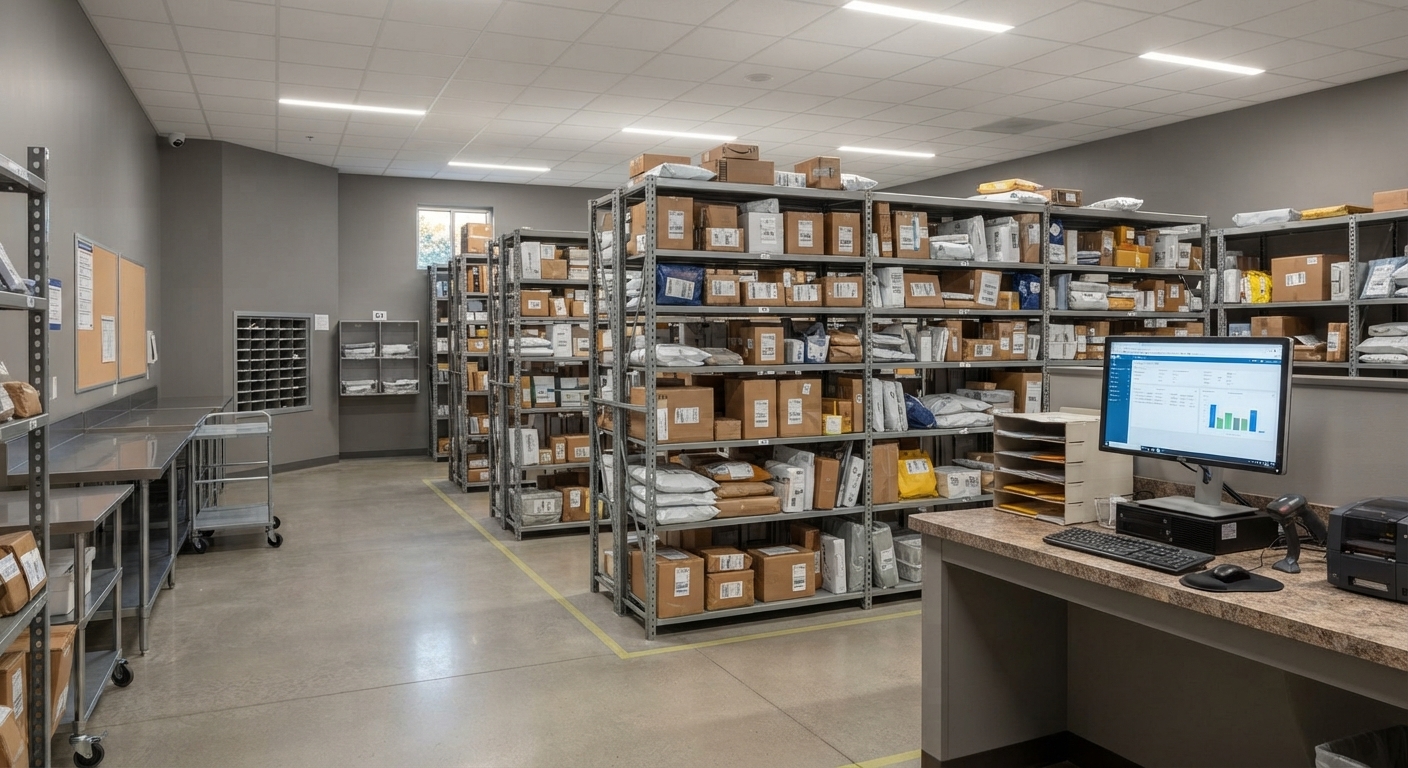
These five questions establish how much recipient data the platform holds and how carefully it is kept.
- Which recipient fields does the platform collect, and can we limit them? A strong answer describes a configurable data model in which fields such as phone numbers are optional.
- How is data encrypted at rest and in transit? Look for named standards, such as AES-256 for stored data (one of the key lengths NIST specifies for AES) and TLS 1.2 or higher for transfers (the baseline NIST requires of government TLS servers).
- Where is our data hosted, and can we choose the region? A named cloud provider and regional options help you match data residency rules such as GDPR.
- How long is data retained, and what happens when the contract ends? Look for configurable retention periods, a data export option, and confirmed secure deletion.
- Which sub-processors handle our data? A published list with advance notice of changes is the standard to expect.
Access Control and Audit Trails: Five Questions on Who Handled Each Parcel and When

When a parcel goes missing or a recipient disputes a handoff, the log settles the matter. These questions test how complete that log is and who can reach it.
6. Does the platform record every parcel event? Check-in, notification, collection, dispatch, and site-to-site routing should each carry a timestamp and a staff identity.
7. What proof of collection is captured? Signatures, photos, and timestamps tied to each parcel record are the benchmark.
8. Which authentication options are supported? Single sign-on through SAML or OpenID Connect, multi-factor authentication, and role-based access let IT manage permissions centrally and remove access the day someone leaves. A vendor's enterprise security features page should spell these out.
9. Are administrator and configuration changes logged too? A trail that covers permission and settings changes helps investigators as much as parcel history does.
10. Can logs be searched, exported, and retained to match our records policy? Searchable records and exports that fit your retention schedule make audits far easier.
Uptime and Incident Response: Three Questions on Keeping Parcels Moving When Systems Falter

Couriers keep arriving whether the software is available or not, so uptime deserves written commitments.
11. What uptime does the service agreement commit to, and is there a public status page? Convert the percentage into hours. A 99.9% commitment allows about 8.8 hours of downtime a year, while 99.95% allows about 4.4 hours (calculated from 8,760 hours in a year). Ask what remedies apply when the target is missed, and look for a live status page with incident history.
12. What do front-desk staff do if the platform is unreachable? A documented fallback process, plus a plan for syncing records afterward, keeps parcels logged during an outage.
13. How quickly will you tell us about a security incident? Under UK GDPR, a reportable personal data breach must go to the ICO within 72 hours of becoming aware of it. Quick supplier notice helps you meet that window. UK government guidance on breach response for departments suggests supplier contracts should require notification within 12 to 24 hours of a suspected breach. Get the vendor's committed timeline in writing. Teams outside the UK should check their own regulator's window.
Certifications and Independent Testing: Two Questions That Back Claims With Evidence
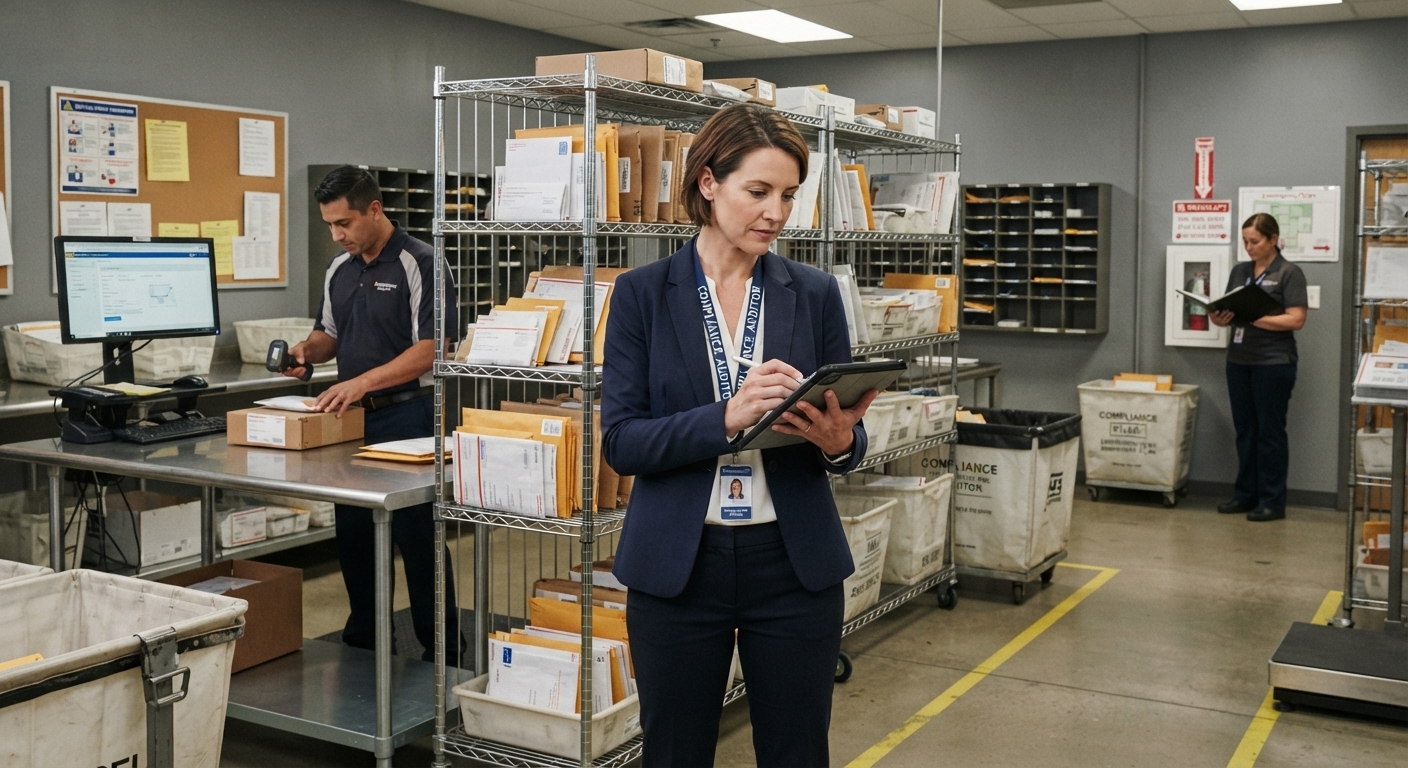
Certificates give buyers third-party proof. ISO notes that organizations decide for themselves whether to pursue ISO/IEC 27001 certification, and that certification is one way to show customers they can manage information securely. A vendor that holds one has made a deliberate investment.
14. Which certifications do you hold, and can we see the certificates? ISO/IEC 27001 is the recognized benchmark for an information security management system. For UK buyers, Cyber Essentials is the baseline the government recommends for organizations of all sizes. Ask for the certificate, its scope, and its expiry date.
15. Do independent testers assess the platform, and will you share the results? Annual penetration testing by a recognized firm, a summary report under NDA, and a responsible disclosure route are reasonable expectations.
Scoring the Answers: A Simple Way to Compare Vendors and Spot Gaps
Rate each of the 15 answers as met, partly met or not met. Weight the recipient data and audit trail questions most heavily, since those carry the greatest compliance consequences. Share the scored sheet with IT, compliance, and the mailroom lead so the decision reflects all three views.
These responses merit a follow-up:
- Security details offered verbally and never in writing
- Certifications mentioned without a certificate to show
- No named hosting region or sub-processor list
- An uptime promise with no SLA or status page behind it
Putting the Checklist to Work: How Parcel Tracker's Published Security Details Compare
Run this checklist early in vendor selection and keep the written answers on file for audits and renewals. It also gives you a clear baseline for comparing mailroom management software side by side.
Teams building a shortlist can use Parcel Tracker as a reference point, because its security posture is published openly. Its Trust Center lists ISO 27001 certification, Cyber Essentials accreditation and GDPR compliance, along with annual CREST-certified penetration testing. It also covers hosting on Microsoft Azure in the UK, US, Germany and Canada, and single-tenant deployments on request for government and enterprise buyers. A public status page shows live platform health, and government and defense organizations appear among the customers listed on its site. IT reviewers can find more on the IT solutions page, and the platform privacy policy covers how it handles recipient data.
Next step: Visit the Trust Center to review the details, or request a security certificate (ISO 27001, Cyber Essentials, the penetration test report, or the system architecture document) from the same page.
Expert FAQ: Quick Answers on Vetting Mailroom Software Security
What should IT teams check first when reviewing mailroom management software?
Check encryption, hosting region, data retention, and certificates first, since they show how recipient data is protected.
Why do audit trails matter in parcel management?
They record who handled each parcel and when, helping resolve collection disputes and support compliance reviews.
How long do UK organizations have to report a notifiable personal data breach?
Without undue delay and within 72 hours of becoming aware, if the breach meets the reporting threshold.
What does ISO 27001 certification show about a mailroom software vendor?
An independent certification body has assessed the vendor's information security management system against the international standard.
How can buyers confirm a vendor's security claims?
Request certificates, penetration test summaries and architecture documents in writing, then compare them against the vendor's published statements.