
.svg)
Amazon Prime Day Survival Guide for Mailroom Managers


The annual e-commerce phenomenon of Amazon Prime Day brings a massive influx of packages to doorsteps worldwide. However, the true frontline of this logistical wave is not the delivery truck, but the local receiving desk. Whether managing corporate offices, high-rise residential complexes, or university campuses, peak shopping events create a massive operational challenge. Traditional manual logging methods fail when daily delivery numbers double overnight, creating massive backlogs and frustrated recipients.
A proactive approach turns this peak delivery chaos into a smooth, structured operation. By optimizing space, communication, and digital infrastructure, any facility can handle the heavy influx efficiently. Modern mailroom management system strategies provide the tools needed to keep incoming items moving seamlessly from the loading dock to the final recipient. Understanding the fundamental mechanics of comprehensive parcel management allows property managers and administrative teams to safeguard their workflows ahead of the summer rush.
What is a Mailroom Package Surge?
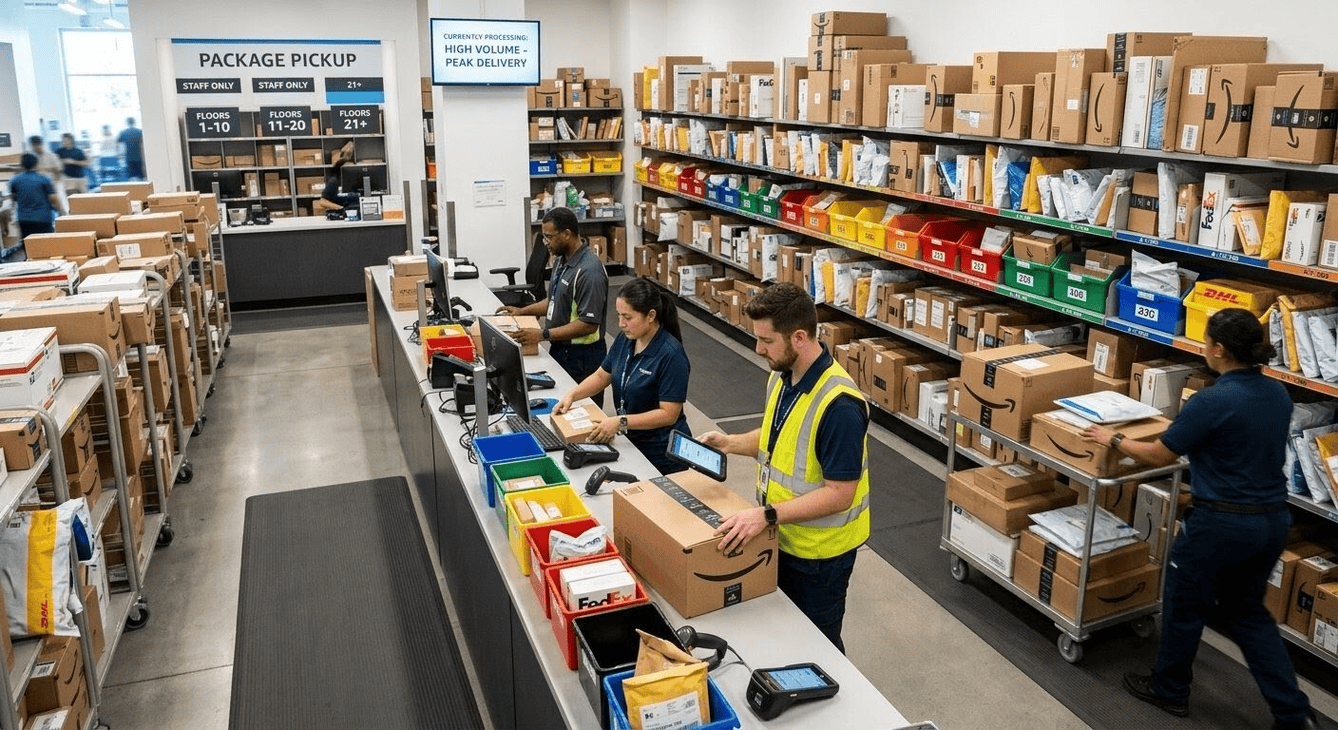
A mailroom package surge is a rapid, temporary increase in inbound delivery volume, typically triggered by major online shopping events. Managing this influx requires automated sorting workflows, agile spatial allocation, and real-time digital tracking to prevent operational bottlenecks across corporate, residential, and campus mailrooms.
How Do You Forecast Mailroom Delivery Volume for Prime Day?

Successful peak season preparation relies heavily on accurate data forecasting. Reviewing carrier logs from previous shopping events allows facilities to predict incoming package volumes with high accuracy. Knowing exactly when delivery trucks arrive helps managers build efficient staff schedules, ensuring adequate coverage during peak morning and afternoon drop-offs.
Evaluating your capacity involves a few critical steps:
- Calculate historical peaks: Review total package counts from past major sales events to set a benchmark.
- Determine maximum storage thresholds: Measure total shelving square footage against predicted inbound volumes to identify storage limitations early.
- Establish carrier windows: Map out arrival times for major couriers to align staff scheduling with heavy drop-off periods.
This data-driven preparation gives teams a clear blueprint, allowing them to scale up operations before the first delivery truck even arrives. Switching to the industry's best mailroom software platforms ahead of time ensures these analytical insights are automatically captured and ready for review.
What Are the Best Ways to Organize an Overflowing Mailroom?

Spatial efficiency is critical when handling a major e-commerce surge. Standard shelving fills up rapidly, making flexible zoning strategies a necessity. Setting up temporary high-density storage zones in adjacent common areas, wide corridors, or secure lobbies creates the extra physical space required to hold oversized boxes and bulk shipments safely.
An organized space relies on an intuitive, visible layout design. Consider utilizing these comprehensive organizational strategies to maximize your available square footage:
- Implement Visual Color-Coded Shelving: Categorize packages visually by building, floor, department, or unit number to help staff find specific items instantly during pickups.
- Execute Size-Based Sorting Protocols: Separate oversized pallets, medium boxes, and small poly-mailers into distinct zones to maximize shelf depth and prevent delicate items from getting crushed.
- Establish Dedicated Courier Unloading Zones: Create a specific, clear area near the entrance solely for delivery drivers to drop off new loads, ensuring incoming workflow does not block outgoing traffic.
- Utilize Mobile Nesting Racks: Deploy rolling carts and temporary wire shelving that can be rolled into place during peak hours and packed away tightly once the surge subsides.
- Maintain Strict Path Delineation: Keep main walking aisles entirely clear of boxes using floor tape, which minimizes retrieval times, prevents tripping hazards, and ensures absolute safety.
- Create an Escalation Area for Problem Parcels: Set up a separate "unknown recipient" or "damaged label" station so that problematic packages do not stall the main intake line.
How Can Mailrooms Speed Up Package Pickup Times?
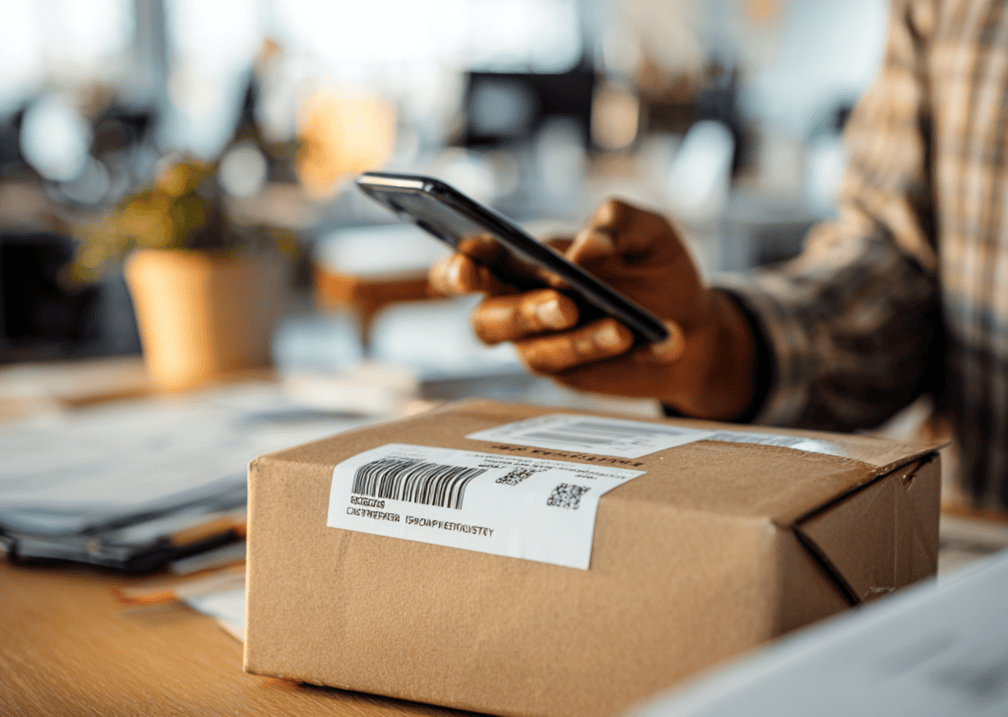
A mailroom only functions efficiently if recipients pick up their items quickly. When incoming volume doubles, the speed of outgoing packages must increase to match it. Sending immediate, automated notifications via text and email prompts recipients to collect their items promptly, keeping storage spaces open for the next delivery wave.
To manage the heavy foot traffic, establish a dedicated fast-track collection counter specifically for quick pickups, which separates standard collections from complex package inquiries. Incorporating secure self-service smart lockers allows residents or students to retrieve items 24/7, effectively spreading out the collection rush. For high-density corporate environments, implementing staggered pickup windows based on department or floor numbers further balances the flow of people and prevents long lines during busy afternoon hours.
Why Should Facilities Switch to Digital Mailroom Management Software?

Manual logbooks and paper clipboards cannot keep pace with modern e-commerce demands. Transitioning to a digital platform replaces slow handwritten logging with smart mobile scanning applications. Using modern mailroom assistant apps allows staff to scan shipping labels instantly, automatically capturing the recipient's name and carrier details in seconds.
Digital tracking tools optimize every step of the internal supply chain. High-performance delivery tracking software maintains a secure, digital chain of custody from the moment a courier drops off a box to the final electronic signature. This end-to-end visibility eliminates lost items, reduces internal inbound friction, and provides management with valuable performance metrics.
Turning Peak Delivery Chaos into Smooth Operations

The delivery surge from major shopping events does not have to result in messy lobbies and missing packages. Combining proactive space planning, fast notification systems, and smart digital workflows allows managers to master high-volume periods easily. Implementing the right internal infrastructure ensures that operations remain organized, efficient, and stress-free for both staff and recipients.
Upgrading your technical workflow is the most effective way to secure long-term operational success. Handle the upcoming delivery boom seamlessly by integrating Parcel Tracker into your facility today to experience fast, automated package management firsthand.
Expert FAQ
Q1: How do you handle a sudden mailroom package surge?
A: Optimize spatial allocation, set up designated surge zones, and use automated scanning software to process incoming high-volume deliveries quickly.
Q2: What is the most efficient way to log inbound parcels?
A: Use digital mailroom software with optical character recognition scanning to log courier packages instantly and reduce sorting bottlenecks.
Q3: Why do mailroom collection delays happen during Prime Day?
A: Delays happen due to manual logging systems, slow recipient notifications, and inadequate high-density storage for major peak delivery influxes.
Q4: How can university mailrooms reduce long package pickup lines?
A: Implement automated multi-channel SMS alerts and establish fast-track pickup counters to accelerate student package collection times significantly.
Q5: What software feature ensures secure parcel chain of custody?
A: Real-time digital tracking and electronic signature capture ensure secure proof of delivery from courier drop-off to final recipient pickup.


.svg)

