
.svg)
Last-Yard Mailroom Management Problems and How to Fix Them?


Last-yard mailroom management is the internal process of receiving, sorting, and distributing inbound packages from a building's central drop-off point to the final recipient's hands. It represents the final, highly vulnerable link in the corporate supply chain.
The global supply chain guarantees delivery across oceans and continents, yet packages routinely stall inside the very buildings where recipients work. The rise of corporate e-commerce, paired with fluid hybrid schedules, turns simple inbound receiving into an operational bottleneck. When packages arrive at a front desk, the external carrier marks the asset as delivered. However, the internal journey has just begun, and without formal infrastructure, operational efficiency plummets.
Organizations must understand the difference between basic receiving and structured operational oversight. To build a framework that scales, teams should define workflows by reviewing comprehensive guides on mailroom management and implementing structured tools designed for parcel management.
What Are the Main Last-Yard Mailroom Problems and How Do You Fix Them?

- Problem 1: Manual Data Entry Causes Typos and Delays
- The Issue: Logistics personnel spend hours writing recipient names by hand in logbooks or typing carrier tracking numbers into legacy spreadsheets. This repetitive input causes spelling errors, delays pick-up schedules, and stalls workplace productivity.
- The Solution: Smartphone OCR Scanning. Staff use a mobile application powered by optical character recognition to scan carrier labels. The system reads names instantly, eliminates typos, and logs information in seconds.
- Problem 2: Lost Packages Due to Poor Chain of Custody
- The Issue: Couriers drop packages at reception desks, but items vanish internally when shifted between shifts or storage rooms. Without a digital signature or accountability log, identifying the point of failure remains impossible.
- The Solution: Digital Proof of Delivery. The mailroom software requires a secure QR code scan or signature at final checkout, establishing strict internal compliance and keeping assets accounted for from dock to desk. Review the essentials of chain of custody to secure your workflow.
- Problem 3: Wasted Time Handling "Where Is My Parcel?" Inquiries
- The Issue: Recipients crowd front desks or flood support channels with messages checking delivery status. Mailroom operators waste valuable hours manually cross-checking logs to confirm arrival details.
- The Solution: Automated Alerts. Deploy an automated alert framework that transmits immediate pickup alerts the instant a parcel gets scanned into storage. Explore how to set this up by understanding automated parcel notification.
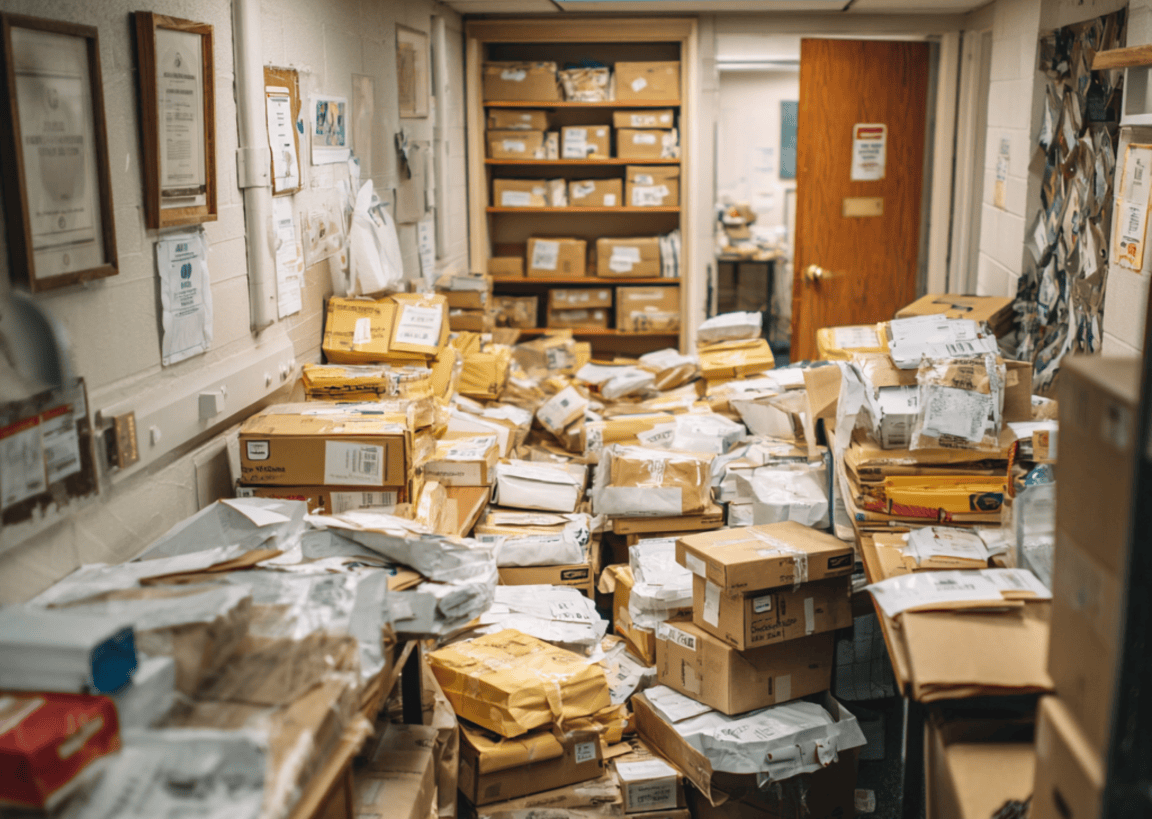
- Problem 4: Storage Overcrowding From Unclaimed Deliveries
- The Issue: Forgotten boxes sit on shelves for weeks, taking up critical storage real estate. Cluttered rooms create safety hazards, slow down sorting speeds, and increase asset damage risks.
- The Solution: Automated Reminders. Configure systematic, automated follow-up messages that prompt recipients to retrieve stale packages, ensuring shelves remain clear for fresh arrivals.
- Problem 5: Inability to Match Names to Fluid Hybrid Work Schedules
- The Issue: Mailrooms receive items for professionals who are working remotely on that specific day. Parcels sit exposed or occupy active sorting bins because the facility lacks insight into staff attendance.
- The Solution: Dynamic Routing Notification. Logistics systems sync with workplace schedules, notifying operators of a worker's remote status so they can immediately route the parcel to a holding area or flag a forward request.
- Problem 6: Difficulty Tracking High-Value, Perishable, or Urgent Assets
- The Issue: Time-sensitive lab samples, perishable catering, or high-value IT equipment mix into standard text mail stacks. Delays cause spoilage or financial losses for critical hardware investments.
- The Solution: Custom Item Tagging. Operators tag individual incoming items with unique priority categories during intake, sorting high-value and perishable goods into distinct handling paths.
- Problem 7: Complete Lack of Data Analytics and Volume Visibility
- The Issue: Facilities managers operate blindly without historical tracking data on peak delivery hours, space utilization metrics, or courier performance records. This makes staff scheduling inefficient.
- The Solution: Centralized Analytics Dashboard. Use tracking software dashboards to monitor processing cycles, spot volume trends, and adjust staffing hours dynamically to manage daily delivery spikes.
What Are the Costs of Failing to Resolve These Issues?

Operating an unoptimized mailroom leaks revenue through lost productivity. When skilled professionals spend twenty minutes looking for a missing office supply box or an IT replacement asset, core projects stall. Over time, these brief operational delays add up to significant financial losses across large corporate offices.
Security risks present an even larger financial threat. High-value client contracts, prototype electronics, or internal hardware left unmonitored at reception desks invite data breaches and asset loss. Fixing the final yard protects companies from liabilities and prevents expensive asset replacement costs.
Is Your Mailroom Ready for Modern Inbound Logistics?
The final yard shouldn't be the weakest link in your operations. Stop wasting time on manual entry and lost packages by upgrading your internal workflow to an automated system. Transform your workplace logistics today by switching to Parcel Tracker.
Expert FAQ
What is last-yard mailroom management?
Last-yard mailroom management is the internal tracking and distribution of packages from a building's reception to the final recipient.
Why do packages get lost in corporate mailrooms?
Packages get lost because manual paper logs and spreadsheets fail to create a secure, searchable internal chain of custody.
How does automated mailroom software prevent delivery delays?
Automated software uses smartphone scanning to log arrivals instantly and trigger automatic text or email pickup notifications to recipients.
What is digital proof of delivery in internal logistics?
Digital proof of delivery requires recipients to sign or scan a QR code, creating a secure checkout audit trail.
Why should businesses replace manual mailroom data entry?
Businesses must replace manual entry because smartphone OCR scanning reduces logging time by 80% and eliminates human data errors.


.svg)

