.svg)
Optimizing Office Mailrooms: Best Practices for Facility Managers


Modern office mailrooms must adapt to rising package volumes and hybrid work models. Package management is crucial for seamless business continuity, yet the core challenge remains handling high delivery volumes without increasing staff workload. Industry data suggest that average U.S. office occupancy remains slightly above 50%, leading to unpredictable pickup patterns as workers rotate through the office. At the same time, global logistics demands continue to surge, with annual corporate and consumer parcel volumes exceeding 190 billion units. Relying on manual workflows or paper logs under these conditions creates severe inefficiencies and delays.
Transforming a traditional sorting room into a high-performance hub requires combining smart physical layouts with advanced technology. Research highlights that organizations implementing comprehensive mailroom automation report productivity increases of 60% to 75%. This guide provides facility managers with actionable strategies to optimize workflows, minimize lost packages, and elevate workspace efficiency.
1. Standardizing Incoming Mail and Parcel Workflows
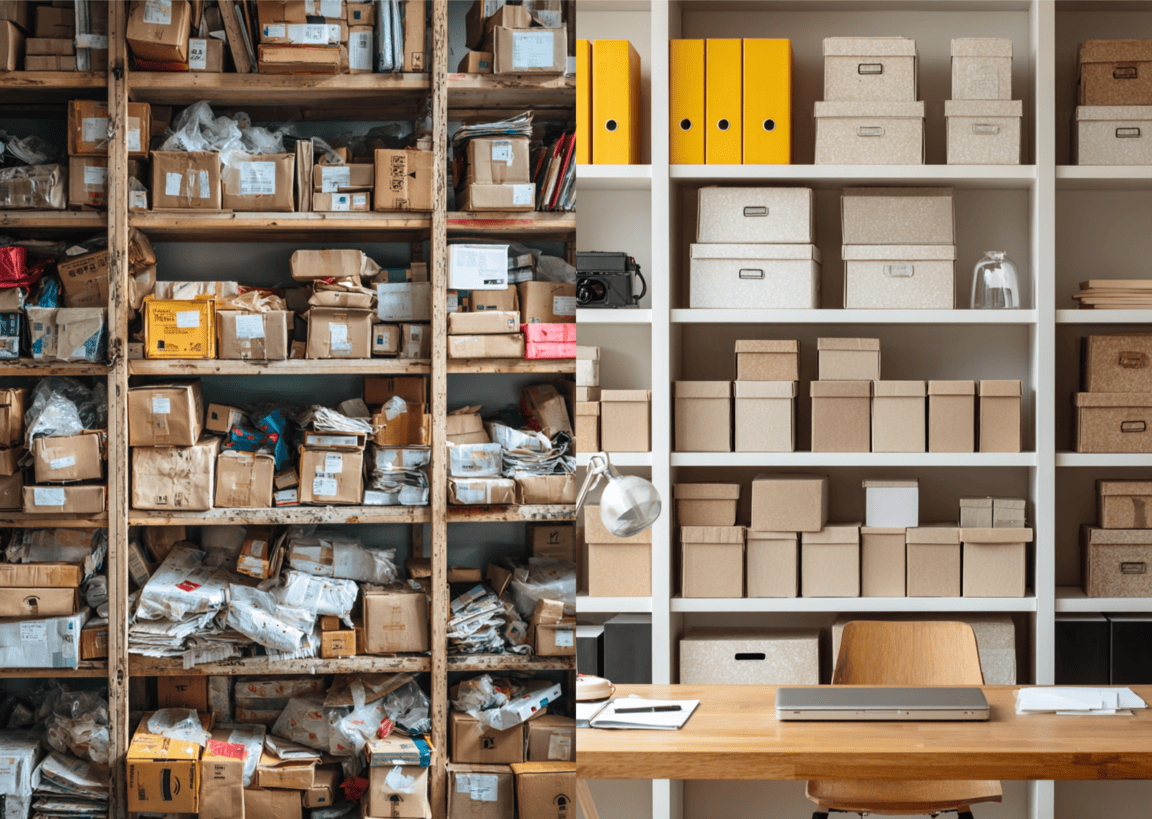
Establishing structured receiving protocols provides couriers with dedicated drop-off zones, keeping the receiving bay orderly. Moving away from manual paper logs toward immediate digital recording prevents lost items from the moment they arrive. Visual sorting systems, such as clear labeling and color-coded bins, help staff categorize mail by department or floor swiftly, ensuring an organized system during peak delivery hours.
Efficiency begins the moment a delivery vehicle arrives at the loading dock. By establishing a designated courier drop-off zone, facility managers eliminate the chaos of delivery personnel wandering through the building. The receiving desk should feature clear signage and a spacious countertop to allow couriers to unload items without obstructing walkways.
Once packages are dropped off, staff must log them immediately to create an accurate timestamp. Real-world applications show the impact of speed; for instance, the logistics operation at Grand Concierge achieved a 50% faster parcel processing time simply by ditching manual steps at intake. Sorting incoming items into color-coded bins based on floor numbers or department codes allows the mailroom team to process high volumes systematically, reducing transit times within the facility.
2. Optimizing Physical Space and Layout

A well-designed physical footprint directly impacts processing speed and employee comfort. Maximizing the square footage of your sorting hub involves a strategic approach to spatial design:
- Ergonomic Sorting Stations: Position adjustable-height desks and anti-fatigue mats at primary sorting locations. Keep high-frequency tools, such as scanners and tape dispensers, within easy arm's reach to minimize repetitive straining motions.
- Clear Traffic Lanes: Maintain a minimum pathway width of four feet throughout the facility. This allows wide mail carts and multiple team members to pass simultaneously without causing bottlenecks or safety hazards.
- Vertical Storage Solutions: Utilize heavy-duty, adjustable vertical shelving to maximize storage footprint. Store oversized or heavy boxes on lower shelves, reserving eye-level space for standard parcels and top shelves for lightweight, low-priority items.
- Secure Staging Areas: Construct a dedicated, locked cage or high-security closet equipped with video surveillance. This area houses sensitive legal documents, electronics, and high-value personal assets until the recipient signs for them.
3. Modernizing Notifications and Pickups

Automated recipient alerts keep employees informed by sending instant notifications the moment their package is logged. Offices can implement contactless retrieval options, such as smart lockers or self-service shelves, to allow secure and independent package pickup. Setting systematic reminder schedules for uncollected items prevents mailroom overcrowding and keeps storage areas clear.
The traditional method of calling or emailing employees manually consumes hours of administrative time. Modern facilities utilize automated notification workflows that dispatch real-time SMS alerts or workplace chat notifications containing precise pickup instructions.
The acceleration in pickup speeds is substantial when multi-channel notifications are used. The workplace logistics hub at 180 Strand noted that automated digital workflows resulted in 6x faster parcel collections. To accommodate flexible work schedules, self-service pickup models provide great convenience. For items remaining on shelves past 48 hours, automated daily reminders prompt recipients to clear their items, keeping the storage racks open for new arrivals.
4. Deploying Advanced Package Tracking Software

Using specialized package-tracking software, mailroom teams can scan incoming items with a smartphone camera and extract label information instantly via smart technology. This delivery tracking software maintains a clear digital chain of custody, ensuring full visibility into the movement of every item. A unified digital dashboard provides accurate records, simplifying data retrieval and eliminating manual data-entry errors.
- Optical Character Recognition (OCR): The software scans any shipping label, automatically identifying the recipient’s name and tracking number without manual typing. Case studies show that implementing OCR technology enables a 2.6x faster parcel logging rate per site.
- Digital Chain of Custody: From arrival, sorting, storage location, to final handoff is recorded with a precise digital stamp.
- Electronic Signature Capture: Recipients sign directly on a mobile device or tablet upon pickup, creating an undeniable record of delivery.
- Instant Search Functionality: Staff can instantly find the status of any parcel by typing the name or tracking code into a central dashboard, yielding up to a 6x faster problem resolution speed when tracking down misplaced items.
5. Transitioning to Comprehensive Mailroom Management

Integrating a dedicated mailroom management solution provides facility managers with real-time analytics to monitor delivery trends, peak processing hours, and collection times. This data-driven approach supports parcel management by optimizing staff schedules to match high-volume periods. Choosing a scalable system ensures your logistics infrastructure expands easily alongside company headcount.
Relying on guesswork to staff your mailroom often leads to service delays during busy seasons. Advanced platforms generate comprehensive reports that highlight your highest-volume days of the week and busiest times of the day. For example, large-scale property ecosystems like the Vita Group scaled this approach across 22 locations, reclaiming a staggering 24,960 total annual hours of staff time. Armed with clear data, managers align staff schedules perfectly with carrier delivery patterns.
Furthermore, a comprehensive system drastically reduces the physical staffing footprint required on the floor. High-volume locations like AXO Student Living managed to cut down their peak parcel-handling staff from three people to a streamlined one-person operation. System integration also allows the mailroom platform to sync effortlessly with the company's employee directory so notification databases update automatically.
6. Training Staff and Establishing Clear Policies

Continuous team education ensures mailroom staff understand the correct procedures for handling hazardous materials and fragile shipments. Setting clear accountability benchmarks for processing times guarantees packages move rapidly from courier drop-off to employee pickup. Finally, sharing transparent guidelines across the entire organization regarding personal deliveries and outbound shipping helps manage overall mail volume.
Standardizing your internal policies removes ambiguity for both the logistics team and corporate staff. At the Williamstown Theatre Festival, setting highly intuitive, repeatable guidelines enabled rapidly rotating seasonal staff to save 35+ hours in just an eight-week timeframe. Setting strict intake processing goals, such as logging all parcels within 30 minutes of carrier arrival, establishes a reliable baseline for performance.
Communicating firm boundaries regarding personal mail usage also keeps package volume manageable. Setting a reasonable holding limit before uncollected items are sent back to the sender encourages prompt retrieval and keeps shelf space available. Regularly auditing team compliance against these established benchmarks maintains high service levels across the facility.
Action Plan for Modernizing Facility Logistics
Combining smart physical layouts with advanced technology ensures long-term logistics success. Upgrading to a modern platform simplifies daily workflows, enhances asset security, and improves workplace communication. Evaluate your current setup today and consider adopting an advanced system like Parcel Tracker to elevate your workplace efficiency.
Expert FAQ
How can facility managers reduce mailroom package backlog?
Managers reduce backlog by implementing automated notification systems that prompt employees to retrieve packages immediately.
What are the key features of modern mailroom software?
Essential features include barcode scanning, optical character recognition, automated arrival alerts, and digital chain-of-custody tracking.
Why should offices transition to digital mailroom logging?
Digital logging eliminates manual errors, speeds up processing times, and provides searchable records for lost packages.
How does an organized layout improve mailroom safety?
Clear traffic lanes and ergonomic workstations reduce physical strain and eliminate tripping hazards during peak delivery times.
What strategy ensures high-value parcel security in office mailrooms?
Staging valuable assets inside locked, monitored storage zones with required signature verification ensures complete parcel security.



.svg)