.svg)
Porch Piracy: The Burden of Package Theft on Mailroom and Property Management


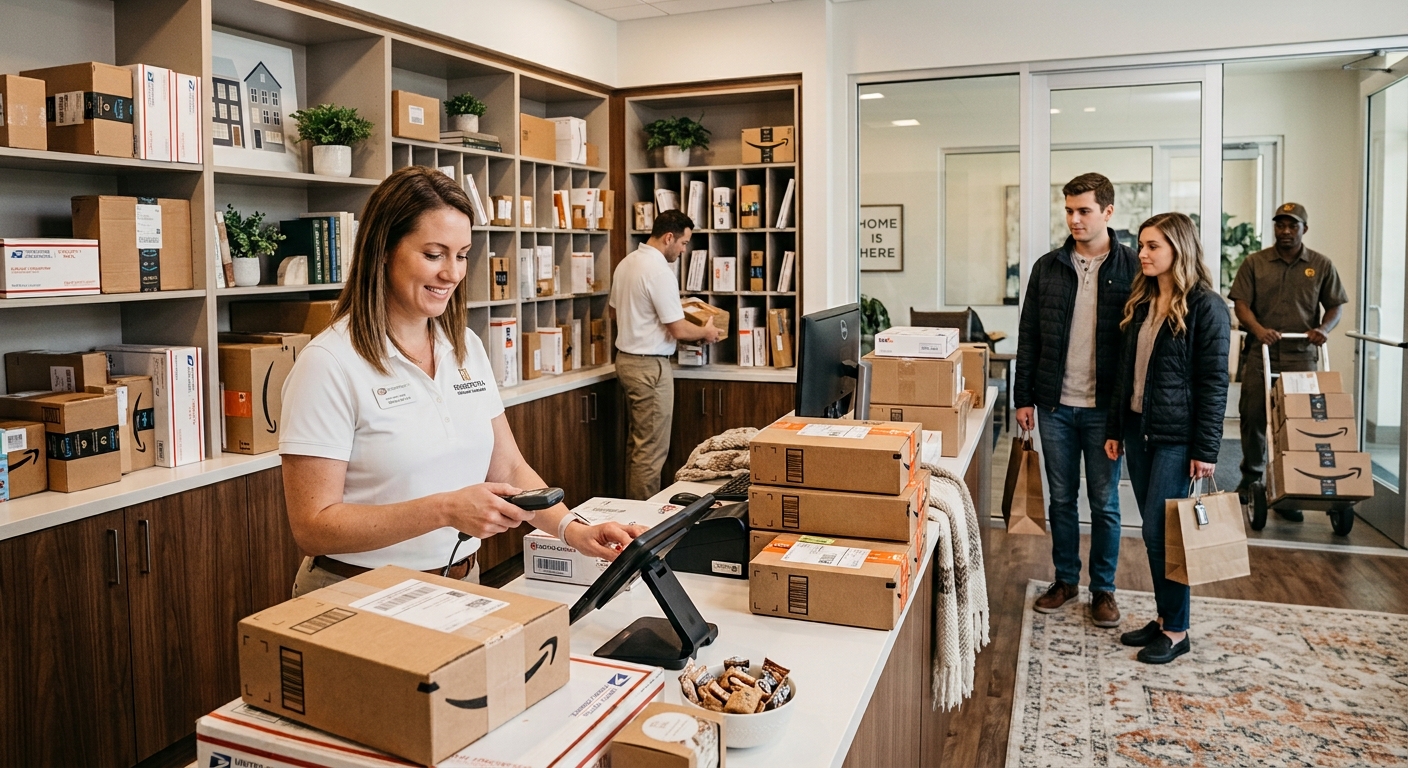
The rise of e-commerce has changed how mailrooms work for apartment and condominium complexes. What was once a simple task, managing a few letters and small packages, has ballooned into a high-volume logistics concern. This spike is evident in the 2025 Black Friday/Cyber Monday (BFCM) shopping period, which saw U.S. online sales reach $44.2 billion for the 5-day Cyber Week, with Cyber Monday alone hitting a record $14.25 billion. This massive inflow of parcels exposes the growing mailroom management and security challenges for property owners.
When package volume escalates this dramatically, the potential for theft and loss transforms package management from a residential amenity into a huge financial liability. Therefore, it is critical to understand the costs that package theft imposes on residential properties.

Hidden Labor Costs
The most insidious cost of package theft is the drain on staff productivity. When a property relies on manual handling, every package requires staff time for logging, storing, and notification. When a package is stolen, the time it takes to resolve the issue compounds dramatically.
Time Diversion from Core Duties
Property staff (whose primary roles should be leasing, resident relations, and maintenance oversight) are constantly distracted by package-related issues. This creates a significant opportunity cost.
- Manual Handling Cost: Houston-based Camden Property Trust estimated in 2015 that they lost approximately 10 minutes of productivity per package received across their 59,000 units. At an estimated labor rate, this equated to an annual cost of $3.3 million just for package management alone.
- Complaint Management: Staff time is wasted fielding calls, tracking down "missing" deliveries, and managing the inevitable frustration of residents unhappy with the building's security protocols.
- Incident Management Labor: When a theft occurs, staff must spend hours reviewing security camera footage, liaising with the resident, the carrier, and local law enforcement, and completing internal incident and liability reports. 68% of building staff report spending up to 4 hours a week managing packages on their own.

Capital and Recurring Costs
To combat theft and mitigate liability, properties are forced to invest significant funds into security hardware and software, creating two distinct financial burdens: Capital Expenditure (CapEx) and Operational Expenditure (OpEx).
Preventative Capital Expenditure (CapEx)
This is the upfront investment required to secure the delivery environment.
- Secure Package Systems: The high cost of installing parcel locker systems or constructing dedicated, access-controlled mailrooms can reach tens of thousands of dollars per building.
- Security Infrastructure: This includes the cost of installing high-resolution, specialized CCTV cameras in mailrooms and entry points to eliminate blind spots, as well as upgrading access control systems (key fobs, electronic locks) to restrict unauthorized entry.
Recurring Operational Expenses (OpEx)
These are the continuous costs required to run a secure mailroom.
- Software and Service Fees: This category covers monthly or annual subscription and maintenance costs for package management software, locker system licenses, and cloud-based video storage.
- Insurance Risk: A pattern of reported theft incidents can lead to increased property liability insurance premiums or larger deductibles, as the property's risk profile increases.
- "Goodwill" Costs: While properties are rarely legally liable for theft, many managers offer "goodwill" compensation or replacement for stolen, low-value items to maintain resident goodwill, creating an unbudgeted operational expense. The average value of a stolen package in one recent survey was approximately $222.

Reputational and Retention Costs
Package security is a core component of the resident experience. Failure to secure deliveries threatens a property's most vital revenue stream: its tenants.
Increased Resident Dissatisfaction and Turnover
- High Vulnerability: People living in apartments and condos are more than three times as likely to have packages stolen as those in single-family homes. This amplified risk makes security a top concern.
- Amenity Failure: A case study by Cortland Partners found that 76% of residents strongly prefer smart lockers, and a crucial 40% were more likely to renew their lease after their implementation.
- The Cost of Turnover: Losing a tenant due to security concerns means absorbing high turnover costs (marketing, unit prep, vacancy loss), which far outweigh the cost of a preventative security system.
Damage to Reputation and Leasing Prospects
Unresolved theft issues quickly translate into public damage.
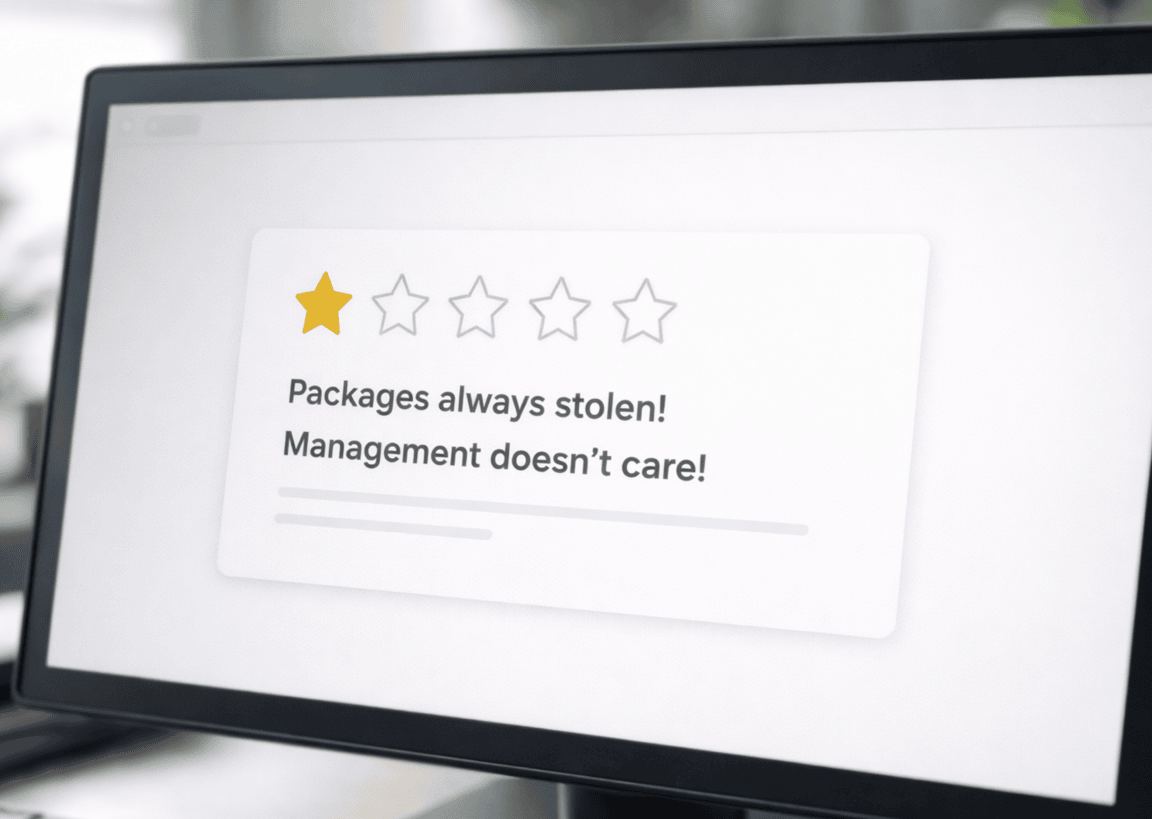
- Negative Reviews: Package theft is a frequent trigger for scathing 1-star online reviews on platforms like Google, Yelp, and apartment listing sites. This negativity impacts a prospect's decision to lease.
- Perceived Safety: A persistent problem with stolen packages erodes the community's overall perception of safety and security, making it harder to attract high-quality, long-term tenants.
Turning Burden into an Investment

The burden of porch piracy is not just the average value of a stolen package, but also the recurring costs of lost labor, the thousands spent on security hardware, and the lost revenue from non-renewing residents. For modern property management, manual package handling is no longer sustainable.
Implementing a secure, automated package management solution is an investment that delivers a powerful Return on Investment (ROI) by:
- Eliminating Non-Productive Staff Labor.
- Providing an Audit Trail that reduces liability and theft investigations.
- Boosting Resident Satisfaction and increasing lease renewal rates.
Ready to convert your property's package management burden into a high-value, secure amenity? Explore how Parcel Tracker can streamline your mailroom operations, boost security, and free up your staff today.



.svg)