.svg)
Scan vs. Type: How AI-Powered OCR is Revolutionizing Mailroom Productivity?


Mailroom management is the internal logistics process in which a parcel is received from a courier, logged into a tracking system, and routed to the final delivery yard for the correct recipient. This journey involves verifying the parcel’s arrival, maintaining a secure chain of custody during storage, and triggering automated notifications to ensure the package reaches the recipient.
The Cost of Manual Logging

The biggest bottleneck in any mailroom is the time spent at the intake desk. When a courier drops off a large delivery, staff are often forced to manually type in recipient names, tracking numbers, and sender details.
This manual process is slow and creates an immediate backlog. More importantly, it is prone to human error. Even experienced staff have an average manual data entry error rate of 1% to 4%. A single typo in a name or email address means the notification never reaches the recipient. The result? Parcels sit unclaimed on shelves, and the front desk is flooded with "Where is my parcel?" inquiries that further distract the team.
How Automatic Scanning Changes the Workflow?
Transforming from manual entry to digital recognition is a fundamental change in mailroom management. By removing the physical and technical constraints of older systems, teams can transition from a reactive sorting mindset to an active delivery mindset.
- Stationary Desktop Logging: In traditional setups, staff are tethered to a fixed computer or a bulky kiosk. This creates a physical bottleneck where every parcel must be hauled to a single station. Once there, the staff member must read the label and manually search a database for a matching name, a process that is both physically demanding and slow.
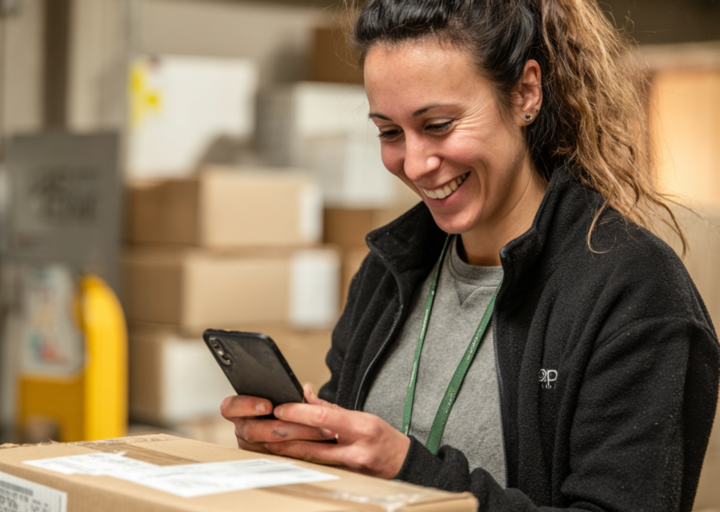
- Mobile-First Recognition: Modern systems utilize mobile devices or tablets to bring the software to the parcel, rather than the parcel to the computer. As shipments are unloaded, staff use AI-powered Optical Character Recognition (OCR) to read the label. The system instantly identifies the recipient and matches them to the database, enabling logging at the point of delivery.
By switching from stationary manual processes to mobile-first automation, organizations can increase overall productivity while keeping the mailroom clear and organized.
Saving Time as Parcel Volumes Grow
Efficiency is becoming a requirement rather than a luxury. Global parcel volume is projected to double to 200 billion parcels per year by 2030. As delivery volumes climb, the "60-second difference" becomes critical.
If it takes one minute to type a label but only five seconds to scan it, a mailroom receiving 100 packages a day saves over an hour and a half of labor every single day. This scalability enables teams to handle peak seasons, such as the holidays or move-in weeks, without hiring additional temporary staff.
Making the Job Easier for Your Team
Technology should make the workday less frustrating. Removing the need for repetitive typing improves staff morale, especially for those who have been with a company for years and find complex new software intimidating.
Modern scanning apps are designed to be intuitive and require almost no training. Because these systems work on standard smartphones or tablets, facilities don’t need to invest in expensive, specialized hardware. It’s a flexible approach that allows the team to be mobile, scanning packages directly at the loading dock rather than carrying them back and forth to a desk.
Moving Toward a Faster Mailroom

The goal of modern parcel management is to move packages from the door to the recipient as fast as possible. By replacing manual typing with automatic scanning, you eliminate the primary cause of backlogs and errors.
With rising delivery volumes, the fastest mailrooms are those that stop recording data and start managing it faster. If your team is still spending hours typing in names, it may be time to look at modern mailroom management software that does the heavy lifting for you.


.svg)