.svg)
What Commercial Real Estate Needs to Know Before Building Its Own Mailroom?


The corporate landscape has changed. Hybrid work schedules and booming e-commerce have transformed how corporate tenants interact with their workplaces. Today, commercial real estate (CRE) properties face an unprecedented influx of inbound deliveries.
According to McKinsey research, global parcel volume surpassed 100 billion packages annually and is on track to double by 2030, with parcel volume catching up to traditional mail volume.
CRE owners and developers now find that the traditional mail counter is obsolete. Building an internal mailroom seems like the logical next step to stay competitive. However, a physical room without a strategic plan creates hidden costs, spatial constraints, and logjams.
Property management teams must evaluate several critical factors prior to breaking ground.
Spatial and Architectural Blueprinting

A successful mailroom requires precise spatial planning. You cannot simply repurpose an empty utility closet. Property teams must forecast space requirements based on current tenant density and projected 2x package growth over the next decade.
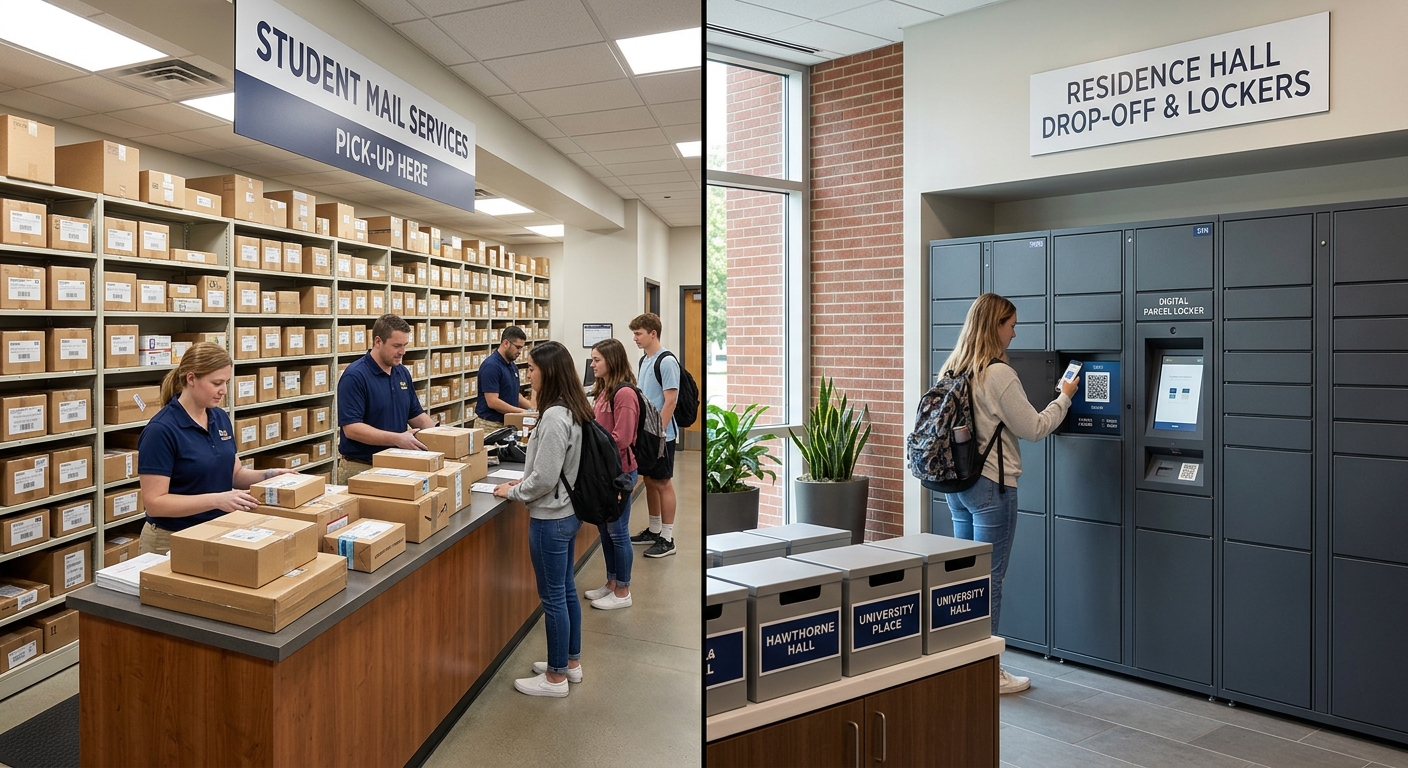
Designers must map the path from intake to final pickup. Positioning the mailroom near the loading dock or service entrance keeps couriers out of the main lobby. Inside the room, storage must diversify. Beyond standard shelving, contemporary setups require dedicated zones for oversized freight, temperature-controlled cold storage for grocery deliveries, and smart locker banks for after-hours access. Implementing efficient mailroom management principles during the architectural phase ensures long-term viability.
Real-world commercial implementations highlight the importance of physical scale. For instance, the property management team at 180 Strand utilized digital systems to successfully oversee logistics operations spanning a massive 1-million-square-foot corporate complex.
Infrastructure, Security, and Compliance

High-volume package environments carry significant financial liability. Protecting sensitive corporate documents and high-value merchandise demands rigorous security measures.
Physical access control via keycard or biometric scanners ensures only authorized personnel handle incoming freight. High-definition CCTV cameras must cover all entry points and storage racks to eliminate blind spots. A digital parcel management system reinforces this physical security by maintaining a clear historical record of every delivery.
Furthermore, the layout must comply with local regulations. Designers must account for fire safety codes, specific lighting requirements, and ADA accessibility guidelines for counter heights and clearance pathways.
Financial Costs and Staffing Realities

Building a mailroom brings ongoing financial demands. Beyond the initial capital expenditure for construction, ongoing overhead can drain resources.
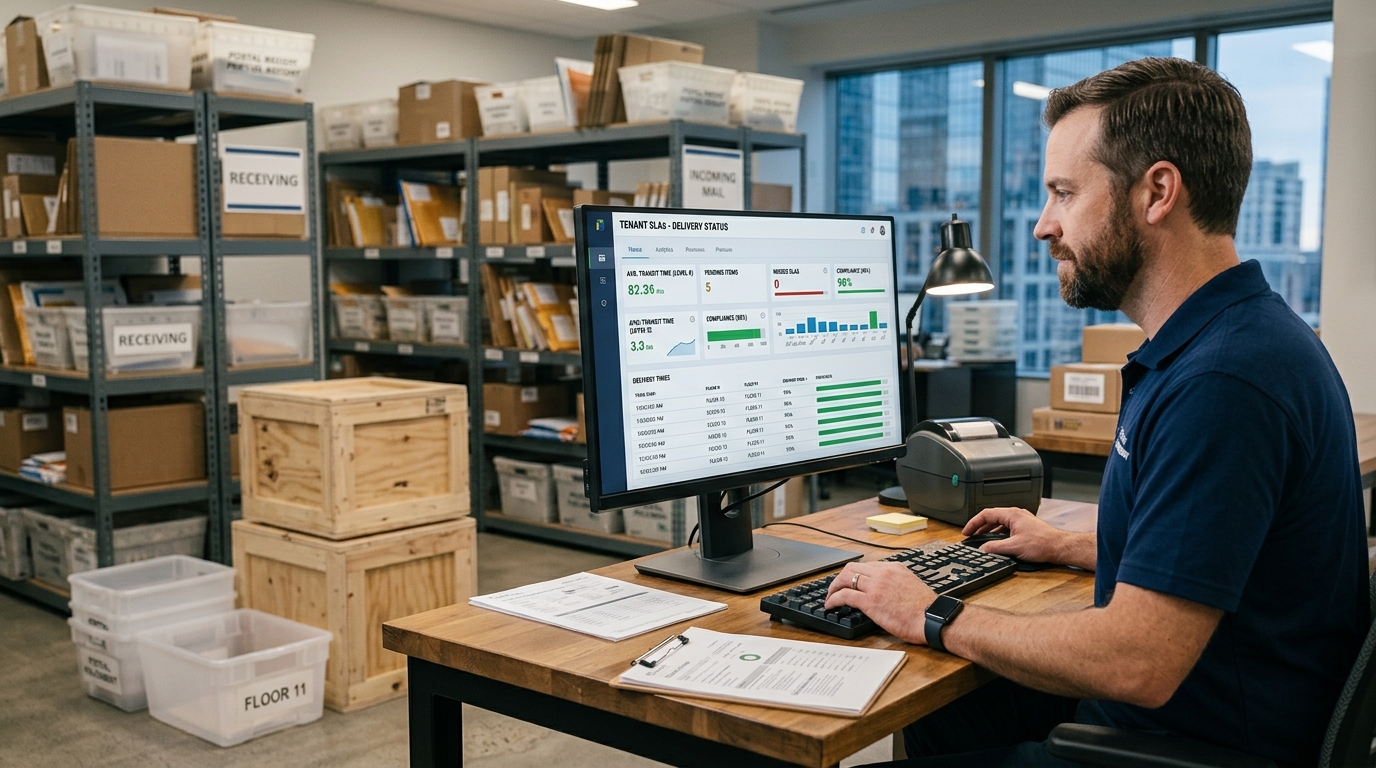
Staffing presents a distinct hurdle. Mailrooms experience high employee turnover, requiring constant training on handling protocols. Relying on manual logging means staff spend hours typing tracking numbers and sorting letters. This administrative burden pulls valuable staff away from tenant relations and core property management tasks. Utilizing dedicated mailroom software can alleviate these labor strains by speeding up everyday tasks.
Property groups managing vast commercial and residential networks face magnified versions of these labor bottlenecks. Portfolio operators like Vita Group resolved these widespread multi-building delivery challenges by shifting away from manual logbooks toward centralized digital check-ins.
Hardware vs. Software

The biggest trap in DIY mailroom development is relying on physical logbooks or basic spreadsheets. These manual tracking methods collapse under heavy parcel volumes, resulting in lost packages, typing errors, and delayed pickup notifications.
Modern properties require dedicated digital infrastructure. Property managers can leverage cloud-based mailroom automation software to connect package intake to existing tenant communication channels. This software setup pairs standard mobile hardware with automated internal parcel tracking engines to ensure that every delivery is logged accurately the moment it arrives.
Your Mailroom Is Commercial-Ready

Building a physical mailroom is only half the battle; success depends on workflow efficiency and digital execution.
Property teams can optimize their new layout and remove manual logging errors from day one by integrating an intelligent solution like Parcel Tracker. This comprehensive parcel tracking tool allows your team to scan packages in seconds and immediately alert tenants. Adopting a modern parcel system helps your property deliver the seamless premium service that corporate tenants expect.
Expert FAQ
How much space does a commercial mailroom require?
Space depends on tenant count and package volume, usually requiring a minimum of 200 square feet for small buildings.
What security features are mandatory for corporate parcel rooms?
Secure facilities require high-definition CCTV surveillance, logged keycard access control, and digital chain of custody tracking software.
Why do manual package logging systems fail in modern properties?
Paper logs cause immediate data entry errors, delayed tenant pickup notifications, and severe package accumulation bottlenecks.
What are the hidden costs of managing a property mailroom?
Properties face unexpected expenses from continuous staff turnover, package liability insurance, and physical space allocation losses.
How does smart mailroom software improve tenant retention?
Software automates real-time delivery alerts and contactless pickups, which increases overall workspace convenience for corporate tenants.


.svg)