.svg)
What is Computer Vision for Package Sorting?

Computer vision for package sorting is an AI-powered technology that uses high-resolution cameras and machine learning to automatically identify, track, and categorize parcels. In modern mailroom management, it replaces manual scanning by instantly capturing tracking numbers, dimensions, and shelf locations, ensuring 100% inventory accuracy through real-time visual data processing.
This technological advancement arrives just in time, as the modern mailroom is no longer a simple space defined by cubby holes and a clipboard. As e-commerce volumes explode, the pressure on internal logistics has reached a point where it needs the arrival of computer vision (CV) or the eyes of the next-generation mailroom. By leveraging artificial intelligence to interpret camera-generated visual data, facilities are finally moving away from the friction of manual scanning toward a fully autonomous, hands-off reality.
The Rise of the Vision-Enabled Mailroom
Industry leaders are already signaling that this shift is inevitable. Research suggests that 50% of supply chain organizations will leverage AI-enabled vision systems by 2027 to replace traditional manual scanning and cycle-counting processes.

Spatial AI: Your Invisible Assistant
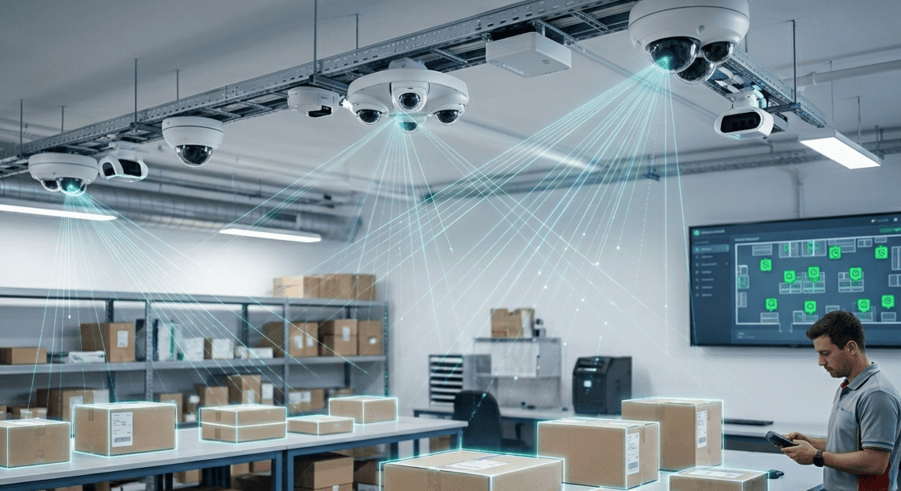
Imagine a series of ceiling-mounted mailroom cameras that not only record video but also understand the environment. This is spatial AI. These systems identify, count, and track the movement of boxes in real-time across the entire floor.
- Real-Time Awareness: As soon as a courier drops a stack of parcels, the cameras identify them.
- 3D Inventory Mapping: It’s like having an assistant that knows exactly which shelf every box is on just by looking at the room.
- Seamless Flow: If a package is moved from the sorting table to a high-density rack, the system automatically updates its location. There’s no manual "beep" required.
Why Computer Vision Wins
Traditional sorting relies on human speed and accuracy, both of which fluctuate. Research indicates that transportation and warehousing have the third-highest automation potential of any sector, largely due to the repetitive nature of tasks like sorting.
In a mailroom context, CV eliminates the search-and-find mission that plagues staff during peak hours. When a recipient arrives to collect a package, the system doesn't just say "it's checked in,” but it can tell the operator exactly where it sits in physical space.
The Digital Bridge: Hardware Meets Software

While spatial AI acts as the eyes, it needs a form of intelligence to process that information into actionable tasks. This is where advanced tech complements the capabilities of mailroom management software.
When the overhead cameras see a new delivery, they instantly feed that data into your management platform. This synergy allows for:
- Instant Notifications: The moment the camera recognizes a label, an automated notification is triggered.
- Chain of Custody: High-resolution visual proof of a package's condition and location at every step.
- Efficiency Analytics: Identifying bottlenecks in your floor plan where packages tend to pile up.
Seeing All Parcels in Your Mailroom
The transition to computer vision is about more than just speed; it's about building a resilient operation that can handle tomorrow's volume. By removing the manual friction of sorting, you free your staff to focus on high-value tenant services rather than hunting for boxes.
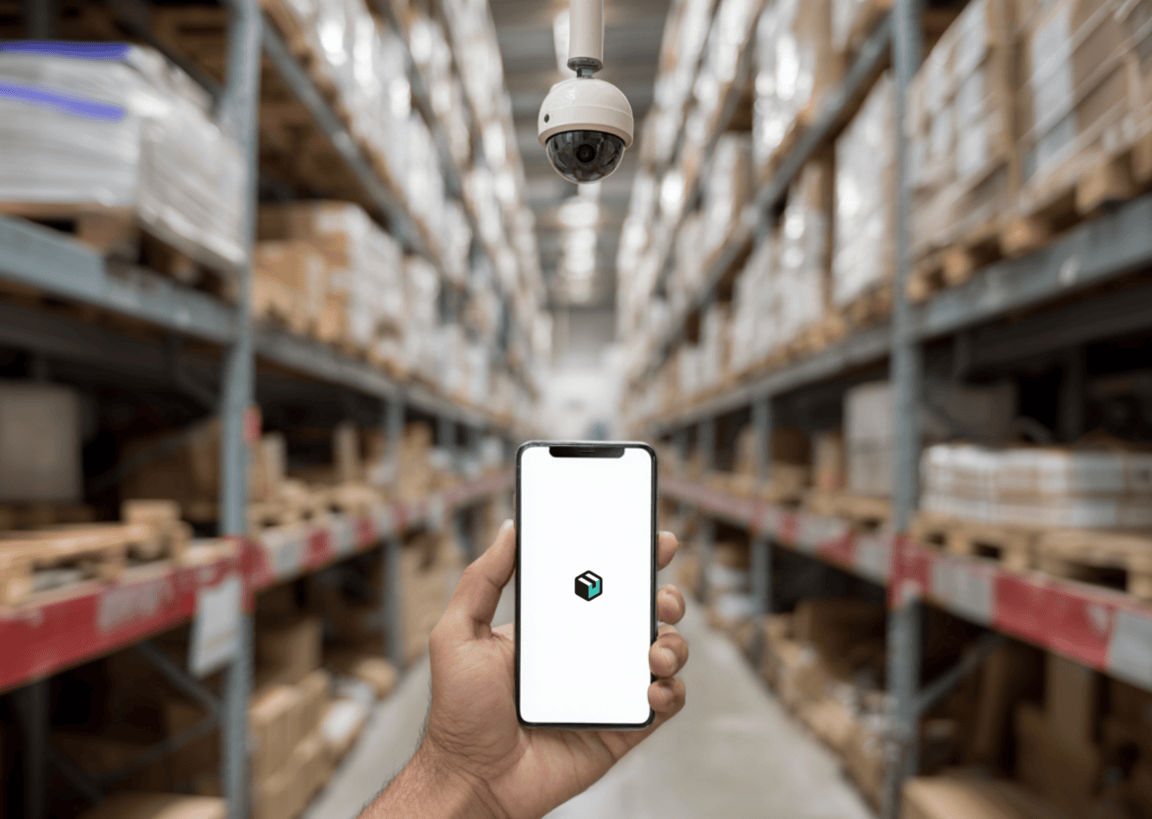
Ready to take the first step toward a smarter, more transparent mailroom? Streamline your internal logistics and gain total visibility with Parcel Tracker.
Expert FAQ
How does computer vision handle damaged or partially obscured labels?
Modern spatial AI uses fuzzy logic and context clues. If a barcode is ripped, the system can cross-reference the package's dimensions, color, and remaining text against the digital manifest to identify it with high confidence.
What is the primary difference between standard CCTV and Spatial AI?
Standard CCTV merely records images for human review. Spatial AI processes those images in real time, converting pixels into data points (such as X, Y, Z coordinates and parcel IDs) that a computer can track without human intervention.
Why is overhead mounting preferred over side-mounted cameras?
Ceiling-mounted cameras provide a bird's-eye view, minimizing blind spots caused by tall shelving or staff movement. This perspective allows the AI to maintain a continuous line of sight on a parcel as it moves across the floor.


.svg)