.svg)
What is Mailroom Ergonomics and Safety Compliance?


In the modern logistics chain, the "last yard of delivery" is the transition from a delivery vehicle to the recipient's hands, which is often the most physically demanding. For property managers and logistics leads, mailroom ergonomics is a critical responsibility. As global e-commerce sales are projected to reach between $6.4 trillion by the end of 2025, the volume of physical handling has elevated mailroom safety to a primary priority.
Administrative Responsibility for Safety Compliance
Safety compliance in the mailroom is an administrative duty to ensure that the physical environment and work procedures meet established legal standards. According to OSHA, the Transportation and Warehousing sector reported over 232,000 workplace injury cases in 2024, second only to healthcare. The Bureau of Labor Statistics (BLS) and recent safety audits indicate that overexertion and material handling (lifting, pushing, pulling) remain the primary causes of these non-fatal injuries.

Administrators must view compliance through two lenses:
- Regulatory Adherence: Staying updated on OSHA standards, which as of January 2025, have increased maximum penalties for serious violations to $16,550 per violation.
- Risk Mitigation: Implementing mailroom Standard Operating Procedures (SOPs) that govern everything from how a package is received to how it is staged for collection.
Core Pillars of Mailroom Ergonomics

Ergonomics, which is the science of fitting the workplace to the worker, is the most effective way to combat Musculoskeletal Disorders (MSDs). These injuries, often caused by repetitive lifting and awkward postures, cost U.S. employers approximately $53.1 billion annually in lost wages and diminished productivity.
- Manual Handling Techniques: Training must emphasize the "neutral posture." Staff should be instructed to lift with the legs, keep the load close to the body, and avoid twisting.
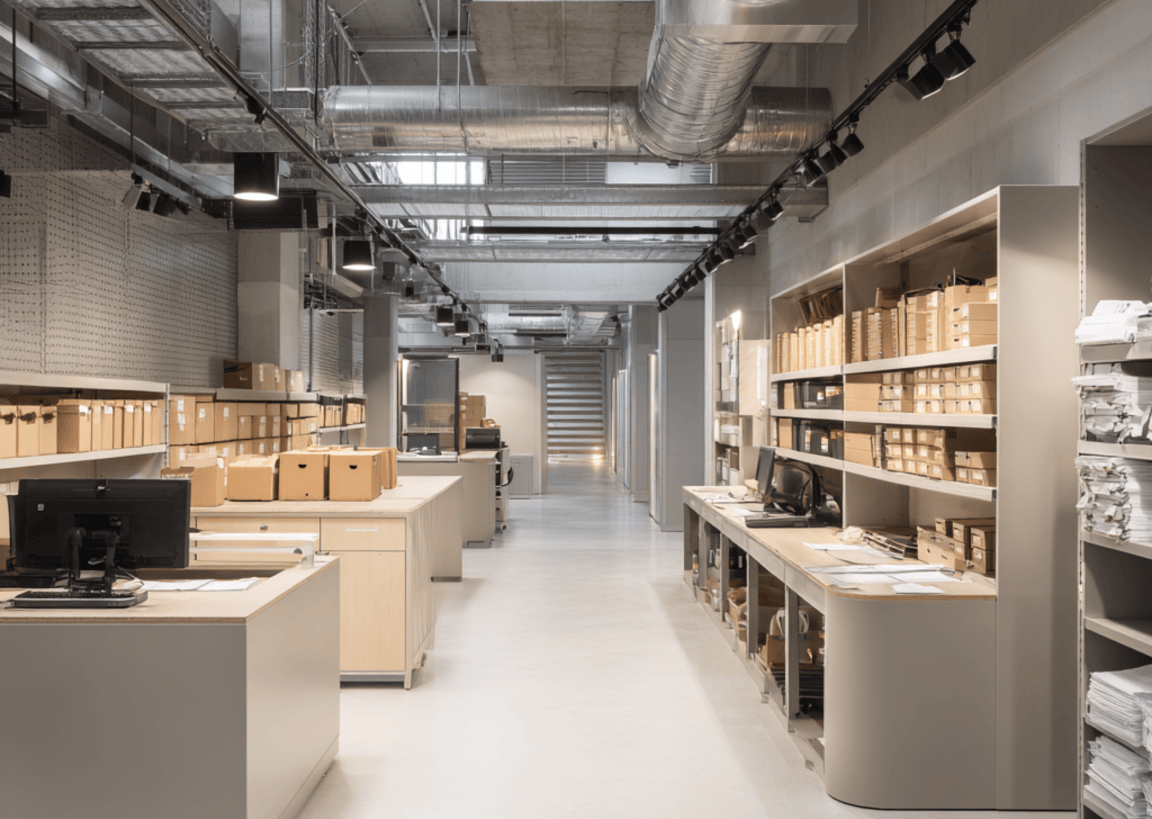
- Workstation Design: A compliant mailroom should feature height-adjustable tables and task lighting. Proper workstation design reduces "reach distances," preventing shoulder and back strain.
- Equipment Maintenance: Administrative oversight includes a maintenance schedule for hand trucks, carts, and scales. A malfunctioning cart wheel forces a worker to use excessive force, a primary risk factor for overexertion.
Safety as an Efficiency Driver
The link between safety and speed is undeniable. Data indicates that last-mile delivery and courier services have seen a 134% increase in injuries over the last decade due to tighter deadlines and higher parcel volumes.
A "safe" mailroom is inherently an organized one. When a mailroom is cluttered or poorly designed, the time spent "searching" for packages increases physical fatigue and the likelihood of trips and falls, which is the third most common cause of serious workplace injuries. By contrast, an ergonomic environment leads to an average 88% reduction in lost workdays.
Integrating Physical Safety with Digital Management

An effective mailroom requires a dual approach: a physical environment designed for safety and a digital system designed for accountability. While ergonomics protects the body, management software protects the workflow.
Property and mailroom managers can no longer rely on manual logs in a high-volume era. To fulfill the administrative responsibility of safety and efficiency, integrating a digital layer is essential. This ensures that while staff follow ergonomic best practices, the movement of every parcel is accounted for with minimal friction.
To bring this level of control and safety-first organization to your facility, consider how Parcel Tracker can streamline your mailroom management and ensure your operations remain compliant and efficient.



.svg)