.svg)
Adapting Office Operations with Flexible Parcel Management

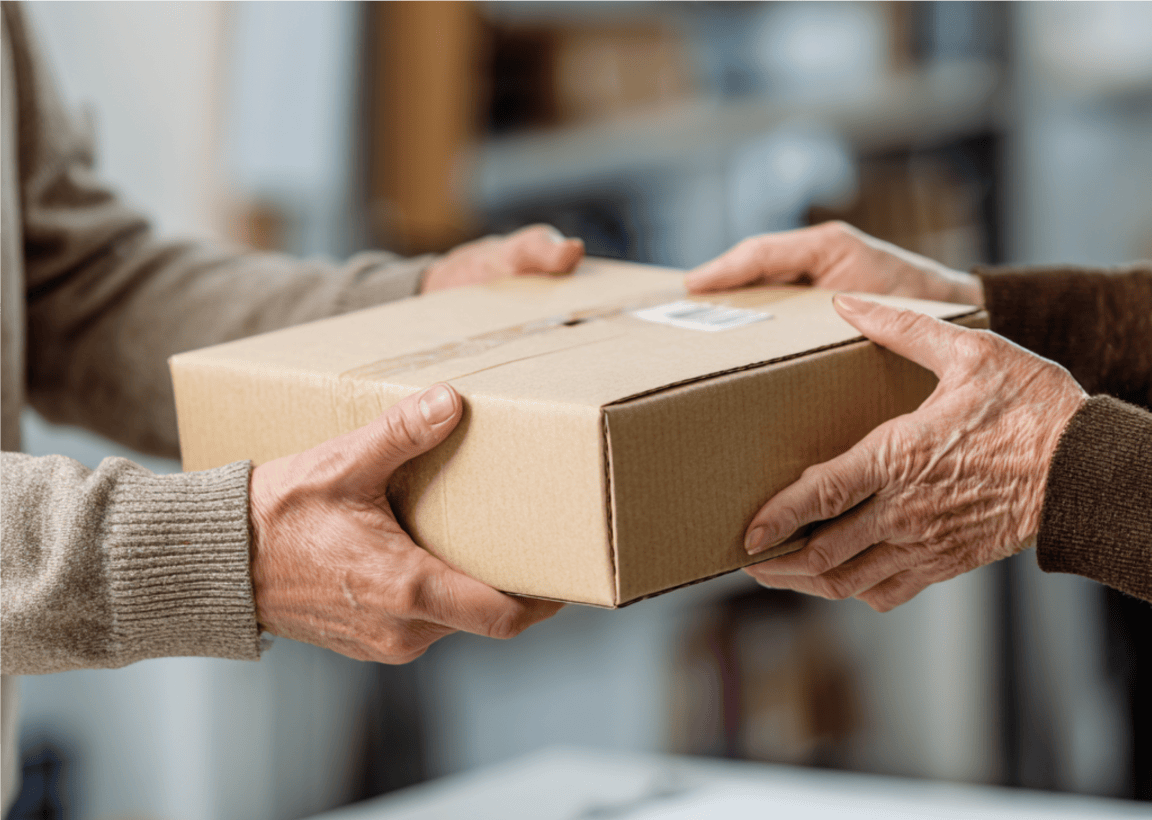
The modern office space has evolved to support flexible work schedules, yet internal delivery workflows often remain stuck in a rigid, five-day mindset. According to ongoing workforce research, over 52% of remote-capable employees now work in a hybrid model, spending two or three days per week on-site.
This changing presence creates a distinct hurdle for office operations. Staff members routinely order business supplies and personal deliveries to the office for security and convenience. When packages arrive on days an employee works from home, those items sit uncollected in reception areas or hallways for extended periods. The resulting clutter consumes floor space, increases security risks, and consumes administrative bandwidth. Modernizing these systems through automated alerts and self-service collection keeps corporate spaces organized while adapting to modern work habits.
Enabling Flexibility: The Rise and Permanent Role of Hybrid Work

The widespread adoption of remote tools proved that organizations can maintain productivity across distributed teams. What started as a temporary necessity transformed into a lasting expectation for workplace flexibility. Today, offering flexible schedules helps companies attract top talent and maintain high employee satisfaction.
This structural shift alters how physical facilities function:
- Smaller Office Footprints: Companies consolidate square footage, leading to smaller administrative zones and reduced physical storage space for incoming deliveries.
- Balanced Work Weeks: Employees focus on individual tasks at home and utilize office days for collaborative projects, changing when and how they interact with workplace amenities.
- Asynchronous Routines: Staff members arrive at varied hours throughout the week, making fixed, fully staffed delivery windows less practical.
While digital communication and project workflows adapted smoothly to this model, physical logistics require similar updates to remain efficient.
Why Traditional Mailroom Handling Fails Hybrid Workplaces

Legacy delivery processes rely heavily on paper logs or manual spreadsheets. These methods are slow, prone to data entry errors, and fail to provide real-time updates to recipients. Facility teams spend a substantial amount of time responding to individual inquiries about package arrivals rather than focusing on broader core tasks.
Standard delivery notifications also present a challenge. A single arrival email sent on a Monday often gets buried in a busy inbox by the time an employee comes into the office on Wednesday. Without dynamic follow-ups, packages remain on shelves longer than necessary.
Overcrowded holding areas eventually create physical bottlenecks. When storage rooms reach capacity, items spill into common areas or unsecured lobbies. This lack of chain-of-custody tracking leaves organizations vulnerable to misplaced deliveries and complicates inventory audits. Modernizing internal systems through dedicated mailroom management practices helps teams maintain complete visibility over every incoming item.
Core Strategies for Adaptive Workflows
Transitioning to a flexible logistics framework requires practical solutions that align with modern attendance patterns. By combining smart communication tools with accessible collection methods, facility leaders can streamline incoming package intake and reduce mailroom clutter.
Smart, Automated Reminders
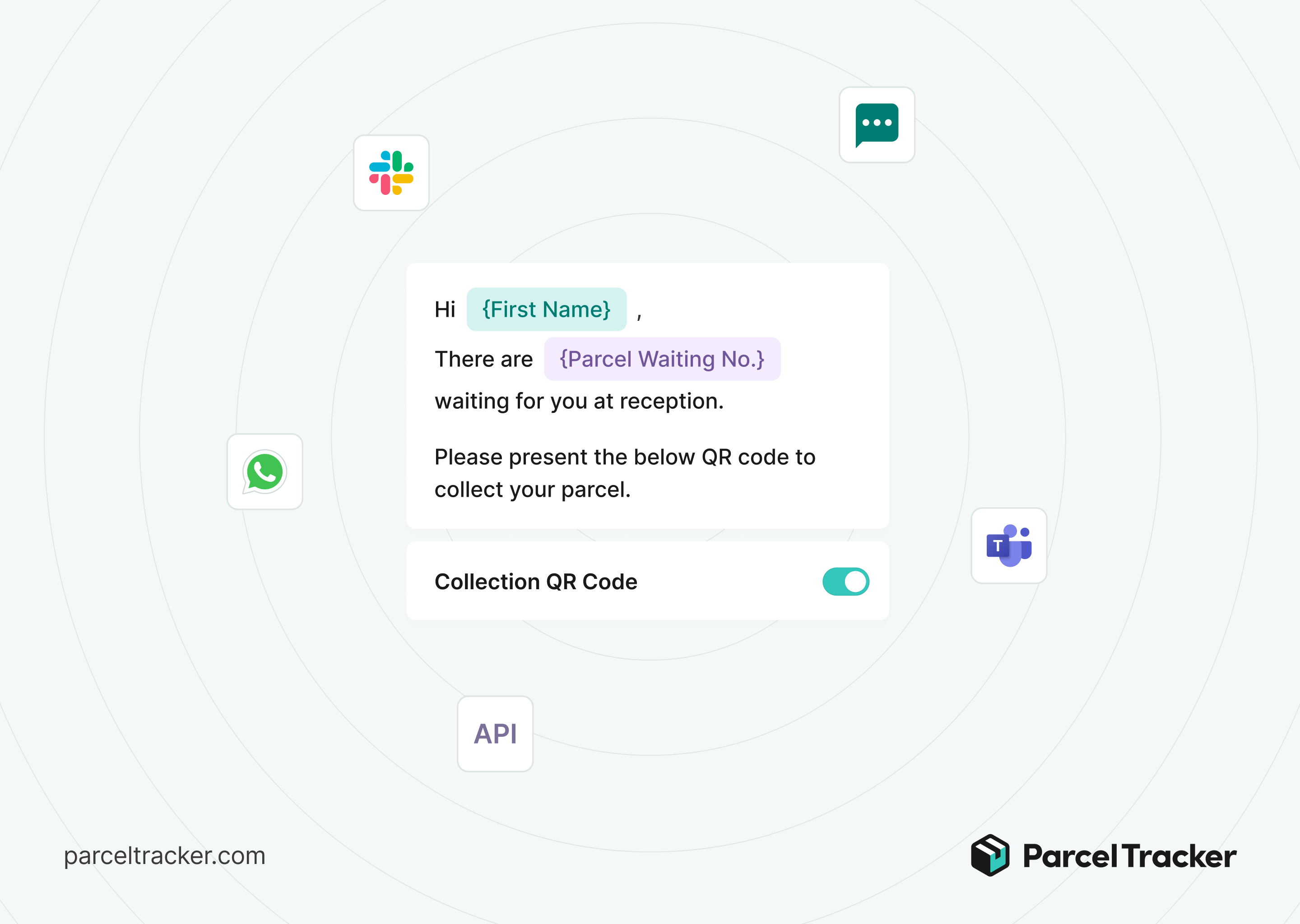
Digital notifications bridge the communication gap between delivery arrival and recipient pick-up. Modern software scans carrier labels instantly, sending immediate alerts to the recipient via email or SMS.
Scheduled follow-ups ensure packages are collected promptly. An initial alert informs the recipient of the arrival, while subsequent automated nudges prompt pickup on designated in-office days. This approach replaces manual check-ins and keeps storage areas clear.
Self-Service Collection Kiosks
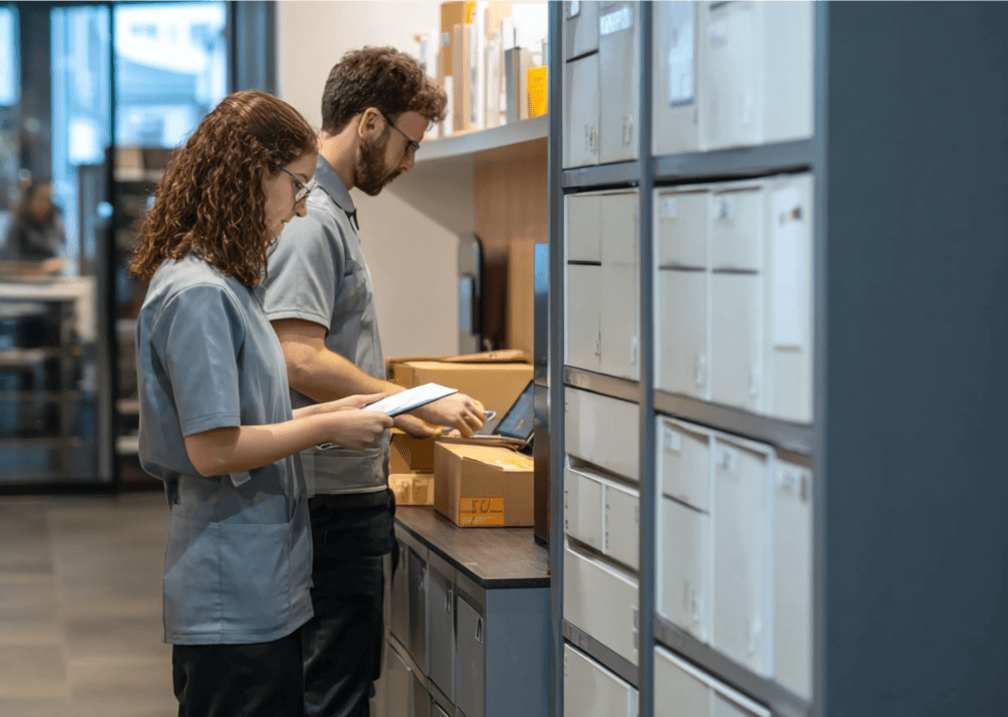
Adopting a self-service model allows employees to collect items independently while maintaining full oversight. Implementing systematic parcel management software simplifies this process into three clear steps:
- Rapid Intake: Facility staff capture shipping details using a tablet or mobile device camera, logging items in seconds.
- Organized Staging: Staff place parcels in dedicated, numbered shelf locations or color-coded zones.
- Contactless Retrieval: Returning employees visit a self-service kiosk, scan a personal QR code from their notification, sign the screen, and collect their item.
This workflow grants recipients round-the-clock access to their items without requiring staff members to manage every individual handoff.
Measuring Success in Hybrid Parcel Operations

Implementing automated alerts and self-service kiosks changes how facility teams track their internal delivery performance. Instead of measuring pure speed, workplace leaders and mailroom managers evaluate how effectively their logistics adapt to fluctuating employee attendance. Tracking specific indicators provides clear insight into whether flexible workflows are keeping holding zones clear and operations smooth:
- In-Office Parcel Dwell Time: Monitoring how long items sit in storage relative to an employee's scheduled office days highlights the effectiveness of automated reminders. High-performing systems keep average dwell time under 24 active in-office hours.
- Scan-to-Shelf Processing Speed: Fast intake routines prevent morning delivery backlogs. Capturing carrier details in under 10 seconds per item allows facility teams to handle peak delivery volumes without slowing down reception desk tasks.
- Unclaimed Delivery Volume: Tracking packages remaining past five business days reveals potential communication gaps or outdated recipient lists. Keeping this rate under 2% confirms that multi-channel notifications effectively reach hybrid staff.
- Chain-of-Custody Accuracy: Maintaining digital sign-off records for every transaction ensures total visibility. Complete audit accuracy confirms that self-service collection zones remain secure, even during off-peak hours when administrative staff are away.
Powering Internal Logistics for the Hybrid Workplace
Hybrid work arrangements represent a permanent baseline for workplace design. Updating internal delivery systems ensures that physical spaces stay tidy and administrative resources remain focused on core priorities. By pairing automated communication with self-service retrieval, workplace leaders create a streamlined experience for employees and facility staff alike.
To upgrade your office delivery workflows without adding complex hardware, explore how Parcel Tracker streamlines package logging, automated notifications, and digital proof of pickup using everyday mobile devices.
Expert FAQ
How does hybrid work impact daily mailroom parcel management?
Hybrid schedules create unpredictable pickup times, causing packages to accumulate and clutter mailrooms on remote work days.
What causes package congestion in modern hybrid office mailrooms?
Congestion happens when traditional mailrooms lack automated reminders, leaving parcels sitting uncollected while employees work from home.
How do automated package notifications improve office mailroom organization?
Automated alerts notify recipients immediately across email or messaging apps, prompting faster pickups when employees return on-site.
Why are self-service kiosks effective for hybrid workplace deliveries?
Kiosks enable 24/7 contactless package retrieval, allowing returning employees to pick up deliveries independently without staff assistance.



.svg)