

How to Prevent Lost Pallets in Multi-Building Distribution Centers

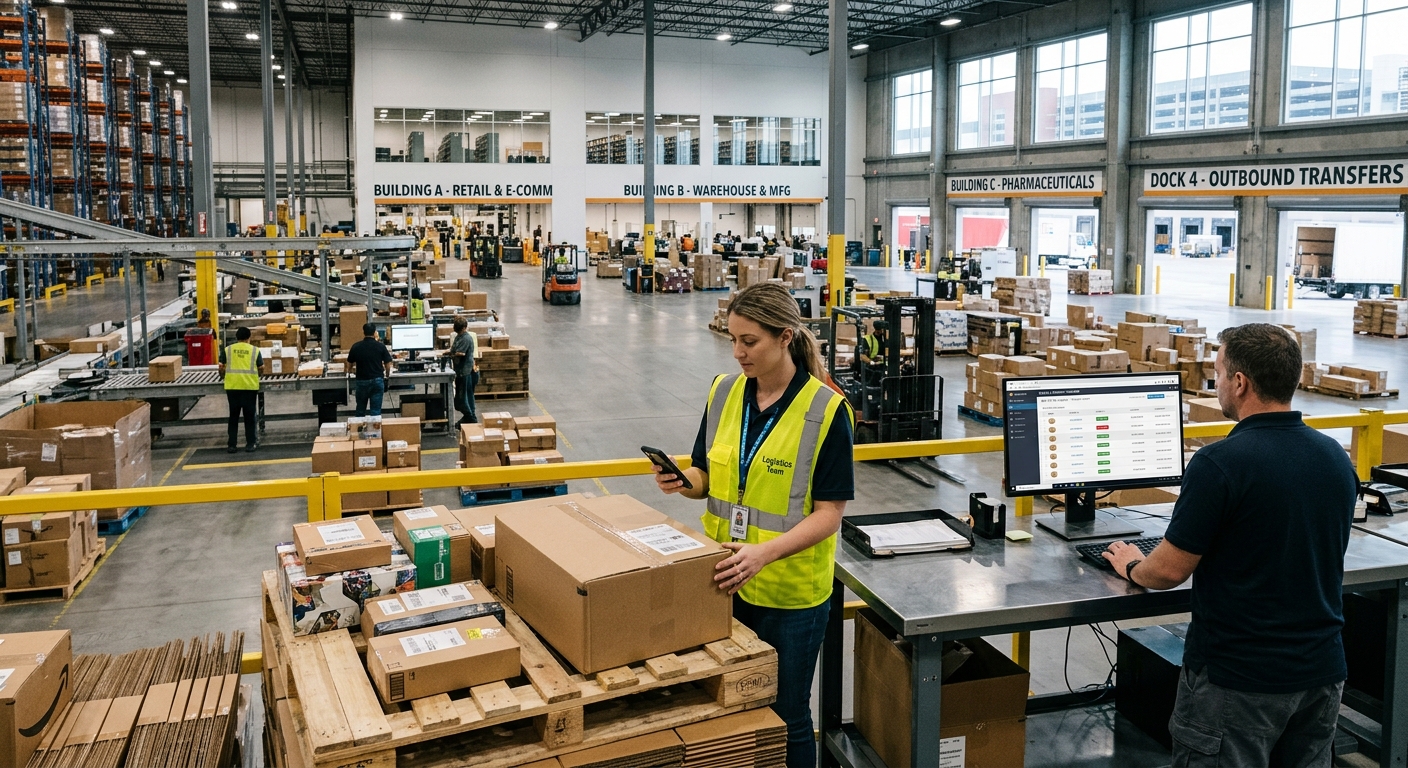
Pallets go missing in multi-building distribution centers because freight changes hands several times without a shared, real-time record. Each building has its own dock and its own paperwork, handled by different staff. A pallet can arrive at the wrong building because the address lacks a building code, move between sites without a scan, or sit in a staging area with no one owning it. Once the paper trail breaks, no one can say where the freight is or who touched it last.
The impact reaches beyond the pallet itself. Staff spend hours walking docks and calling carriers to track down a single shipment. Production schedules slip when materials fail to arrive, and perishable or regulated goods can spoil or trigger compliance reviews while they wait. Carrier claims close after a fixed filing window, so a pallet found three weeks late may no longer qualify for reimbursement. Repeated losses wear down trust with suppliers, internal customers, and clients.
The fix combines a clear receiving model with consistent processes. Centralizing inbound freight, standardizing addresses and labels, and scanning at every handoff keep each pallet accounted for from dock to final delivery. A named owner for each staging zone and a single shared system of record complete the picture. Parcel Tracker fits at the center of this approach. The mailroom management software logs pallets at check-in, shows live status across buildings, captures signatures, and sends alerts when freight goes unclaimed.
Which Organizations Run Multi-Building Distribution Centers
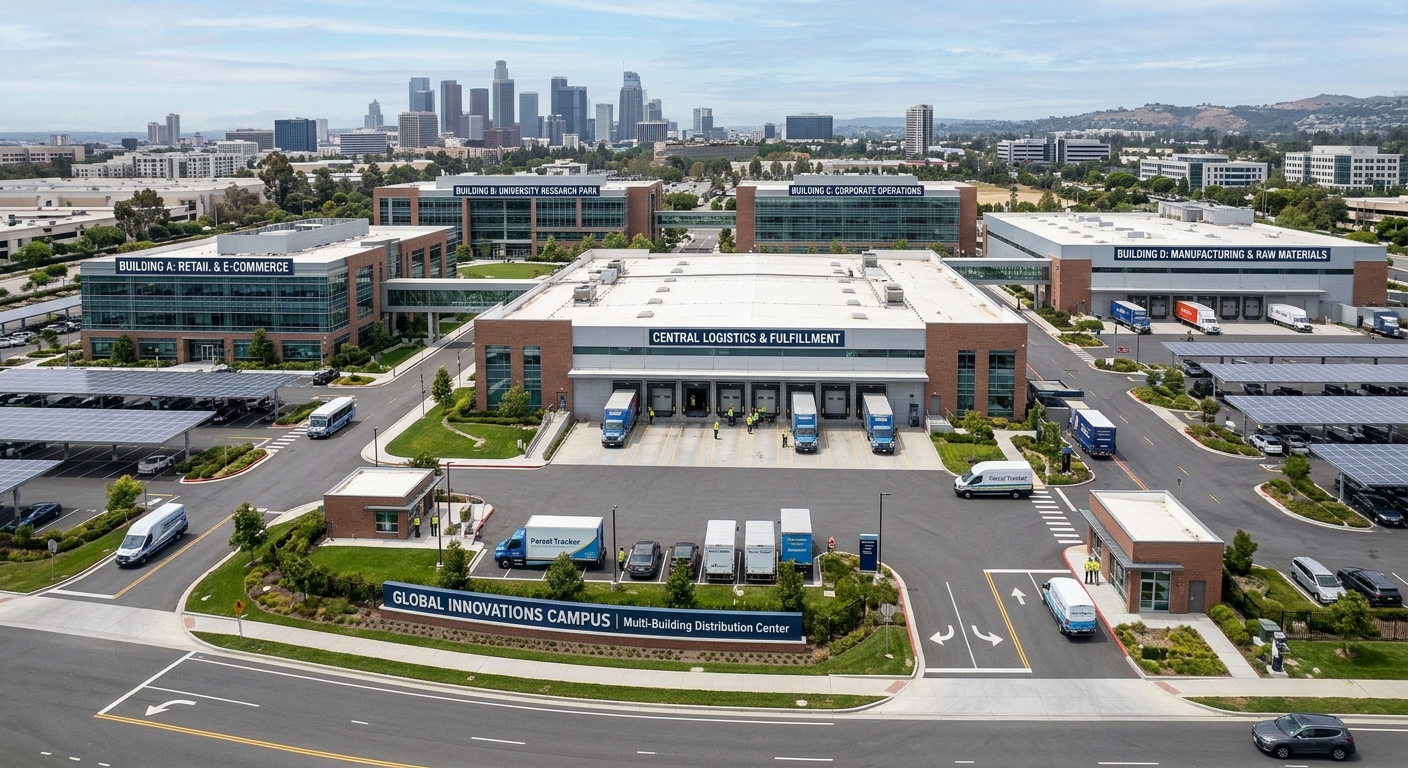
Any organization that receives freight at more than one physical location deals with this challenge. Common examples include:
- Retail and e-commerce fulfillment networks: Regional warehouses, overflow buildings, and returns centers each receive inbound pallets from suppliers and carriers.
- Third-party logistics (3PL) providers: Several client accounts share buildings, so one misplaced pallet can affect multiple customer relationships.
- Universities: Science labs, residence halls, athletics facilities, and a central stores building each take deliveries on different schedules.
- Hospitals and health systems: Medical supplies, pharmaceuticals, and equipment move between a main campus, clinics, and off-site storage.
- Manufacturers: Raw materials arrive at one building, work-in-progress moves to another, and finished goods ship from a third site.
- Government and military installations: Large footprints, security screening, and many receiving points make tracking difficult.
- Food and beverage distributors: Ambient, refrigerated, and frozen buildings require separate handling, and time-sensitive pallets cannot sit unclaimed.
- Freight forwarders and consolidators: Organizations that handle freight forwarding often break up and rebuild shipments across several warehouses before final delivery.
- Corporate campuses: Office parks with separate buildings for facilities, IT, and production receive furniture, equipment, and supplies on pallets.
Several factors make these sites vulnerable. Each dock has its own staff and habits, and carriers may not know which door to use. A pallet leaving one building for another often moves on a forklift or shuttle with no scan or signature. Every extra handoff adds one more chance for the record to break.
Common Causes of Lost Pallets Across Multiple Buildings
Knowing where the process fails makes it easier to pick the right fix. These causes appear most often:
- Carrier drops at the wrong dock or building. Drivers follow the address on the paperwork, and campuses with similar building names invite mistakes.
- Unclear addresses and missing building codes. A ship-to line that reads "Distribution Center" with no building number leaves the driver guessing.
- No scan during internal transfers. A pallet moved by forklift between buildings often leaves no digital trace.
- Unowned staging areas. Overflow zones fill up with freight that has no assigned recipient and no status.
- Shift changes and turnover. Verbal handoffs get forgotten, and new staff may not know which pallets are waiting for pickup.
- Paper logs and spreadsheets. Records that update once a day, or only when someone remembers, cannot answer a question asked at 3 p.m.
- Vague or missing recipient information. A pallet labeled with a department name but no contact person can sit for days.
- Inconsistent processes between sites. One building photographs freight at the dock while another relies on a handwritten note.
Six Solutions That Streamline Multi-Building Receiving and Reduce Pallet Loss
Option 1: Centralize Inbound Freight in a Single Receiving Area or Mailroom
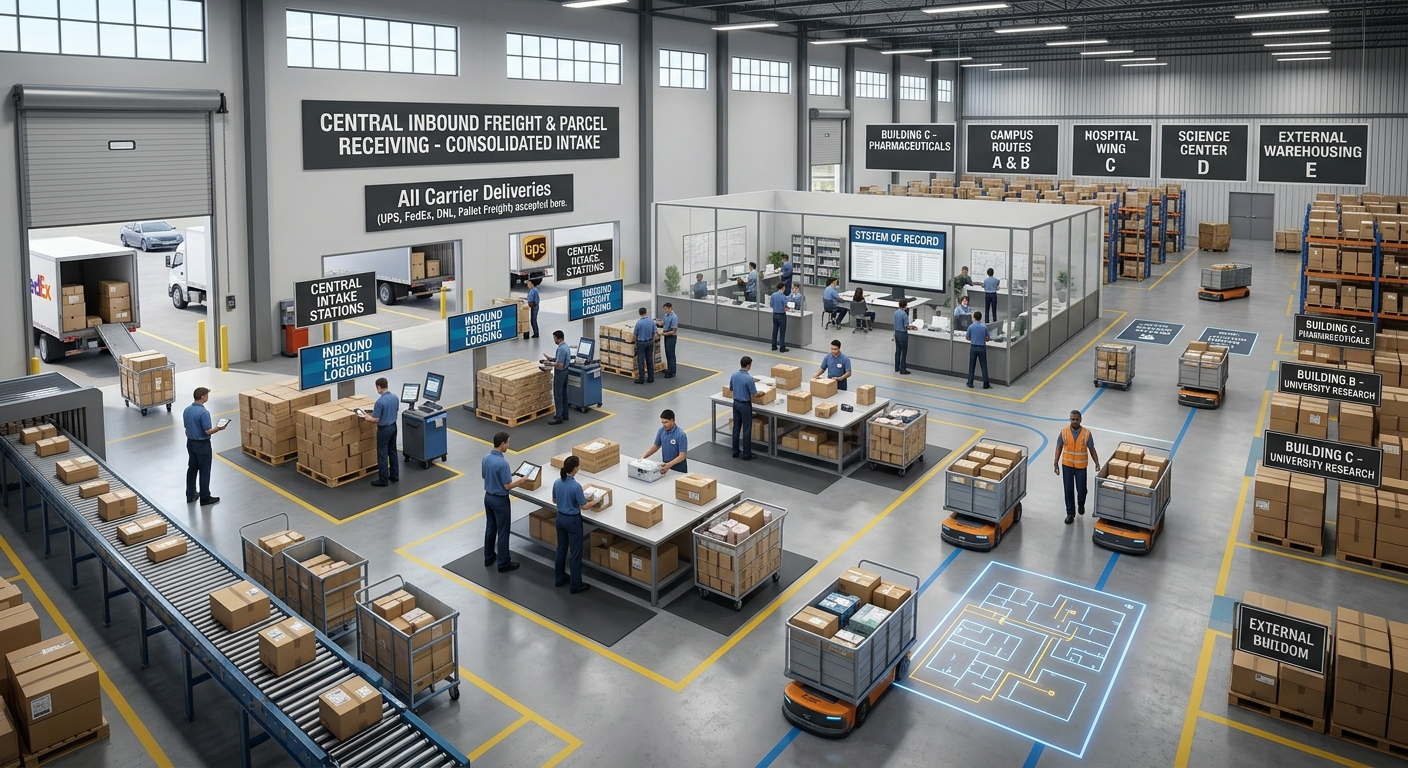
In this model, every carrier delivers to one dock. Staff there inspect the freight, log it, apply a label, and route it to the correct building on a schedule. A central receiving room follows the same principles as mailroom management: one intake point, one set of procedures, and one team accountable for every item.
Advantages:
- One point of accountability makes errors easy to trace.
- Consistent scanning and labeling apply to every delivery.
- Training and audits cover a single team.
Trade-offs:
- Freight needs internal transport after receiving, which adds time.
- Busy periods can create bottlenecks at the central dock.
- The site needs enough space and staff to handle peak volume.
Best for: campuses, hospitals, and corporate parks where buildings sit close together and the facility receives a mix of packages and pallets.
Option 2: Have Carriers Deliver to Each Distribution Center
Each building receives its own freight, handled by local staff. Carriers drop pallets at the dock closest to the end user, shortening delivery time and avoiding re-handling.
Advantages:
- Freight reaches its destination faster.
- No internal shuttle or second touch is required.
- The model scales well for high-volume buildings with dedicated crews.
Trade-offs:
- Procedures can vary from site to site.
- Leadership has a harder time seeing all inbound freight in one view.
- Every dock needs trained staff and clear delivery instructions.
Best for: geographically spread sites where internal transfers are impractical, such as 3PL networks and regional fulfillment operations.
Option 3: Use a Hybrid Model With a Central Hub and Satellite Docks
A hybrid setup sends high-value, regulated, or mixed shipments through a central hub, while routine freight for a single building goes straight to that site's dock. Organizations often adopt this approach gradually, starting with the freight categories that cause the most problems.
Best for: organizations with varied freight types, those growing into new buildings, and teams moving from decentralized receiving toward more control.
Option 4: Standardize Addressing, Labeling, and Carrier Instructions
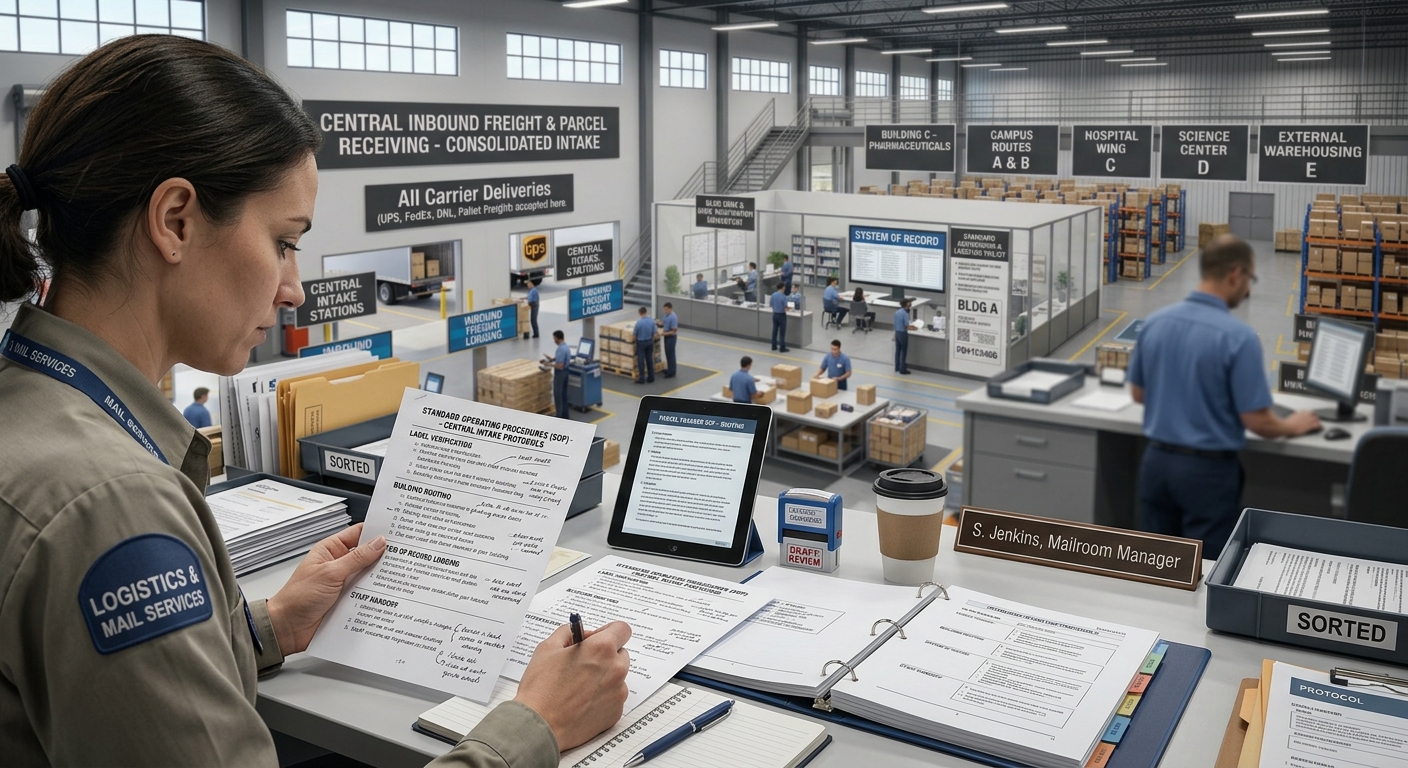
Clear identification at the source prevents many errors before a pallet reaches the dock. A strong labeling standard includes:
- A unique building code and dock door number on every purchase order and ship-to address.
- A recipient name, department, and contact number.
- A barcode or QR code that links to the pallet record.
- The purchase order or reference number for matching against expected deliveries.
Share these standards with suppliers and carriers in a routing guide, and update the guide whenever a building or dock changes. This option works alongside any of the receiving models above.
Option 5: Establish Chain-of-Custody Rules at Every Handoff
Chain of custody means every pallet has a documented owner at every moment. Practical rules include:
- A scan or photo at receipt, at each internal transfer, and at final delivery.
- A named owner for each staging zone, with that person's name posted at the zone.
- A maximum dwell time, such as 24 hours, after which unclaimed pallets trigger an escalation.
- A written shift handoff that lists pallets awaiting pickup or action.
Short training sessions help new hires follow the process from their first day, and periodic spot checks keep habits consistent.
Option 6: Align Carriers and Suppliers With Delivery Appointments and Scorecards
Carriers and suppliers influence where pallets land. Scheduling appointments at each dock spreads arrivals throughout the day and gives staff time to receive each shipment properly. Carrier scorecards that track wrong-dock deliveries and missing paperwork give procurement teams evidence for performance conversations. Some organizations also add building-specific delivery instructions to every purchase order so drivers see them before arrival.
How Mailroom Management Software Prevents Pallet Loss Across Buildings
Processes work best when staff can follow them consistently, and software makes consistency practical. Mailroom management software gives every building one shared record of what arrived, where it sits, and who owns it. Many organizations already run a parcel system for boxes and envelopes, and the same platform can extend to pallets and larger freight. Teams responsible for post management on campuses and corporate sites often find that the habits built around daily mail and packages apply equally well to freight.
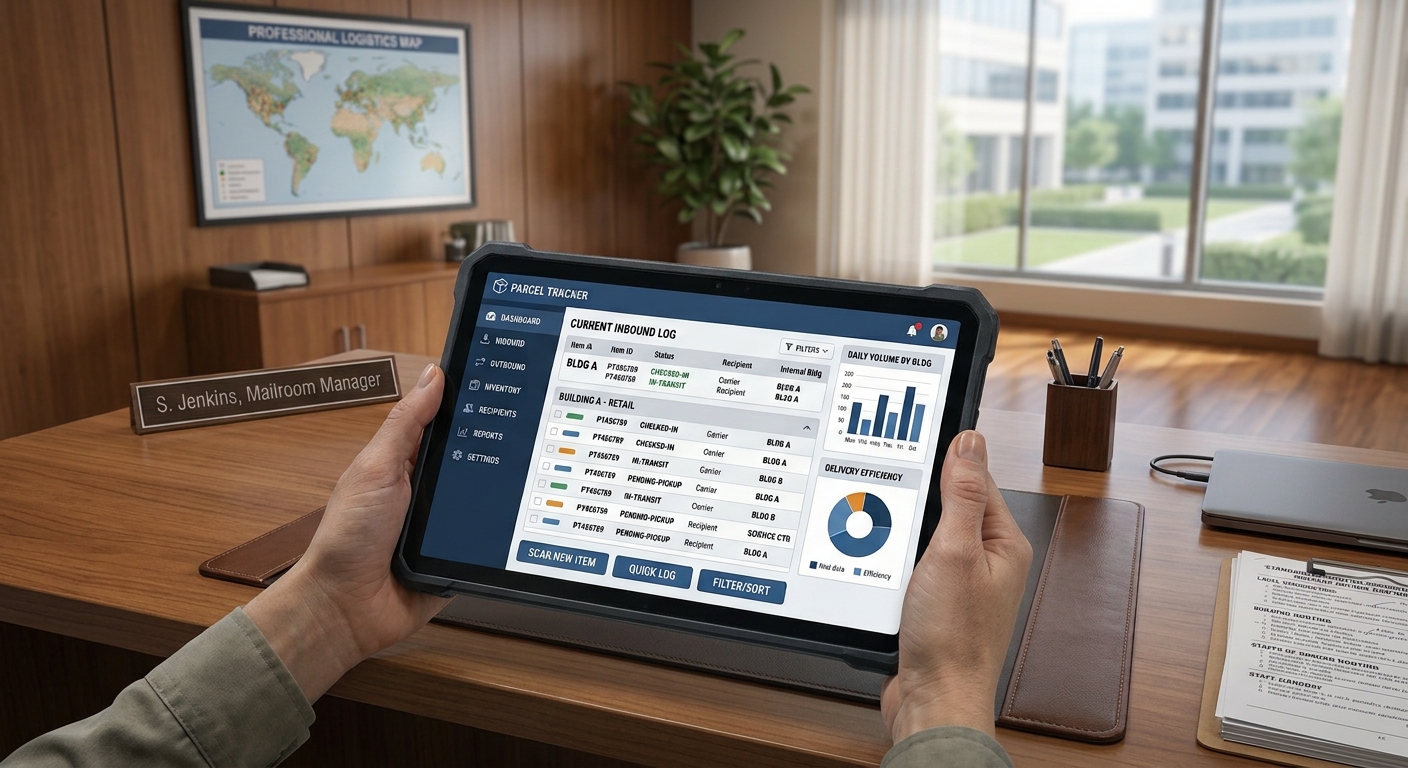
Strong parcel management practices rely on the following capabilities, and good package tracking software provides all of them:
- Single system of record: Every building logs freight in the same place, which removes the need for separate spreadsheets.
- Dock check-in: Staff scan or photograph a pallet on arrival, capture carrier and tracking details, and link the pallet to a recipient and building.
- Real-time status: Anyone can see whether a pallet is received, in transit between buildings, or delivered.
- Automated notifications: Recipients get an alert when freight arrives, and reminders escalate when it goes unclaimed.
- Signature capture and audit trails: Each handoff records who touched the pallet and when, which supports carrier claims and internal reviews.
- Reporting and analytics: Managers can spot patterns, such as a carrier that frequently misdelivers or a shift with long dwell times.
Software supports every receiving model described above. A centralized mailroom uses it to log and route, a decentralized network uses it to give leadership a unified view, and a hybrid model uses it to keep hub and satellite records in sync.
What to Look for When Selecting Tracking Software
- Support for pallets and oversized freight in addition to standard packages.
- Mobile scanning that works on the dock and in staging areas.
- Multi-location configuration with building-level permissions.
- Configurable alerts and escalation rules.
- Exportable records and reports for carrier claims and audits.
- Simple onboarding so staff on every shift can use it confidently.
Visibility at Every Handoff Keeps Pallets Where They Belong
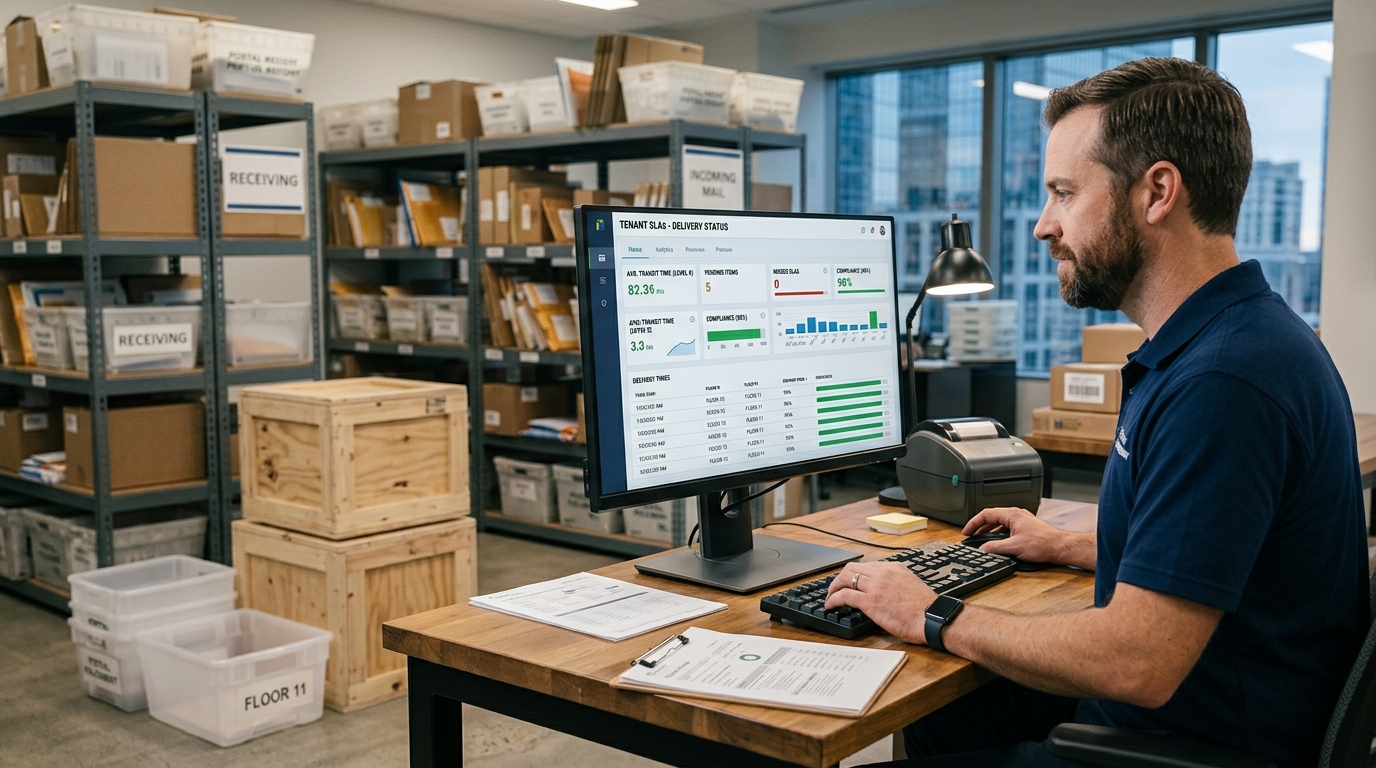
Lost pallets in multi-building facilities usually trace back to process gaps such as a vague address, a skipped scan, or a staging area with no owner. The right receiving model, consistent labeling, clear chain-of-custody rules, and shared tracking close those gaps. Each facility will use a different combination, and visibility at every handoff benefits everyone.
Teams ready to replace spreadsheets and guesswork with a single record across all buildings can explore Parcel Tracker to see how a purpose-built platform supports accountable receiving, tracking, and delivery.
Expert FAQ: Preventing Lost Pallets in Multi-Building Distribution Centers
How can distribution centers prevent lost pallets across multiple buildings?
Standardize receiving, label every pallet with a building code, scan at each handoff, and log status in one system.
What is the best receiving model for a multi-building distribution center?
Centralized receiving fits close buildings, and carrier delivery to each site fits distant locations with high pallet volume.
Why do pallets get lost between buildings?
Wrong-dock deliveries, unclear addresses, missing transfer scans, and unowned staging areas cause most pallet losses.
How does package tracking software reduce lost freight?
It logs each pallet at check-in, shows live location, captures signatures, and sends automated alerts for unclaimed items.
What should a pallet chain-of-custody process include?
A scan at every handoff and a named owner for each staging zone, with dwell time limits.
Why does a central receiving point reduce pallet loss?
One dock gives freight a single point of accountability and a consistent scanning routine.


