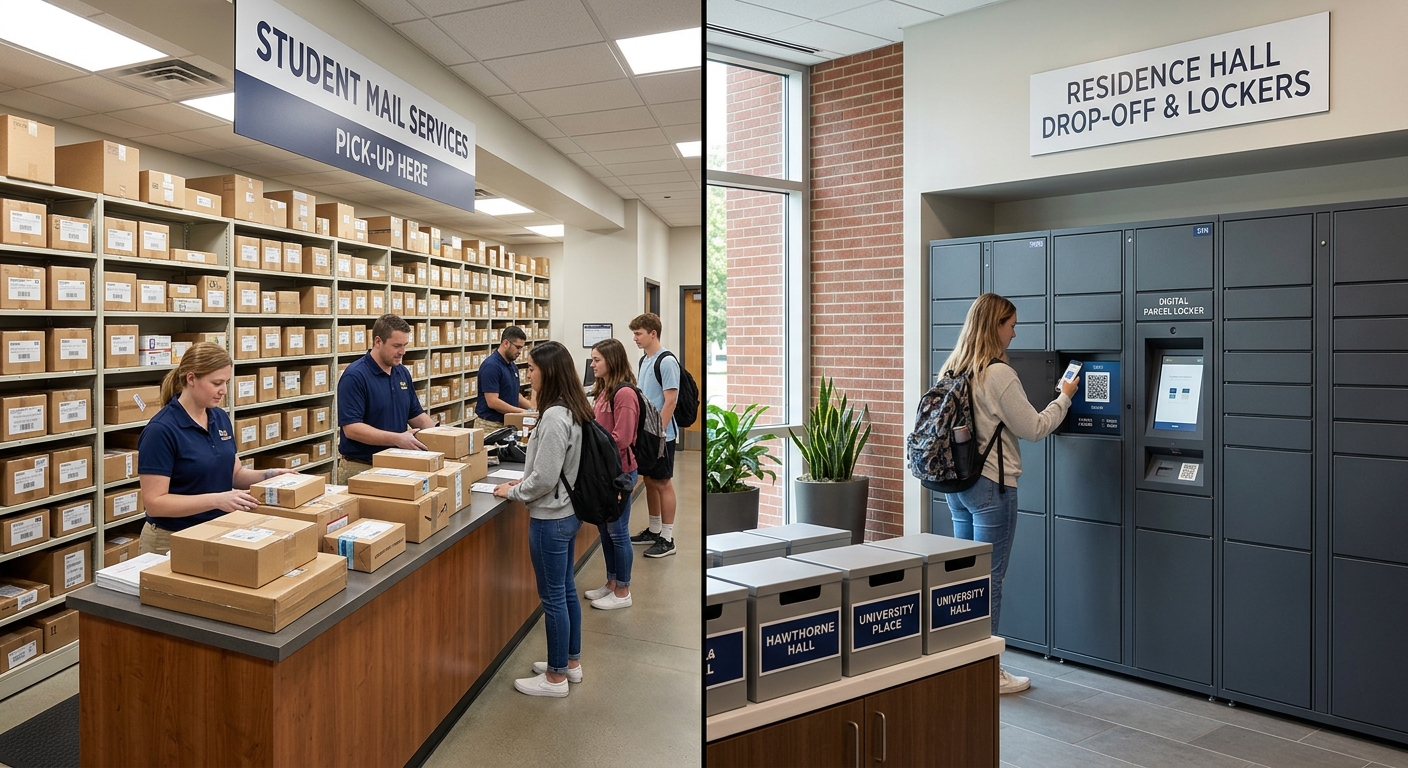
.svg)
Emergency Protocols for Suspicious Packages in Office Mailrooms


High daily parcel volumes in modern corporate offices increase exposure to unidentified or hazardous deliveries. Building managers must maintain active threat awareness to safeguard staff, assets, and physical infrastructure.
Implementing structured security protocols allows teams to process large volumes of incoming items safely while catching anomalies before they reach internal departments. Proactive safety measures ensure that every incoming item undergoes clear verification steps prior to internal distribution. Effective mailroom management combines physical intake standards with digital tracking tools to maintain complete control over the entire receiving ecosystem.
Treating receiving safety as a baseline component of building security protects staff and preserves business continuity. Equipping intake teams with actionable protocols enables rapid threat identification, precise physical containment, and clear escalation paths.
Identifying Visual and Physical Red Flags on Incoming Parcels

Physical inspection serves as the first line of defense for incoming deliveries. Mailroom staff members trained to recognize distinct label anomalies and physical package irregularities stop potential threats at the loading dock.
Courier Label Anomalies
- Missing, illegible, or unverifiable return sender details.
- Excessive or improper postage stamps indicative of meter bypass.
- Misspelled individual names, incorrect executive titles, or restrictive markings like "Personal" or "Confidential".
Physical Parcel Indicators
- Visible wires, metallic foil, strange chemical odors, or oily surface stains.
- Lopsided weight distribution, rigid feel, sloshing internal liquids, or excessive sealing tape.
- Unexpected deliveries arriving from unfamiliar origin points without corresponding tracking logs.
Comprehensive parcel management workflows ensure that every anomaly gets logged and verified before moving past primary intake.
Immediate Digital and Physical Isolation Protocols
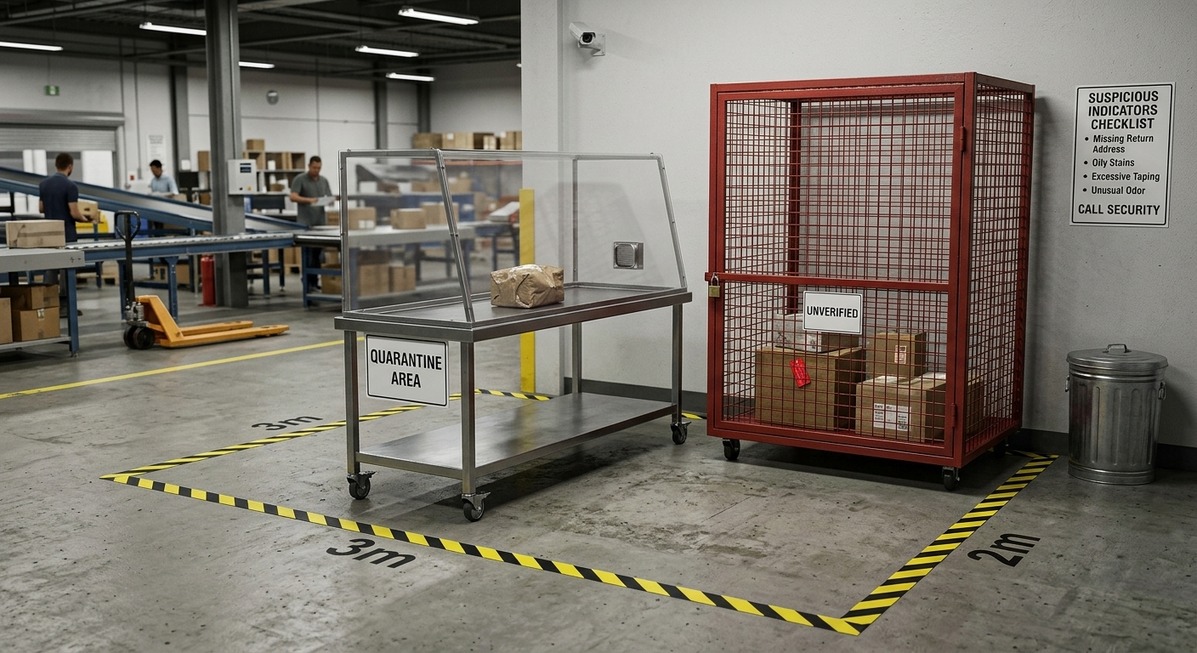
When a delivery exhibits red flags, mailroom personnel must execute digital and physical containment measures simultaneously. Rapid isolation prevents accidental exposure and stops automated delivery workflows.
Digital containment requires marking the item status as "Quarantine" in the core system software. This action immediately suppresses recipient notifications via email or text, preventing employees from walking down to retrieve an unverified package. Uploading a photo log of the flagged label creates a permanent audit record for corporate security review.
Physical containment mandates a strict hands-off approach. Staff must leave the package exactly where found, avoiding further movement or handling. Establishing a clear 25-to-50-foot safety perimeter around the item keeps personnel at a safe distance. Shutting down local HVAC units in the immediate receiving area stops potential airborne particles or gases from migrating into primary office spaces.
Chain-of-Command Escalation and Response Steps

Escalation procedures must follow a structured hierarchy to ensure rapid, coordinated action without triggering a building-wide alarm.
- Internal Notification: The receiving operator immediately contacts the Facilities Manager and the Head of Physical Security.
- Threat Assessment: Security personnel review the digital item log, inspect the perimeter, and evaluate the need for localized or building-wide evacuation.
- Leadership Alignment: Executive management, legal counsel, and corporate communications receive briefings to coordinate external alignment.
- Emergency Services Engagement: Security contacts local law enforcement or hazmat specialists when physical hazards appear likely.
- Data Transfer: Staff provide responding authorities with digital intake records, origin photos, and system timestamp logs to assist their tactical response.
Post-Incident Protocols and Staff Safety Retraining

After emergency personnel clear the building, facilities teams shift focus toward systematic recovery and process refinement. Supporting law enforcement with complete access logs, CCTV footage, and chain-of-custody data speeds up official investigations.
Restoring standard intake workflows requires a thorough system audit and equipment check. Facilities leaders should conduct post-incident reviews with receiving staff to evaluate response timing and identify communication gaps.
Regular training sessions reinforce emergency readiness. Conducting quarterly drills ensures intake teams maintain sharp visual recognition skills and follow digital quarantine steps accurately during high-stress situations.
Building a Resilient Mailroom Operations Framework
Combining structured physical procedures with end-to-end digital visibility creates a secure receiving environment. Modern software solutions like Parcel Tracker help facilities teams maintain total internal traceability, flag suspicious items instantly, and keep corporate buildings safe.
Expert FAQ: Mailroom Emergency Protocols
What are the primary visual red flags of a suspicious package?
Key indicators include missing return addresses, excessive postage, misspelled names, strange stains, protruding wires, or unverified courier sources.
How do you digitally isolate a suspicious parcel in mailroom software?
Flag the package status as "Quarantine" in your management system to pause automated pickup alerts to recipients immediately.
What is the first physical step when finding a threat parcel?
Immediately stop moving or opening the package, clear all personnel, and establish a minimum 25-to-50-foot isolated perimeter.
How should facilities directors escalate a mailroom threat internally?
Alert internal security immediately, review digital parcel logs, and contact local emergency law enforcement services if verified dangerous.



.svg)