.svg)
Enterprise-Grade Reliability: Can Your Mailroom Software Handle Extreme Parcel Density?


When your mailroom is quiet, any software will do. But when the delivery trucks arrive with hundreds of packages during a peak morning, your software is either an asset or a bottleneck.
Extreme parcel density refers to periods where the volume of incoming mail exceeds your staff's ability to process it manually. To survive these surges, you need a digital delivery log and enterprise-grade reliability.
When Small-Scale Systems Break
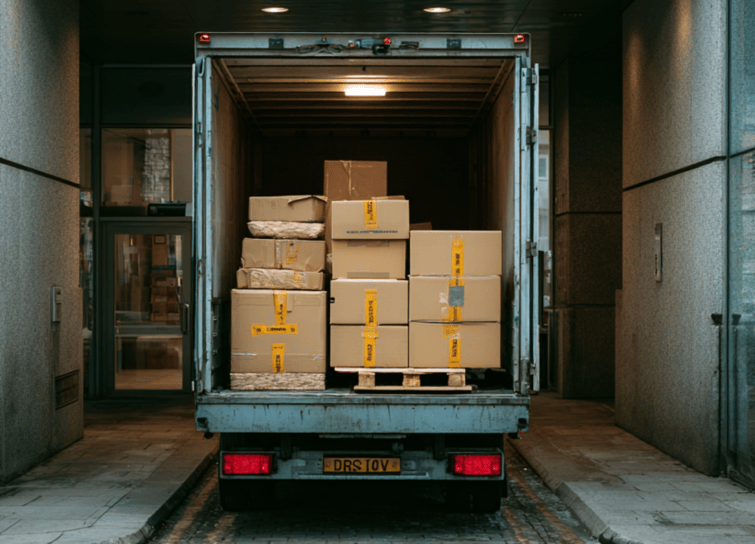
Most mailroom apps are designed for 10 packages a day. They look sleek and work fine in a vacuum. However, enterprise operations, such as Tier-1 universities or massive corporate campuses, face a unique technical challenge when density spikes.
When you hit 100+ packages an hour, a standard system starts to choke. You’ll see:
- Database Latency: The system takes three seconds to save a record instead of 200 milliseconds. In a line of 50 students waiting for packages, those seconds compound into hours of lost productivity.
- Sync Conflicts: Two mailroom clerks scan the same pallet at the same time, causing the database to "lock" or create duplicate entries.
- OCR Degradation: Light-duty Optical Character Recognition (OCR) might struggle with glare, font variations, or damaged labels when forced to process at high speeds.
The Technical Pillars of Enterprise Scalability
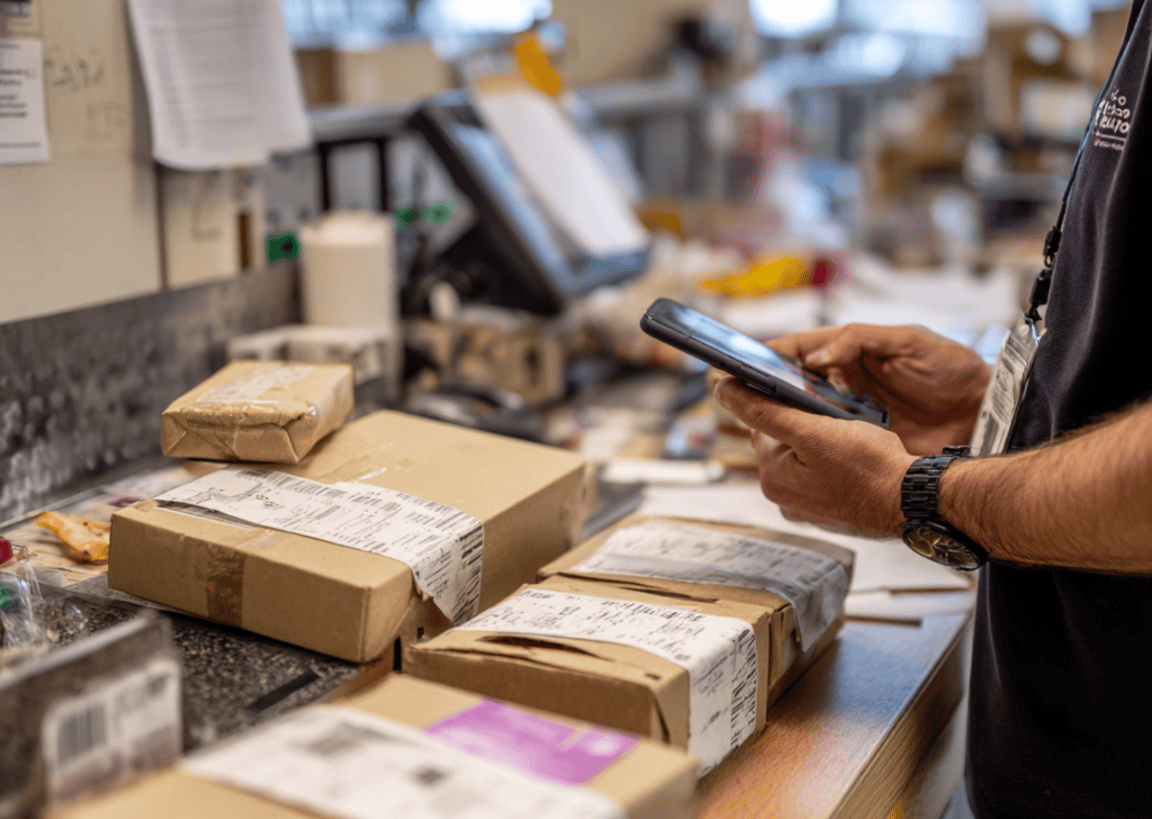
To handle high density, your parcel management software must be built on a high-concurrency architecture. Here is what actually happens under the hood of a reliable system:
1. Database Throughput & High Concurrency
Enterprise systems utilize distributed databases. Instead of a single giant spreadsheet that can be edited by only one person at a time, these systems support hundreds of simultaneous writes. This ensures that while five clerks are scanning in the loading bay, ten couriers can be out for delivery without a single millisecond of lag.
2. High-Speed Batch Processing
A prosumer app forces you to Scan → Confirm → Notify for every single item. An enterprise system utilizes batch processing. This allows a clerk to scan 50 items in a continuous stream, with the system intelligently grouping notifications. This prevents a surge of notifications that can flag your mail server as spam or overwhelm recipients' inboxes.
3. Edge-Based OCR Accuracy
At scale, you don't have time to manually type a name. Enterprise-grade OCR uses machine learning models that run on the device (edge computing) or high-speed cloud clusters. This ensures that even a crumpled, rain-soaked label is digitized in under a second with 99%+ accuracy.
The Human Cost of Technical Delay

When the software lags, the staff suffers. In high-density environments, a slow system leads to manual workarounds, and clerks start writing things on paper or skipping scans just to clear the queue.
The moment a scan is skipped, the chain of custody is broken. For an enterprise, this is a massive liability. If a high-value research sample or a sensitive legal document goes missing because the software was spinning, the cost of that failure far outweighs any software subscription fee.
Fast and Reliable Mailroom

Reliability means maintaining fluidity under pressure. An enterprise-grade system should feel just as fast at package 1,000 as it did at package one.
If your current mailroom management setup is struggling with the surge, it may be time to move beyond simple apps and toward a platform engineered for the heavy lifting of modern logistics.
Looking to upgrade your infrastructure? See how Parcel Tracker is built to handle extreme parcel density without ever missing a beat.


.svg)