.svg)
Applying Macro Warehouse Principles to Micro Mailroom Spaces


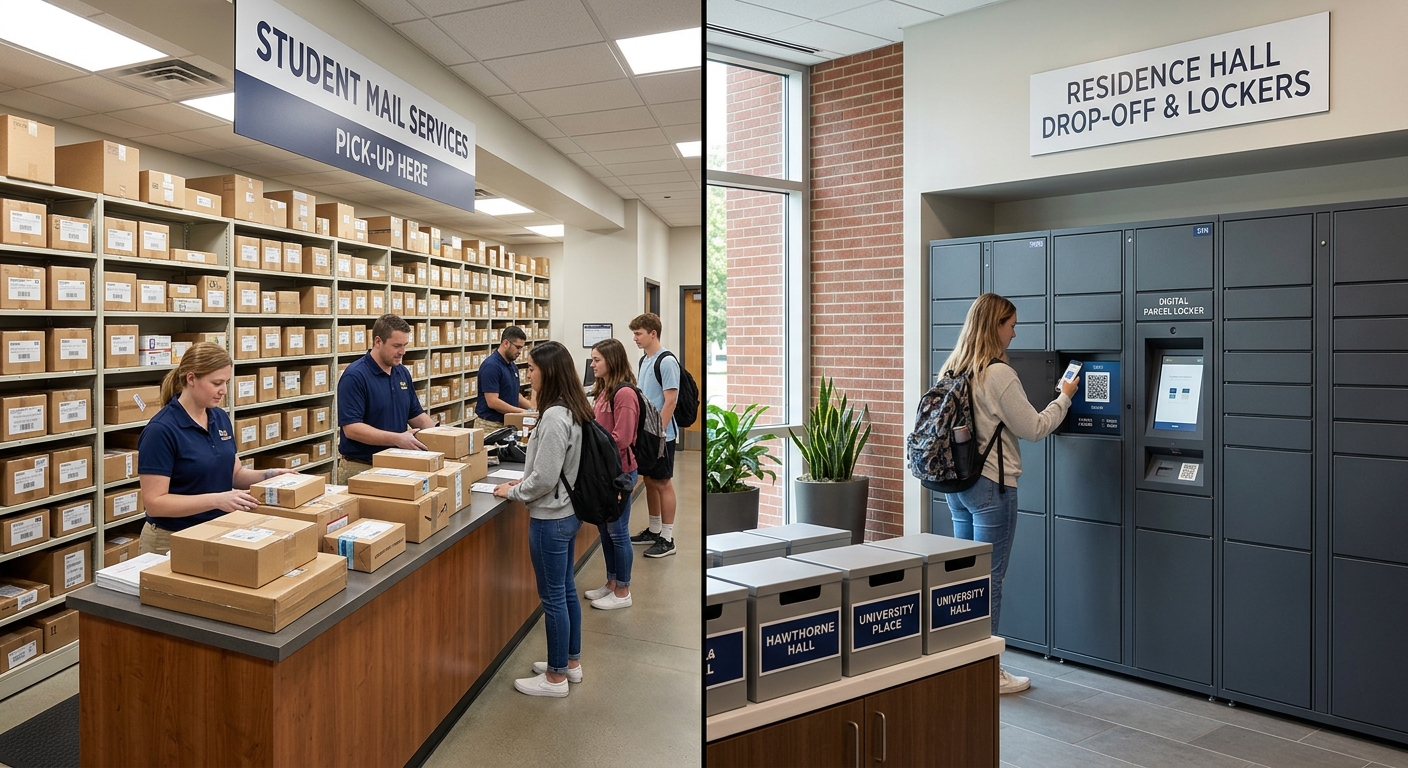
Efficient parcel management is a systematic process where incoming packages are organized, tracked, and distributed using structured logistics frameworks. In small corporate and residential footprints, executing this method with dedicated mailroom management software ensures complete inventory visibility, eliminates courier drop-off delays, and maximizes spatial capacity.
Why Do Small Mailroom Spaces Experience Major Logistics Bottlenecks?
Industrial distribution centers manage thousands of square feet to route freight. Small corporate offices and residential high-rises often process hundreds of multi-sized deliveries daily inside repurposed closets or tiny reception alcoves. This sudden influx of e-commerce packages creates severe pressures that mirror the vulnerabilities of large fulfillment hubs.

When incoming deliveries arrive without an organized sorting framework, inventory visibility disappears. Packages pile up randomly on floors, chairs, or open desks. Staff members lose hours digging through stacks to locate individual items, which spikes internal transit times and creates administrative stress.
Simultaneous courier arrivals worsen these spatial limitations. Multiple delivery drivers frequently crowd narrow entrance corridors at peak hours. Relying on manual logbooks or paper spreadsheets slows down driver check-ins, blocks foot traffic, and creates immediate gridlock at your front desk.
How Can You Implement Warehouse Slotting Strategies on Mailroom Shelving?

What Is Velocity-Based Inventory Placement?
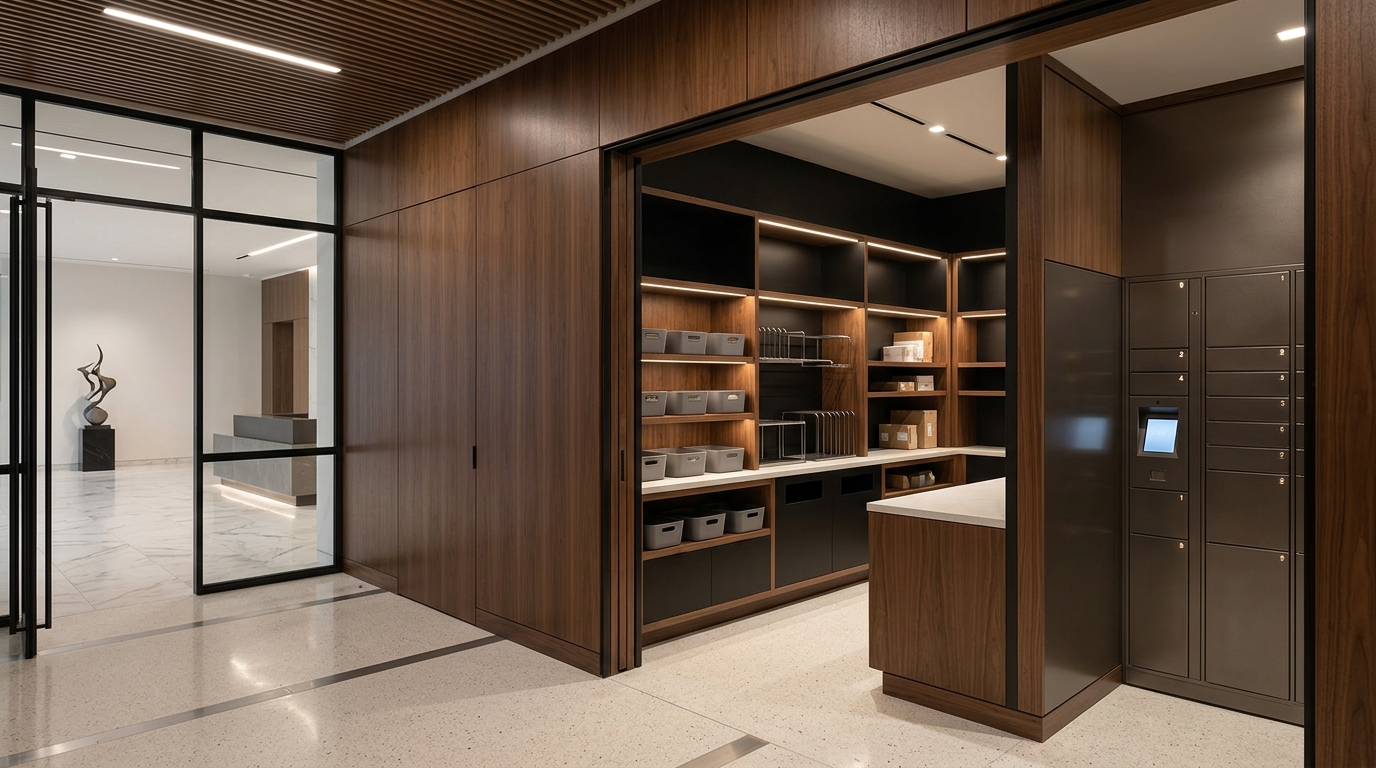
Industrial warehouses place high-demand products closest to loading bays to minimize travel time. Your mailroom can adopt this approach by organizing shelving units based on recipient pickup velocity. Staging packages for high-volume departments or frequent online shoppers on central, eye-level shelves accelerates daily retrieval. Position long-term holds, certified documents, or low-frequency recipients on the highest or lowest shelf extremities to keep prime space clear.
How Do You Cube Out Small Shelving Footprints?
Maximizing spatial density requires dividing available racks into standardized zones that match specific dimensions. Allocate distinct sections for thin document mailers, medium corrugated boxes, and oversized custom packages. Utilizing uniform bins or adjustable shelf dividers prevents smaller parcels from getting buried behind large cartons, allowing staff to assess total remaining capacity instantly.
Why Establish Fluid Staging Zones?
Fixed spatial assignments often lead to wasted capacity when certain departments experience low delivery volumes. Maintaining a percentage of your shelving as dynamic allocation zones allows the space to adapt to changing conditions. During peak holiday shopping seasons or corporate events, staff can reassign empty document racks to hold bulk promotional shipments.
How to Engineer Layout and Optimize Traffic Flow

Establishing a Linear Flow
Eliminating cross-traffic friction requires a strict, one-way sequential path from initial package intake to final recipient pickup. Designing this continuous physical loop ensures that staff members and visitors move in a single direction without colliding.
- The Receiving Dock: A dedicated counter near the entrance door for courier drop-offs.
- The Processing Station: A separate workspace equipped with digital tools where staff scan, label, and sort items.
- The Staging Racks: Organized vertical shelves categorized by velocity and recipient zones.
- The Retrieval Window: A client-facing service point located away from the processing zone where recipients collect items.
Utilizing High-Density Vertical Storage
When horizontal square footage is limited, extending your storage upward preserves valuable floor space. Installing heavy-duty industrial shelving units that reach the ceiling opens up massive volume. Use lightweight, rolling step stools to keep the top tiers accessible, and ensure that heavy boxes remain at waist level to protect employee safety.
Creating Visual Controls
Clear visual indicators remove confusion for both internal workers and external delivery drivers. Applying bright floor tape to mark courier boundaries keeps active delivery zones separated from foot traffic. Color-coding shelving tiers by department or floor number helps workers identify correct storage spots in seconds.
How Digital Automation Transforms Micro Mailrooms

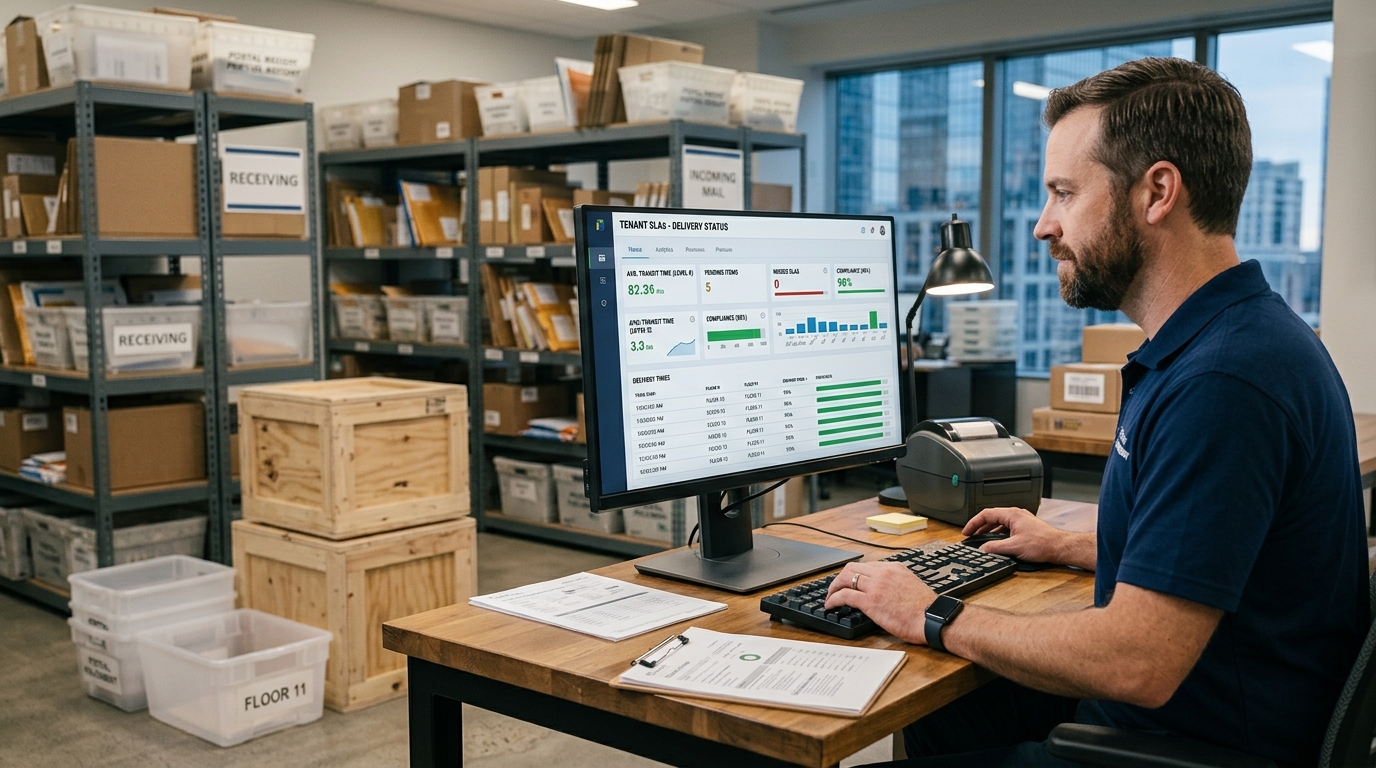
Adopting a modern parcel system eliminates the human errors inherent in manual data entry. High-speed barcode scanning captures tracking numbers instantly, logging sender and recipient data into a centralized dashboard without delays. This shift protects data integrity and creates a reliable audit trail for every single item that enters the building.
Implementing high-quality parcel tracking software streamlines communication through automated alerts. The moment a worker scans a package into a staging slot, the system distributes an immediate text or email notification. Providing these alerts encourages rapid collection, which lowers average package dwell time and keeps storage shelves clear.
Maintaining accurate data requires an uninterrupted digital chain of custody. Recording electronic signatures or taking photo proof at the point of exchange establishes clear accountability. This digital verification ensures parcel management compliance and protects your facility from liability regarding lost or misplaced items.
How to Maximize Efficiency in Restricted Footprints

Applying systematic warehouse logistics to small footprint areas turns a chaotic mail corner into a high-throughput fulfillment center. Structured layout designs, velocity-based slotting, and vertical storage optimization allow facilities to handle rising e-commerce volumes smoothly.
Upgrading manual workflows with advanced software removes blind spots entirely. Implementing the best package tracking app automates notification workflows, manages inbound flow similarly to freight forwarding checkpoints, and secures your chain of custody from arrival to final handoff.
Discover how integrating Parcel Tracker can optimize your physical space and elevate your daily tracking productivity.
Expert FAQ
What is mailroom slotting?
Mailroom slotting is organizing incoming packages on specific shelves based on their physical size and recipient pickup velocity.
Why do micro mailrooms experience bottlenecks?
Micro mailrooms experience bottlenecks because manual logging and unstructured layouts slow down courier drop-offs and recipient package collection.
How does vertical shelving improve mailroom capacity?
Vertical shelving improves capacity by utilizing overhead wall space, clearing floor clutter, and expanding total parcel storage density.
What technology replaces manual paper mail logs?
Modern mailroom management software replaces paper logs by utilizing digital barcode scanning to track packages instantly.
Why are automated parcel notifications important?
Automated parcel notifications are important because they alert recipients immediately, accelerating package retrieval and freeing shelf space.


.svg)