.svg)
Resolving Freight Damage Disputes: Using Photo Proof in Forwarding Parcel Management

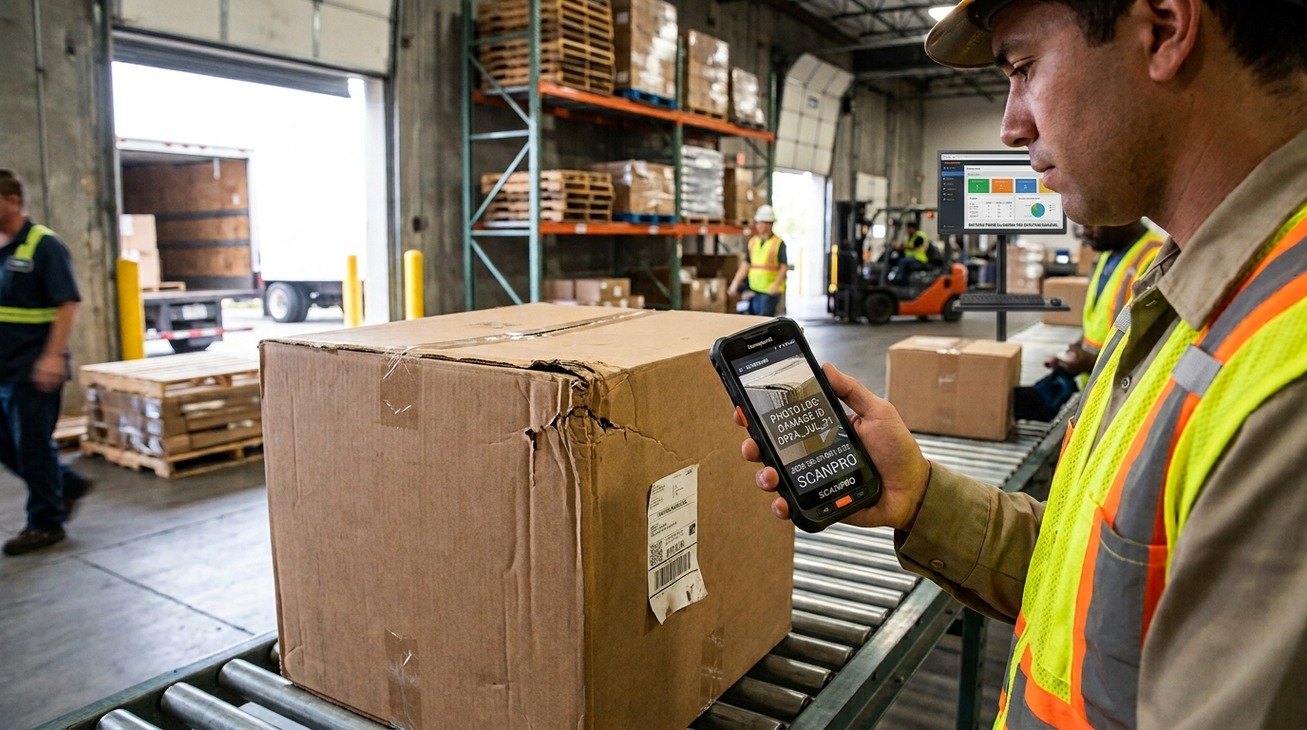
Freight forwarders and receiving centers frequently encounter packages that arrived at their loading docks with pre-existing damage. Standard barcode systems and electronic manifests confirm the exact time a package enters a building. These traditional records fail to show the physical condition of incoming items at the point of entry.
Taking ownership of a package with a crushed box or broken seal without proper documentation shifts full responsibility to your internal team. Digital scan logs confirm the chain of custody. Visual proof establishes a clear audit trail for the chain of condition. Combining both methods gives facility teams total transparency during intake.
High-volume facilities cover all their bases by adopting structured mailroom management practices. Capturing precise condition data at the receiving gate protects your business and maintains complete operational visibility across every shift.
Establishing Intake Defense via Time-Stamped Photo Proof at Dock Scan-In

Dock teams seamlessly integrate quick visual capture into standard receiving routines. Workers record high-resolution imagery during initial intake to establish immediate clarity regarding incoming parcel quality.
Dock staff inspect incoming freight for structural weaknesses and visible exterior flaws during scan-in. Recognizing these high-risk indicators helps teams document defects before accepting shipments into inventory.
- Crushed, creased, collapsed, or severely indented outer cardboard packaging
- Torn, cut, re-taped, or tampered security tape and tamper-evident seals
- Punctures, tears, gouges, or holes extending through outer shrink wrap or corrugated boxes
- Water marks, liquid stains, dampness, leaks, or sagging, soft cardboard
- Broken, loose, missing, or snapped plastic or metal strapping and banding
- Tilted, shifted, leaning, or unstable pallet stacks and unbalanced loads
- Broken or splintered wooden pallet bases, cracked runners, or protruding nails
- Exposed contents, torn inner polybags, or loose items visible from the exterior
- Activated or tripped tilt, shock, or temperature monitor indicators attached to freight
Intake photography relies on verifiable details to maintain accurate records. Every photo automatically logs exact timestamps, GPS locations, tracking identifiers, and handler credentials. These details provide objective proof whenever questions arise between transport partners.
Pre-Custody Real-Time Alerts for Complete Transparency Before Final Hand-off
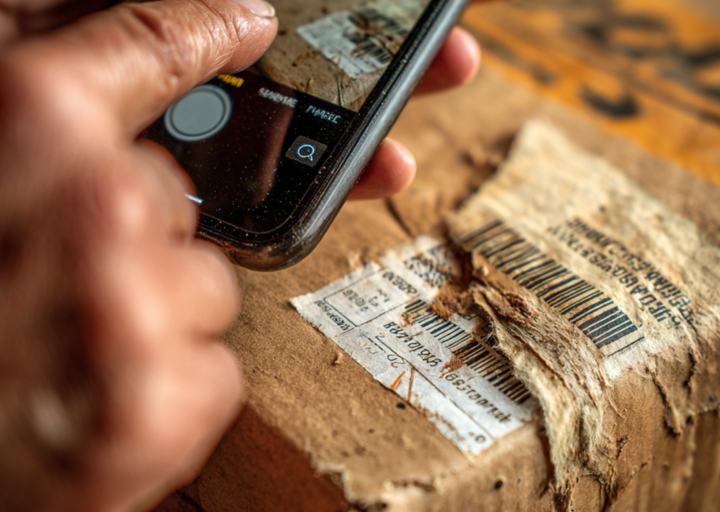
Establishing transparent communication protocols protects facilities prior to final custody hand-offs. Implementing automated intake sequences ensures every stakeholder remains informed about parcel condition status.
- Automated Status Notifications: Receiving platforms issue instant alerts to shippers, carriers, or consignees the moment staff observe external package defects.
- Securing Pre-Custody Confirmations: Stakeholders review digital photo evidence, acknowledge existing conditions, or direct next steps before your facility assumes final custody.
- Streamlining Communication: Clear image records attached to parcel histories resolve misunderstandings and align all parties around verified facts.
Teams managing large shipment volumes rely on parcel management workflows to automate these updates. Instant alerts keep external partners updated while preserving receiving productivity.
Upgrading Mailroom and Freight Operations with Visual Tracking

Receiving facilities replace manual logbooks and camera uploads with all-in-one mobile intake applications. Smart mobile devices allow staff to scan barcodes and document package conditions in a single action.
Digital tracking solutions archive condition reports within a secure central dashboard. This centralized approach empowers support teams to retrieve incoming receipt logs within seconds to answer delivery questions.
Freight facilities strengthen overall receiving workflows while building strong trust with carriers and recipients. Discover how internal mailrooms, logistics hubs, and receiving bays cover every angle with mailroom management software from Parcel Tracker.
Expert FAQ on Freight Intake Photo Evidence
How does capturing photos at dock scan-in protect a receiving facility?
Photo proof verifies package condition before internal handling, confirming pre-existing exterior damage occurred prior to facility intake.
What specific metadata must be embedded in parcel intake photos for accurate recordkeeping?
Reliable photo logs include automated time-stamps, facility location data, tracking numbers, and staff ID details.
Why are standard barcode scans insufficient for managing package condition records?
Barcode scans record delivery time and location without capturing visual details regarding physical packaging condition.
How soon should shippers be notified when freight arrives in damaged condition?
Shippers receive automated photo-backed notifications immediately at intake before packages move to final storage or internal routing.
What are the primary visual indicators of tampered or damaged freight?
Key indicators include crushed boxes, torn seals, package punctures, water stains, broken strapping, and activated shock monitors.



.svg)