.svg)
Retrofitting Older Residential Buildings for E-Commerce Surge


Older apartment complexes and commercial sites face physical limitations when handling daily deliveries. Architects designed these properties to accommodate simple paper letters, resulting in narrow corridors, compact front counters, and limited storage space. The surge in online shopping causes couriers to drop off hundreds of bulky cardboard boxes every single week, creating crowded lobbies and safety concerns.
Global shipping estimates indicate that annual package volumes will expand significantly beyond 100 billion parcels per year and approach double that volume by 2030. Managing this influx requires modernizing property and mailroom operations. Building teams can easily double their package storage capacity without incurring the costs of expensive wall demolitions or installing bulky electronic parcel locker banks. Simple space adjustments paired with light digital tools help maintain clear entryways and organized deliveries.
Low-Cost Space Hacks to Store More Packages in Small Areas
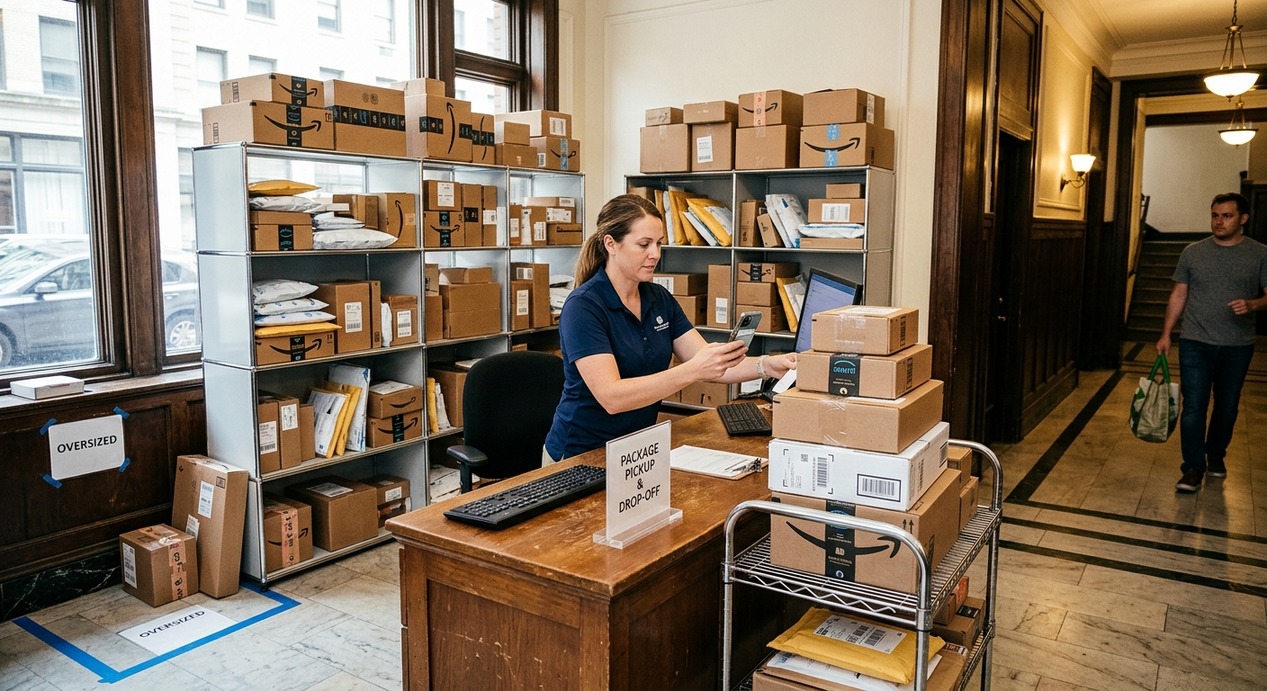
Maximizing existing wall space offers an immediate solution for floor clutter. Installing adjustable, wall-mounted shelving allows staff to stack incoming boxes safely according to height and weight. Storing lightweight, oversized items on higher shelves keeps lower walkways clear, while placing heavy packages at waist height simplifies lifting for desk attendants.
Rolling utility carts provide flexibility during heavy courier drop-offs. Staff members can sort boxes onto multi-tiered carts immediately upon arrival. Once peak delivery hours pass, these carts roll into back offices or supply rooms, restoring a clean appearance to the main lobby.
Unused building corners offer additional storage potential. Small architectural alcoves, spaces underneath stairwells, or coat closets can serve as secure staging spots. Marking designated floor areas with bright tape provides clear guidance for couriers dropping off extra-large items, preventing obstructions along main resident pathways.
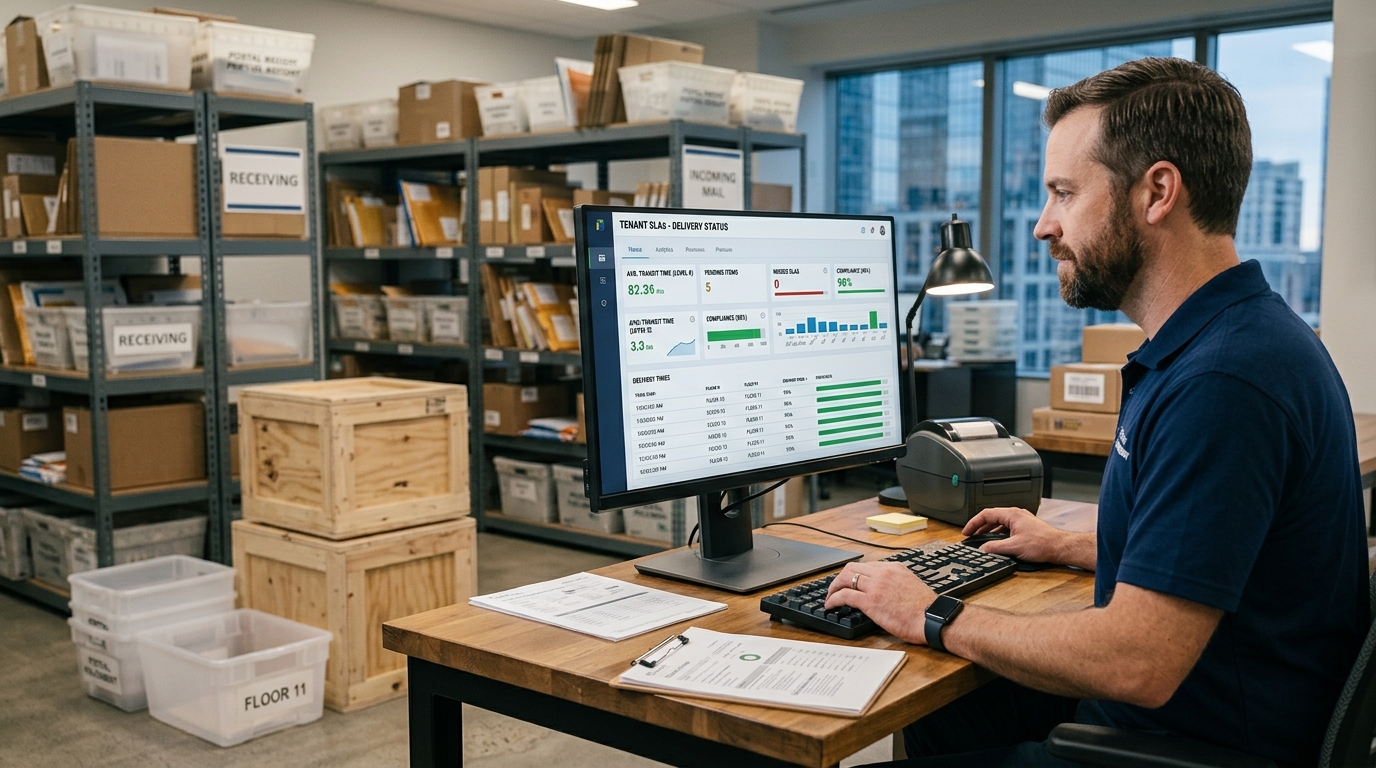
Effective mailroom management relies heavily on organizing physical space to keep packages safe and searchable. Proper spatial layout ensures staff members locate items quickly when residents arrive for pickup.
Ditching Bulky Desks and Paper Logs for Smartphone Scanning
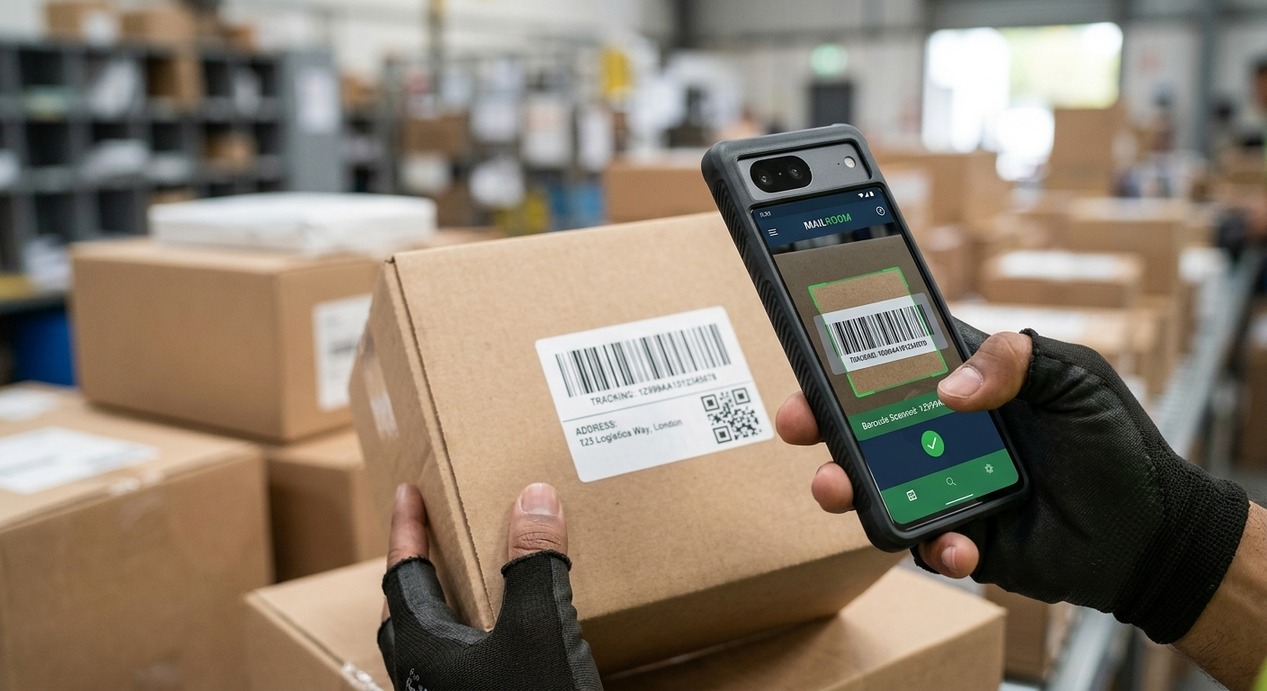
Paper logbooks slow down daily mailroom operations and consume valuable counter surface area. Handwriting carrier names, tracking numbers, and recipient details takes substantial time and leads to occasional legibility errors. Desktop computers, corded barcode readers, and heavy printers occupy space that front desk staff need for guest reception.
Replacing stationary hardware with a smartphone application streamlines incoming deliveries. Mobile software allows staff to scan box labels anywhere in the building using the devices they already carry.
- Staff scan multiple package labels simultaneously using rapid optical character recognition.
- Automatic email or text notifications reach residents immediately after a package is logged.
- Digital signatures captured on mobile screens confirm successful pickups without paper receipts.
An efficient parcel management system gives property teams real-time visibility into incoming inventory while keeping front counters tidy.
Handling Holiday and Peak Delivery Spikes with Flexible Setup

Tracking daily carrier delivery windows helps teams prepare space in advance. Couriers typically complete their primary drops during late morning or early afternoon hours. Anticipating these arrival times allows front desk staff to clear temporary sorting spaces before boxes arrive.
Collapsible room dividers create temporary high-density staging areas during busy shopping periods like the holiday season. Staff set up these lightweight partitions to keep package piles organized and out of sight. When delivery volumes return to normal levels, the partitions fold flat for compact storage.
Clear communication with residents accelerates package turnover during peak delivery periods. Automated pickup reminders encourage residents to collect their items on the day of arrival, keeping storage areas clear for the next day's deliveries.
Updating Older Mailrooms Without Major Spending

Upgrading parcel handling in older residential buildings depends on smart software and organized workflows rather than structural changes. Property teams can maintain clean lobbies and efficient package tracking without spending capital on expensive physical renovations or large hardware installations.
Using existing smartphones keeps operational costs remarkably low while providing modern delivery features. Learn how Parcel Tracker offers flexible Free and Plus options starting at $67 per month per site to speed up package logging and keep your front desk organized.
Expert FAQ: Upgrading Mail Operations in Older Buildings
How can older buildings handle package floods without adding extra storage space?
Older buildings can manage package surges by using vertical shelves, rolling carts, and smartphone scanning apps to maximize space.
What is the cheapest way to log incoming packages at the front desk?
Using a smartphone parcel scanning app is the cheapest way because it eliminates paper logs and expensive desktop hardware.
Why are traditional paper logbooks bad for property managers?
Paper logbooks cause front desk clutter, slow down package processing times, and increase the risk of lost deliveries.
How do mobile scanning apps speed up tenant package pickups?
Mobile apps instantly send automated tenant notifications upon scanning and collect fast digital signatures right on the phone.


.svg)