.svg)
Centralized Student Mailroom vs. Dorm-Level Drop Points: Which Model Scales Better?

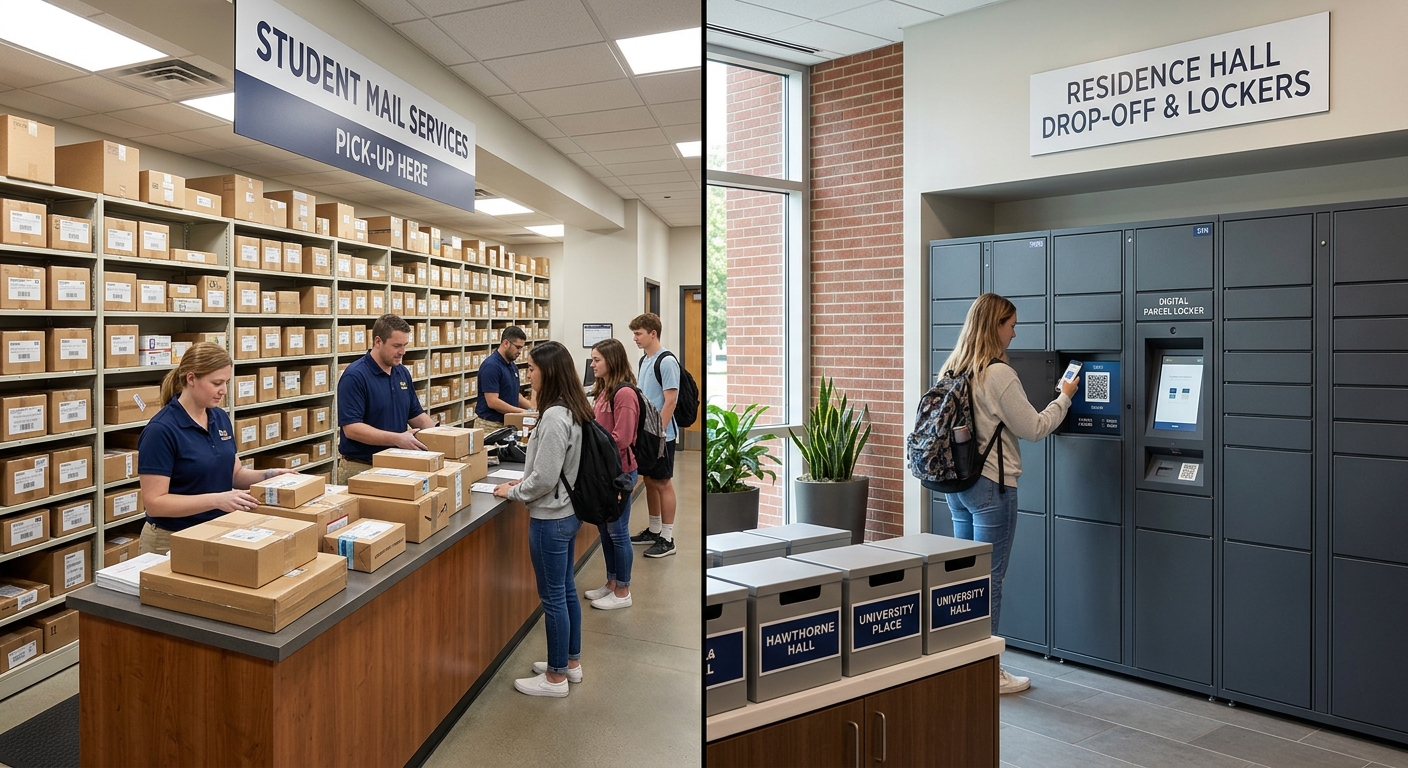
Online shopping habits among university students continue to increase daily parcel volumes across higher education institutions. Demographic data reveals that 59% of adult Gen Z consumers shop online weekly, creating consistent delivery spikes throughout the academic year. Furthermore, 73% of college-aged online shoppers purchase through major retail platforms, driving massive shipments to campus grounds. These volume trends leave institutions handling massive fulfillment challenges, as 62% of campus administrators acknowledge noticeable package growth over recent years without corresponding increases in processing space.
University administrators choose between two primary distribution models to manage daily parcel deliveries. Modern institutions implement effective mailroom management practices through centralized hubs or decentralized drop locations near residential halls. Each structure offers distinct characteristics for long-term growth and student convenience.
Model 1: Centralized Student Mailroom Operations
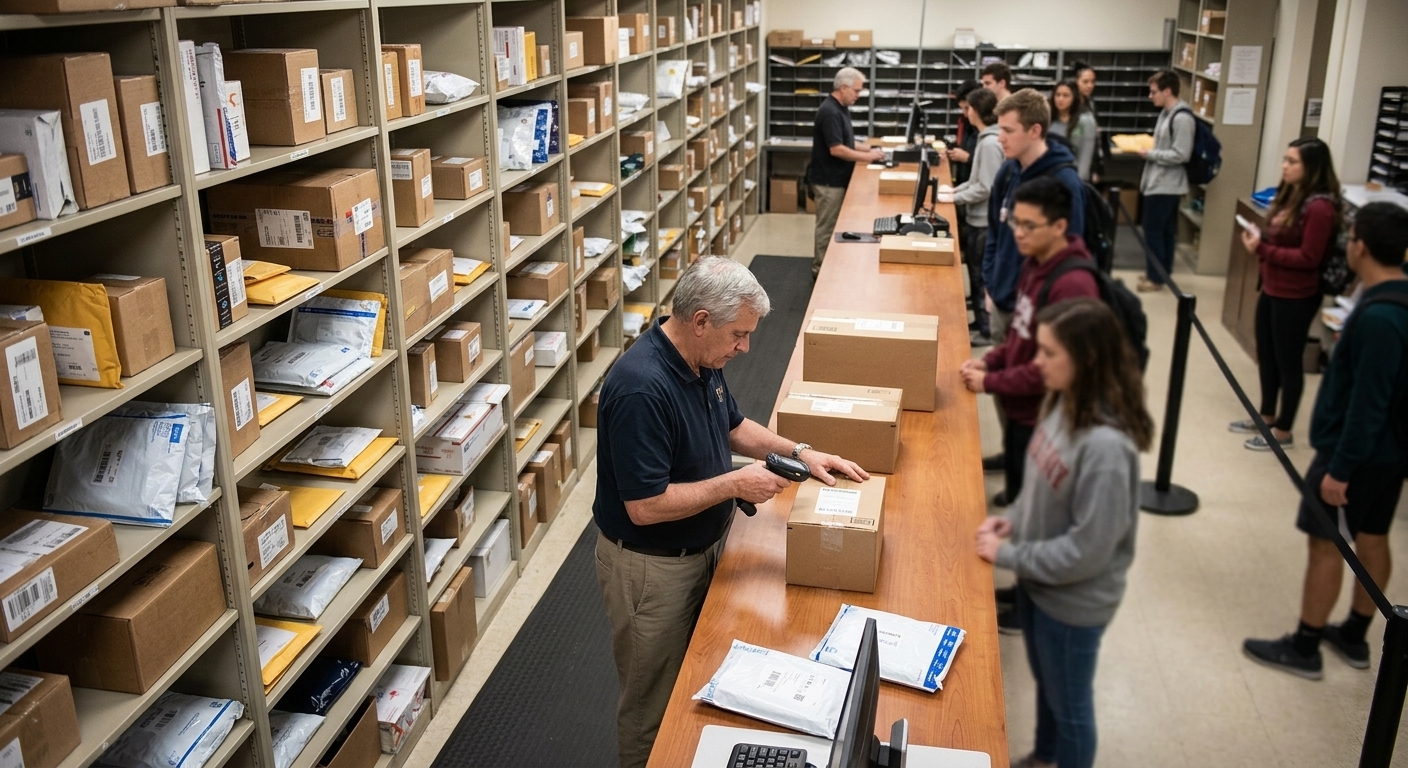
Centralized mailrooms consolidate all incoming packages into a single facility on campus. Major commercial carriers deliver all items to one receiving mailroom, where staff members log, sort, and store parcels in a secure central space.
Centralized operations offer several key advantages for growing universities:
- Consolidated Staffing: Placing personnel in one location allows supervisors to balance shift coverage and streamline training.
- Simplified Security Protocols: Maintaining a single pickup desk maintains chain-of-custody oversight and minimizes misplaced items.
- Flexible High-Density Storage: Large central facilities easily accommodate heavy shelving, pallet racks, and oversized delivery.
Centralized mailrooms present minor challenges during specific times of the year. Peak move-in weeks can generate extended lines at the main counter, requiring students living on the outer edges of campus to walk further to retrieve their orders.
Model 2: Dorm-Level Drop Points and Parcel Rooms
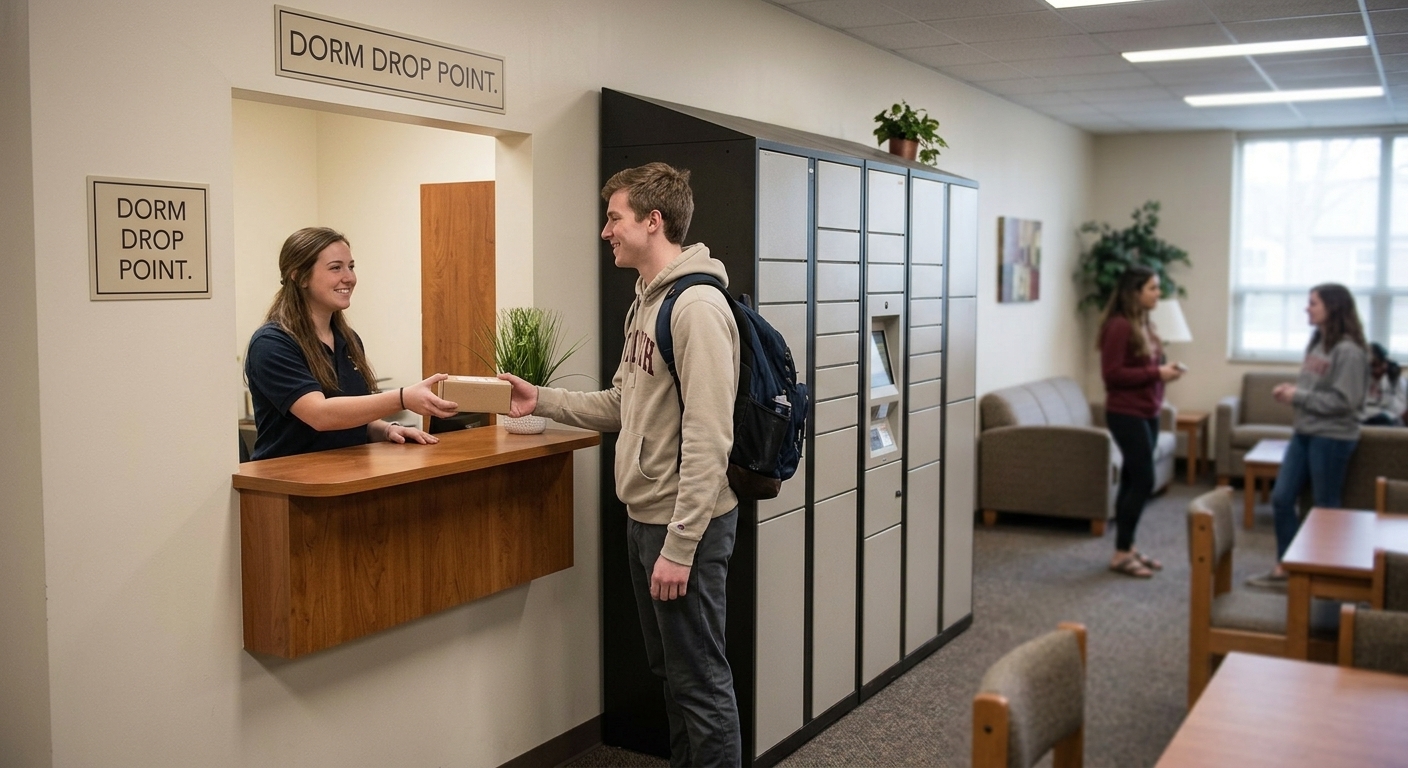
Decentralized models distribute incoming inventory across individual residence halls using dedicated parcel rooms or lobby lockers. Central staff or external couriers sort items by building before moving them to localized pickup locations.
- Local Access: Students retrieve incoming deliveries within their primary living quarters, providing rapid pickup options.
- Reduced Building Congestion: Spreading pickup locations across housing facilities reduces crowding in main administrative buildings.
- Internal Transit Requirements: Delivering items to individual dorms requires extra handling steps, vehicle transit time, and staff hours across campus routes.
- Physical Space Restrictions: Older residence hall footprints often restrict storage capacity, creating overflow during high-volume sales events.
Comparing the Core Metrics
Comparing centralized facilities with hall-level drop locations reveals distinct characteristics across four key performance metrics.
- Institutions focused on labor productivity benefit from centralized facilities that eliminate secondary campus transit routes. Central hubs preserve staff hours by keeping intake and pickup within one room.
- Centralized buildings adapt easily to expanding inventory through adjustable racking. Decentralized package rooms maintain fixed footprints that experience space limitations when delivery volumes increase.
- Decentralized points provide close access for residential students, while centralized facilities concentrate counter service in a single campus location.
- Centralized hubs maintain clear chain-of-custody tracking from carrier drop-off to final student handoff. Multi-stop distribution routes introduce additional handling stages that require structured internal monitoring.
Software as a Strategy to Bridge the Efficiency Gap
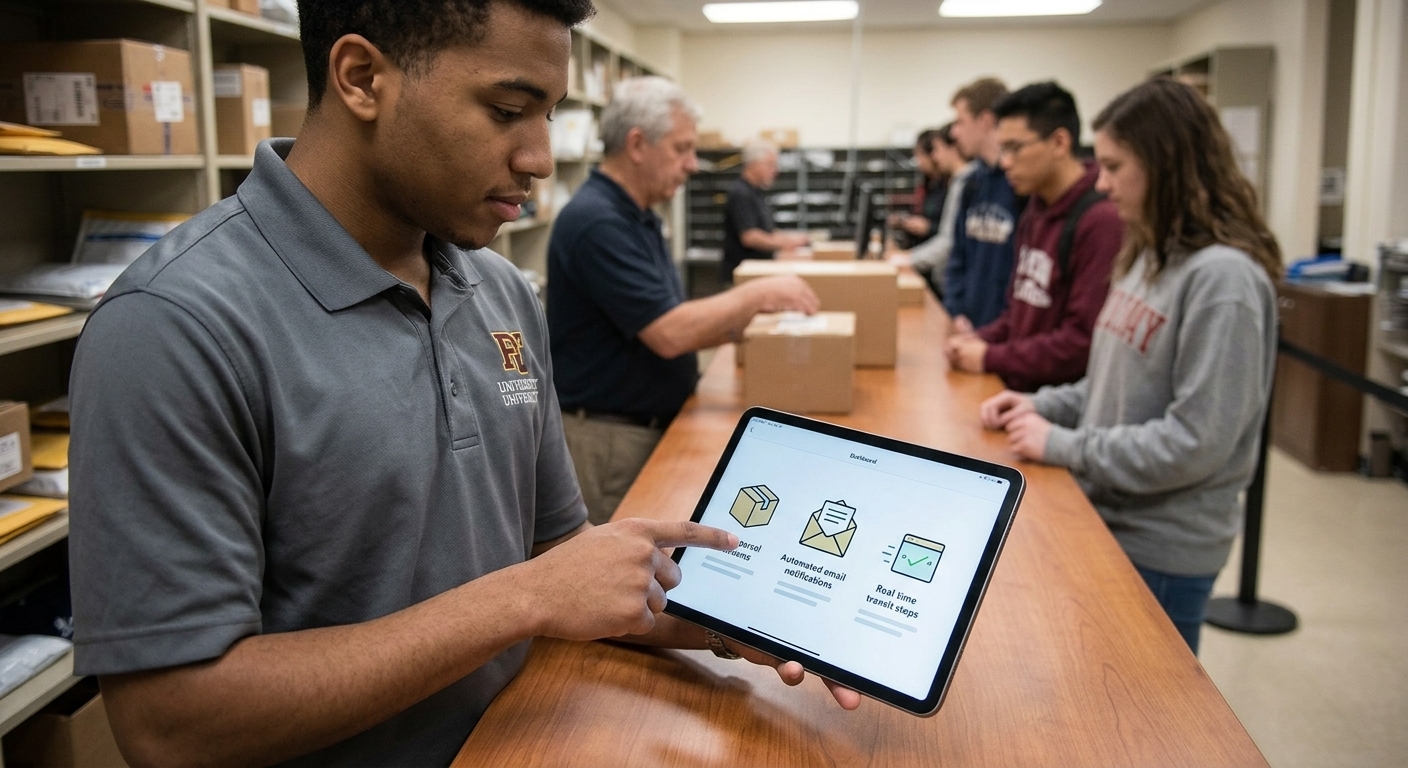
Modern digital platforms support both distribution models by accelerating intake speeds and automating communications. Digital barcode scanning enables swift intake processing, helping staff clear high-volume delivery loads in minutes.
Implementing organized parcel management software provides complete visibility across every stage of internal transit. Staff scan items at the central dock and record each transfer step through final pickup, maintaining accurate digital logs for every resident.
Verdict: Which Model Scales Better for Your Campus?
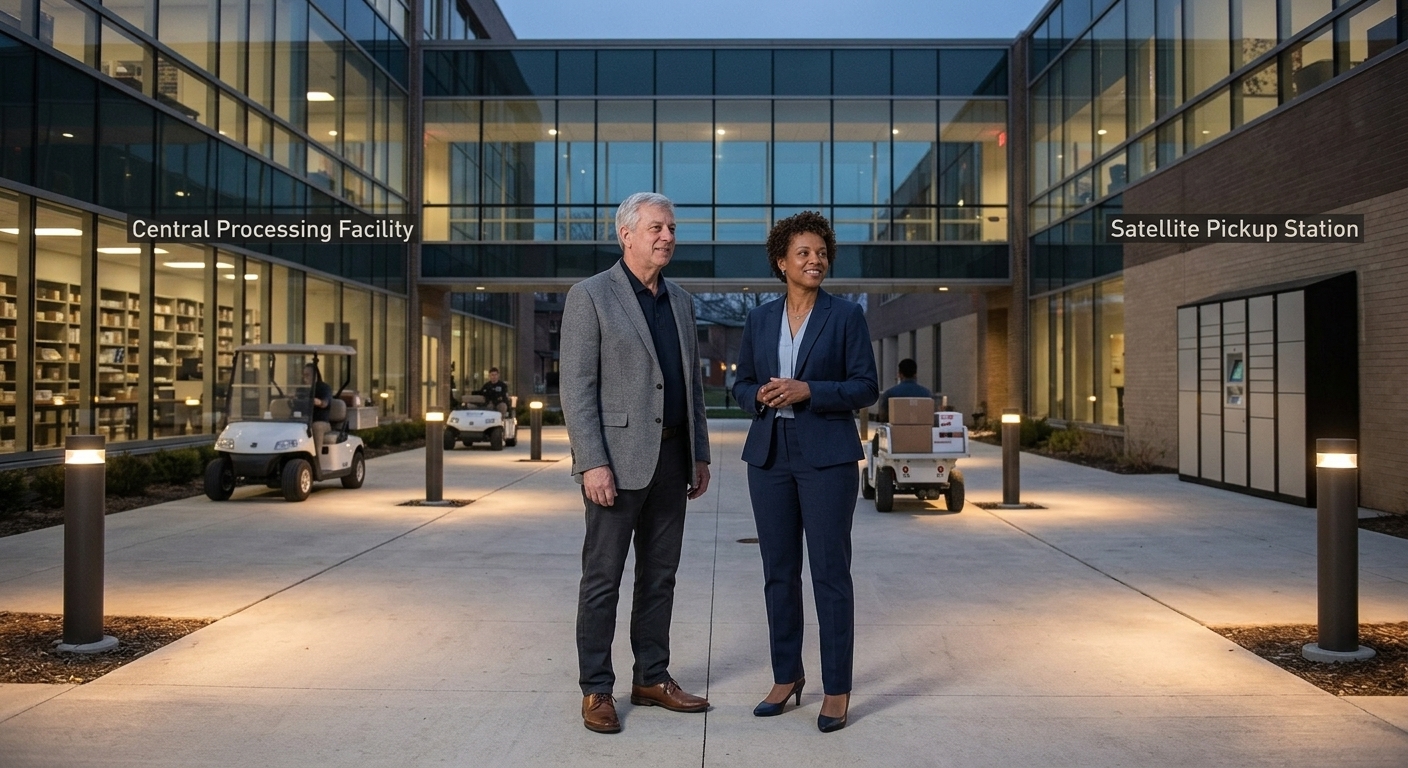
High-density campuses and institutions operating within tight labor constraints scale effectively using centralized mailroom hubs. Centralization preserves resource allocation while maintaining consistent security over incoming shipments. Decentralized drop points suit expansive campuses supported by dedicated internal distribution teams or automated locker systems.
A hybrid framework offers a balanced strategy for modern higher education facilities. Combining a centralized processing facility with strategic satellite pickup locations balances staff efficiency with student accessibility. Integrating modern management platforms like Parcel Tracker ensures reliable tracking, fast counter processing, and a streamlined delivery experience across campus.
Expert FAQ: Campus Package Logistics
How do centralized mailrooms handle high package volumes during move-in week?
Centralized mailrooms utilize high-density shelving, mobile intake scanning, and automated notifications to process incoming parcels rapidly in one location.
What is the main operational risk of dorm-level package drop points?
Dorm drop points increase labor costs and parcel loss risks due to extra internal transportation steps between buildings.
Why do campus mailrooms struggle with package volume growth?
Mailrooms struggle due to static storage space, fixed staffing levels, manual logging habits, and daily e-commerce deliveries from students.
How does mailroom management software improve campus delivery scalability?
Software automates student notification alerts, speeds up logging through mobile barcode scanning, and maintains digital chain-of-custody tracking across campus.


.svg)