.svg)
How AI Label Scanning Revolutionizes Freight Documentation?

AI label scanning is an automated technology that uses machine learning to extract shipping data, while freight forwarding is the strategic coordination of moving goods across networks. Together, they create an integrated data pipeline where large-scale shipping documentation feeds into local mailroom apps and parcel management platforms for final-mile tracking.
The Evolution of Data Capture in Freight Forwarding

Moving goods across global borders involves navigating complex international laws, diverse transport networks, and massive volumes of paperwork. For a deeper look into these foundational processes, reading an overview of how freight forwarding works clarifies how the industry manages these complex journeys.
Historically, tracking these movements required logistics teams to read physical paperwork and type long tracking numbers into basic computers. Traditional optical character recognition (OCR) systems offered a slight improvement, but these legacy tools remained rigid, requiring perfect labels and specific templates to function.
Modern global logistics demands flexibility. Intelligent data extraction systems leverage artificial intelligence to interpret cargo details, regardless of the document format. To explore how businesses coordinate these large-scale operations across hubs, team workflows map out distinct transit stages to maintain consistent inventory control.
The Daily Hurdles of Manual Data Entry

Relying on human hands to type every tracking code introduces continuous bottlenecks. In a high-volume warehouse, small mistakes like a single mistyped digit can route a container to the wrong city, creating expensive delays and hurting customer trust.
- Text Interpretation Challenges: Handwritten notes on packaging present a persistent challenge. When cargo arrives with faded text or manual annotations, standard systems fail, forcing workers to slow down and verify the information.
- Supply Chain Stalls: These processing delays stack up, reducing overall velocity and stalling supply chain momentum.
- Chain of Custody Gaps: Beyond speed, security remains a core concern. Administrative gaps make it difficult to verify exactly who handled a package at any given second. Maintaining a tight ledger is necessary for accountability, and you can study these protective protocols further in this guide on mailroom compliance and chain of custody.
The Inner Workings of Intelligent Scanning Infrastructure
AI-powered scanning works by transforming physical text into structured, digital information within milliseconds. When a package arrives at a loading dock, the scanning system reads carrier numbers, destination addresses, and complex barcodes without requiring a specific layout.
Physical Label -> AI Mobile Scan -> Instant Data Extraction -> Automated WMS Update
Once the system captures the text, it initiates automated record validation. The software cross-references the scanned details with digital bills of lading and shipping manifests to verify that the cargo matches the original order.
The final step is system integration. Instead of keeping this data isolated, the platform funnels the real-time information into Warehouse Management Systems (WMS) and enterprise resource planning software. Adopting modern principles of digital mailroom management allows companies to use this seamless entry workflow across every corporate touchpoint.
Strategic Advantages of Automated Documentation

- Higher Delivery Accuracy: The immediate benefit of smart data capture is a measurable reduction in misrouted shipments. Eliminating manual data entry errors ensures that inventory records remain clean.
- Increased Throughput Capacity: Fulfillment hubs experience a major boost in processing capability. Because workers can scan and log incoming items using basic mobile devices, receiving docks handle more volume every hour without creating inventory backlogs.
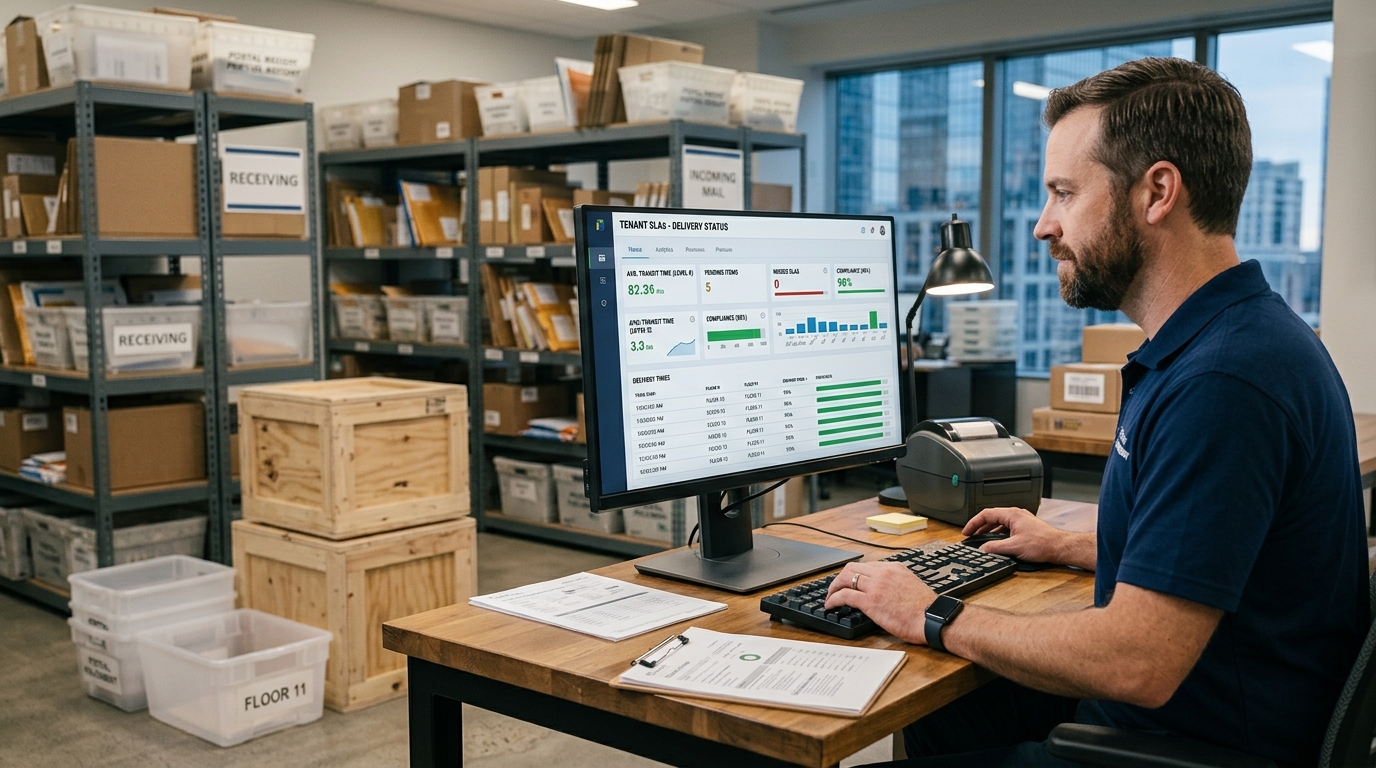
- End-to-End Milestone Visibility: Speed creates visibility across the entire shipping journey. Managers can view the location of any asset at any milestone. The power of these real-time updates is explained in detail within this article covering what is automated parcel notification and why your mailroom needs it.
Traditional Logging: Arrival -> Manual Typing -> Verify Error -> Delay -> Logged
AI Scanning Flow: Arrival -> Mobile Scan -> Instant Auto-Verify -> Logged
Bridging the Gap to Modern Mailroom Optimization

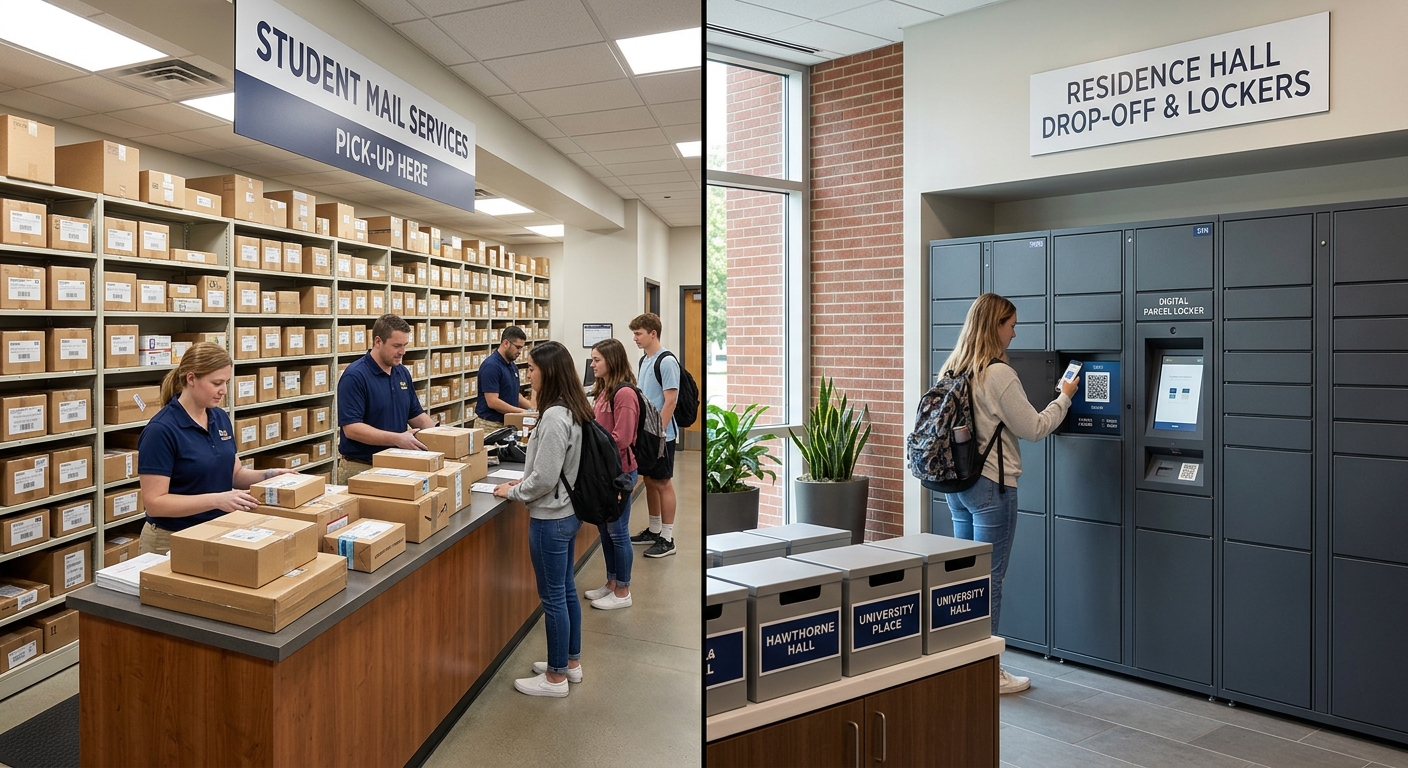
The logistical challenges of a busy shipping dock mirror the daily pressures found inside corporate and residential mailrooms. Large office buildings, university campuses, and apartment complexes face an ever-growing mountain of inbound packages that require swift, organized processing.
Implementing logistics-grade scanning inside these environments simplifies the entire internal distribution workflow. Utilizing dedicated parcel tracking software allows reception staff to process incoming deliveries with the precision used by large cargo networks.
Choosing the right tool depends entirely on your specific organizational scale. Evaluating professional systems alongside simpler mailroom apps helps business leaders select the best mailroom management software for their unique requirements. Upgrading this infrastructure shifts traditional post management away from messy paper logs and into a fast, secure digital era.
Getting Global Supply Chains Ready with Smart Data Capture

The digital transformation of freight documentation proves that machine learning is an essential asset for modern logistics. Automating data capture removes friction from the moment a crate arrives at a consolidation center until the final box lands at a recipient's desk.
Connecting heavy supply chain technology with local distribution networks ensures that no asset is lost in the final mile. Ready to upgrade your internal package logging? Discover how Parcel Tracker brings enterprise-grade AI scanning efficiency to your mailroom.
Expert FAQ
What is AI label scanning in freight tracking?
AI label scanning uses machine learning to read, extract, and digitize shipping data from physical freight labels.
Why does AI scanning outperform traditional OCR software?
AI scanning interprets damaged text, diverse typography, and variable layouts by utilizing flexible contextual learning algorithms.
How does automated document scanning lower logistics costs?
Automated scanning optimizes spending by eliminating manual typing, reducing processing errors, and accelerating processing times.
What organizations gain the most value from intelligent shipping documentation?
Global logistics providers, e-commerce fulfillment hubs, freight forwarders, and corporate package centers receive the greatest advantages.
How does modern parcel tracking software apply machine learning?
Parcel tracking software utilizes machine learning to read optical label data, connecting inbound arrivals to correct internal recipients.


.svg)