
.svg)
Multi-Building Tracking: Managing Logistics Across Large Industrial Facilities


Multi-hop parcel tracking is an internal logistics method that monitors packages across multiple consecutive custody transfers within an industrial facility. Also known as multi-hop parcel routing, this approach connects central mailroom receiving, internal yard truck transit, and final warehouse destination points into a single, unbroken digital audit trail to prevent package loss across massive corporate sites.
What Is Multi-Hop Facility Tracking?
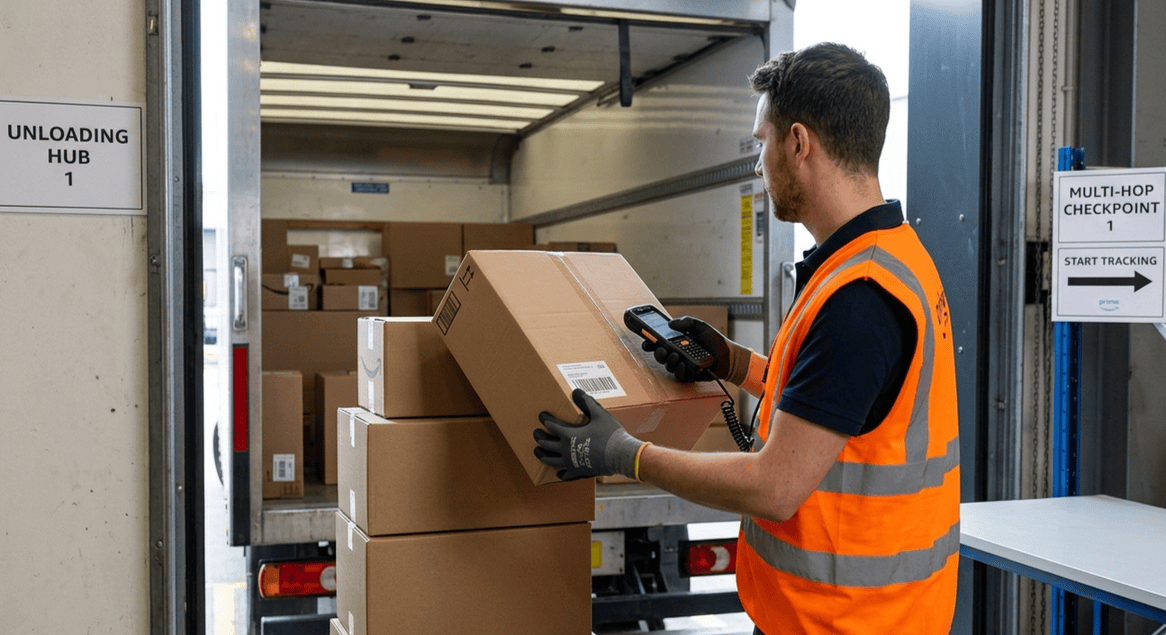
Industrial logistics operations often suffer from visibility gaps once a delivery truck leaves the main gate. Standard carrier tracking ends at the loading dock, leaving internal teams blind to the subsequent movement of goods. Multi-hop facility tracking bridges this gap by dividing the internal supply chain into distinct, trackable segments.
Every time a package changes hands, modern parcel management software logs a new checkpoint. This process transforms a vague internal delivery route into a series of predictable, measurable steps. Operations managers use this data to pinpoint the exact location of any asset, whether it sits on a sorting table or rides in a utility vehicle.
How Does the Step-by-Step Multi-Hop Journey Work?
The continuous internal chain of custody relies on a sequential three-step process to ensure a package safely navigates the distance between the main perimeter and its final destination.
- Central Receiving Hub Intake: Inbound clerks scan the external carrier barcode using cloud-based software upon arrival. This action logs the package into the facility ecosystem, recording the arrival time, initial condition, and intended recipient before sorting the item into an outbound distribution lane.
- Yard Truck Transit: Fleet operators scan package barcodes as items load onto cross-site utility vehicles. This scan closes the receiving hop and opens the transit hop, providing real-time updates that show the inventory is moving across the facility grounds rather than sitting idle.
- Final Destination Handover: The delivery driver scans the package at the destination point, collecting a digital signature or photo proof. This final interaction completes the tracking loop, logs the total transit time, and sends automated notifications to the stakeholder.
Why Is Multi-Hop Tracking Critical for Large Industrial Sites?

Eliminating inventory blind spots
Manual logbooks and spreadsheets fail when facility scale increases. Warehouse management principles dictate that guesswork must be replaced with real-time digital location data. If an engineer inquires about a critical repair component, managers can immediately confirm if the item is still at central receiving, on a yard truck, or already delivered to the shop floor.
Optimizing internal fleet routes
Internal distribution networks often run inefficient schedules based on habits instead of actual performance metrics. Tracking data reveals exactly how long yard trucks spend traveling between buildings and waiting at loading bays. Managers use these insights to adjust routing schedules, reduce fuel consumption, and eliminate delivery bottlenecks.
Improving departmental accountability
Large facilities can reduce operational friction and improve internal handling care by implementing targeted tracking protocols at every major handoff point.
- Enforced Custody Transfers: Requiring a scan at every department boundary creates a clear digital paper trail that defines exactly who is holding the item.
- Reduced Loss Rates: Staff members treat packages with greater care when their individual digital ID is tied directly to the current step of the delivery sequence.
- Faster Dispute Resolution: Missing package investigations take minutes instead of days because managers can pinpoint the exact checkpoint where the chain of custody broke down.
Securing Your Multi-Building Internal Supply Chain

Managing logistics across expansive industrial properties requires continuous visibility from the perimeter to the final desk. Transitioning from legacy processes to modern mailroom management practices replaces chaotic internal delivery routines with an organized, traceable workflow.
Ready to eliminate missing packages and optimize your inventory handoffs? Use Parcel Tracker to gain complete visibility over every internal delivery lane today.
Expert FAQ
What is multi-hop parcel tracking?
Multi-hop tracking monitors a package across multiple internal custody transfers from central receiving to its final warehouse destination.
Why do large industrial facilities lose packages?
Large facilities lose packages due to fragmented internal delivery chains, manual logging errors, and a lack of unified tracking software.
How does multi-hop tracking improve logistics visibility?
It improves visibility by generating unique digital checkpoints at every yard truck transfer, building entrance, and departmental desk.
What technology is required for multi-building tracking?
Multi-building tracking requires cloud-based logistics software, mobile scanning applications, and barcode or RFID identification tags for continuous updates.
How can companies reduce internal delivery times?
Companies reduce delivery times by analyzing multi-hop data to optimize yard truck routes and eliminate processing bottlenecks at receiving hubs.


.svg)

