.svg)
Preparing Your Campus Mailroom for the August–September Student Move-In

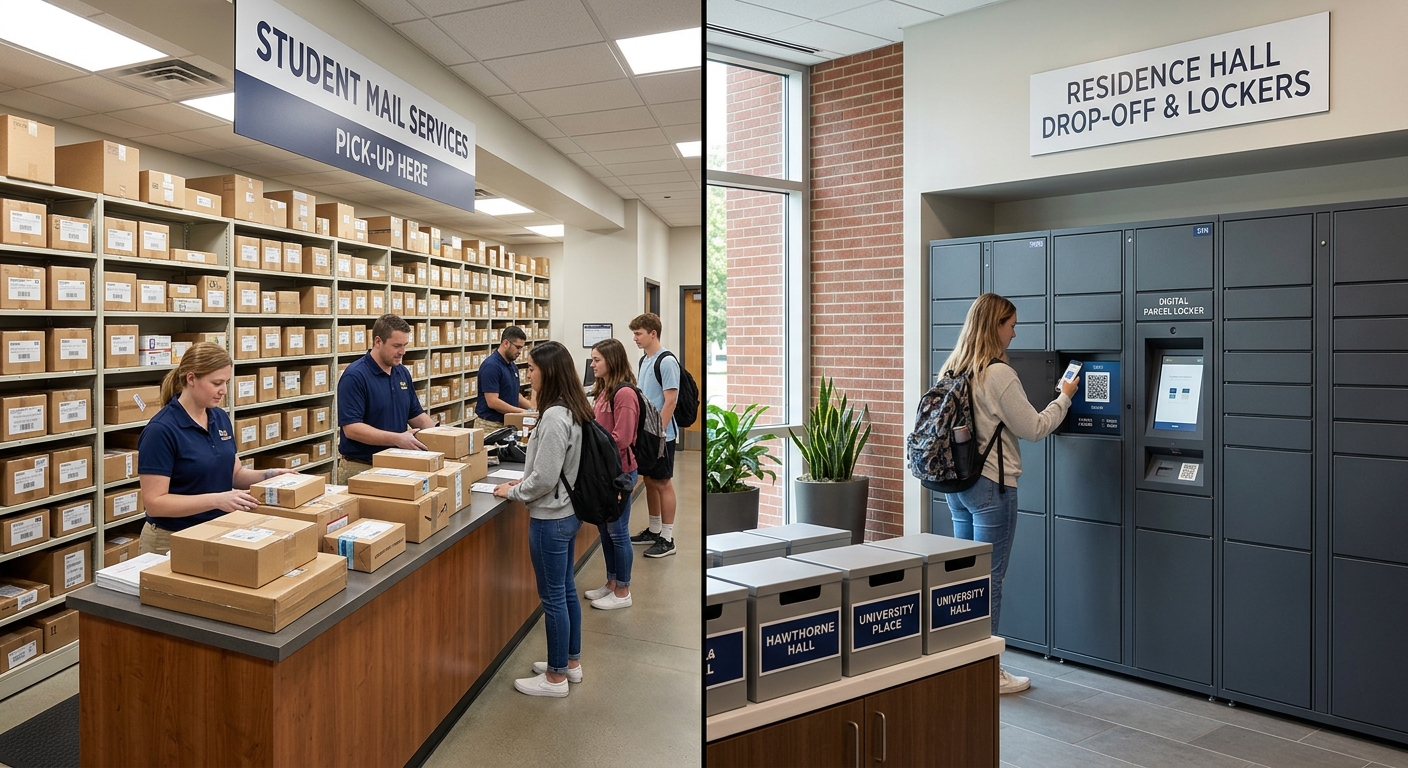
The late summer move-in period presents a major logistical test for universities and purpose-built student accommodation (PBSA) providers. Within a brief three-week window, thousands of residents arrive on site, accompanied by a wave of incoming deliveries. Heavy bedding sets, desktop monitors, course textbooks, kitchen appliances, and care packages arrive at reception desks all at once.
Without a deliberate strategy, mailrooms become crowded, hallways fill with disorganized boxes, and package retrieval slows.
The scale of this challenge is evident in higher education receiving centers. Major institutions like Stanford University process over 500,000 packages annually, with a heavy concentration arriving during the initial weeks of the academic year.
Similarly, operations at Boston College issue high-volume package alerts every August to manage the surge, actively requesting that students delay non-essential shipments to prevent delivery backlogs.
Establishing structured systems enables property teams to maintain clear walkways, secure items reliably, and serve residents efficiently during peak volume. Modernizing your mailroom management workflows creates a smooth move-in experience for incoming students and staff alike.
Preparation Checklist for Move-In Weeks

Organizing a high-volume mailroom requires preparation before the first delivery vehicle arrives. The following steps provide a practical roadmap for managing heavy delivery intake.
1. Pre-Load and Audit Recipient Directories
Import updated housing rosters, student IDs, and assigned room numbers into your database weeks before move-in begins. Syncing resident data ahead of time ensures that auto-matching protocols work instantly when labels are scanned.
Take time to log known name variations, preferred names, and updated building assignments to prevent misfiled items.
2. Designate Staging Zones and Overflow Areas
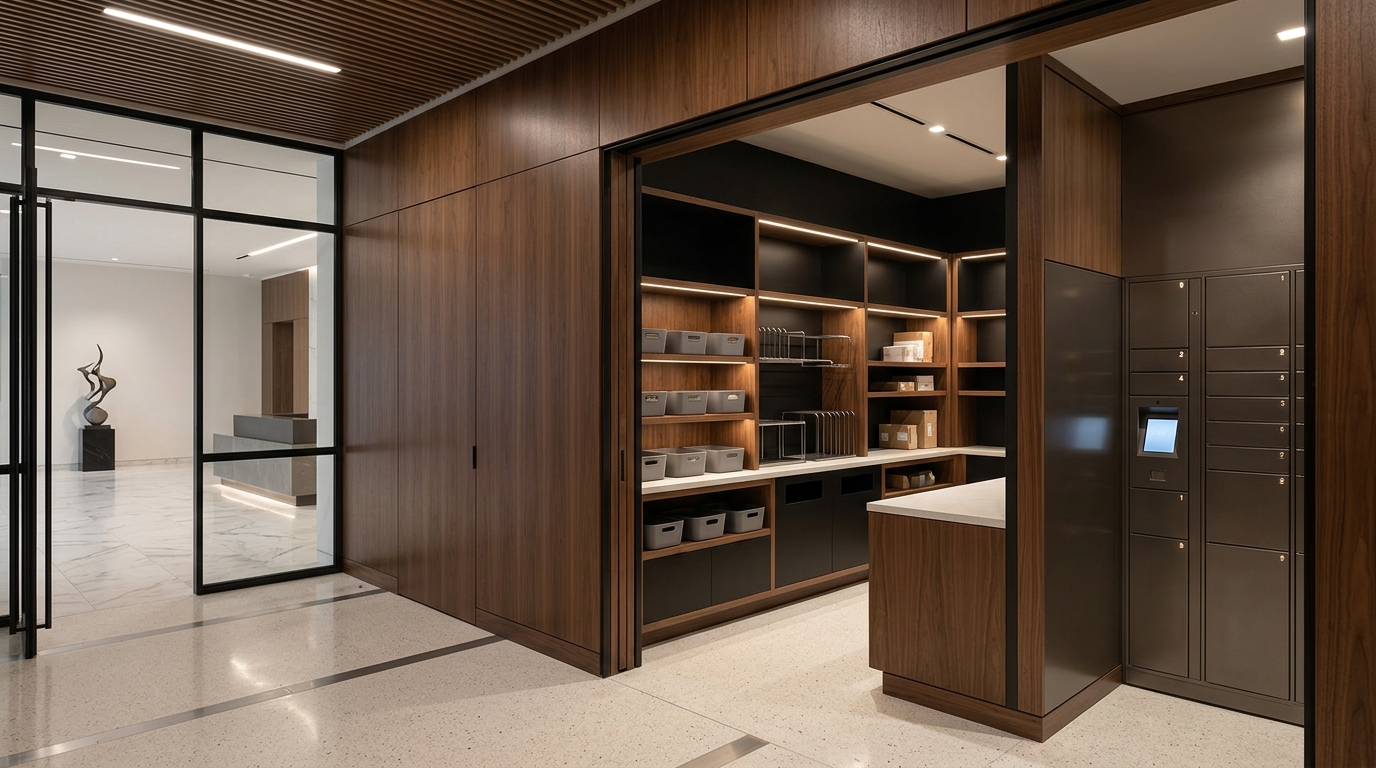
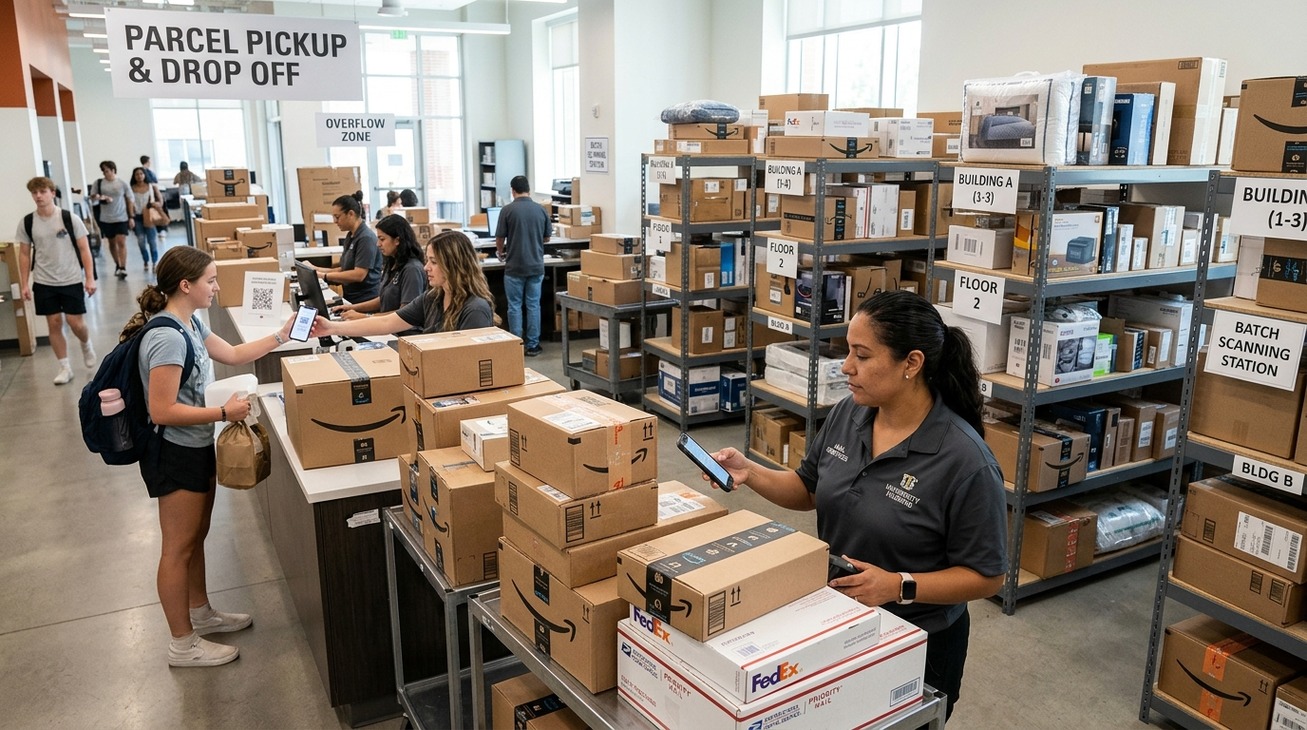
Set up designated holding zones beyond the main front desk footprint. Unused common rooms, secure multipurpose spaces, or modular staging shelves serve well as temporary holding centers.
Organize these temporary areas clearly by building number, floor, or resident last name so team members can locate specific items in seconds.
3. Transition to High-Speed Mobile Batch-Scanning
Eliminate manual paper logs and single-item entry systems. Modern parcel management tools allow staff members to use smartphones or handheld tablets to scan multiple shipping labels sequentially.
Batch-scanning clears delivery drivers from loading bays rapidly and keeps inventory records up to date.
Proven Tactics to Drive Fast Student Pick-Ups

Logging arriving items efficiently is only half the battle. Clearing physical space requires getting students to collect their belongings as quickly as possible.
- Automated SMS Communications: Email messages often sit unread in crowded student inboxes during move-in week. Instant text notifications alert residents the moment their package reaches the holding area, prompting immediate collection while they set up their rooms.
- Unique Pickup QR Codes: Attach a digital barcode or QR code to each pickup notification. When residents arrive at the counter, staff members scan the code directly from the student's mobile screen to confirm identity and complete the handoff in under ten seconds.
- Clear Arrival Instructions: Send pre-arrival orientation emails explaining exact mailing address formats, desk operating hours, and identification requirements. Educating residents early prevents misrouted shipments and reduces questions at the counter.
Software Budgeting Without Peak Surcharges

High package volumes can create unexpected budget variations when software contracts tie pricing directly to item counts. Traditional mailroom software platforms often charge per-scan fees or trigger higher billing tiers as intake spikes.
Consequently, software expenses climb highest at the exact moment demands are greatest.
Choosing flat-rate software coverage provides total budget certainty during peak move-in months. Fixed subscription models, such as the Parcel Tracker Plus Plan, allow housing managers to process tens of thousands of move-in parcels without facing usage penalties, per-package surcharges, or hidden overage tiers.
Mailroom managers can scale their intake capacity during busy seasons while keeping software expenses completely predictable.
Streamlining Operations for Move-In Success

A successful move-in season relies on clear space planning, automated communication, and robust digital record-keeping. Pre-loading resident directories ensures accurate matching, while temporary staging zones keep physical walkways open and organized.
Automated notifications and mobile scanning tools work together to keep items moving swiftly through the facility.
Upgrade your site reception and simplify move-in logistics this season with Parcel Tracker.
Expert FAQ: Campus Logistics Peak Season
How do automated notifications speed up move-in pickups?
Automated SMS alerts and QR codes notify students instantly, reducing holding times and clearing intake storage spaces quickly.
What causes severe package bottlenecks during August student move-in?
Bottlenecks occur when thousands of packages arrive simultaneously while receiving desks rely on manual entry and single-item logging.
Why is per-package software pricing problematic for student housing operators?
Per-package pricing creates unpredictable software costs, increasing operator expenses precisely when parcel delivery volume spikes during move-in.
What is the fastest way to log incoming deliveries during peak volume?
Mobile batch-scanning allows staff to scan multiple package labels sequentially, updating inventory records and notifying residents within seconds.
How can receiving teams handle oversized items during move-in week?
Creating designated overflow staging zones organized by building or floor keeps large items secure without blocking main reception areas.
Why should property managers pre-load recipient directories before fall semester?
Pre-loading rosters matches incoming names to assigned room numbers automatically, preventing delivery delays caused by manual searching errors.


.svg)