.svg)
The Q4 Peak: Managing Corporate Mailrooms Through Prime Day, Black Friday, and Holiday Gifting


Q4 brings an unrelenting inbound of parcels, padded envelopes, and oversized crates into commercial office buildings. E-commerce platforms lower barrier friction for consumers, triggering staggering fulfillment figures across major shopping events.
Shopify merchants generated a record-breaking $14.6 billion in Black Friday Cyber Monday sales, setting a clear precedent for the massive downstream volume that mailrooms must absorb every Q4. The retail calendar creates a continuous compounding effect, starting with October's Fall Prime Day, running through Cyber Week, and ending with late December holiday exchanges.
Corporate employees regularly divert personal orders to workplace receiving desks. Concerns over porch piracy, missed home signature requirements, and long workday schedules drive workers to list their office desks as safe shipping destinations.
This influx transforms corporate receiving areas into overcrowded holding hubs, creating physical navigation hazards, misplaced items, and reduced productivity for mailroom staff. Modern mailroom management relies on digital strategies to maintain total control over physical floor space during this intense seasonal surge.
Establishing Clear Corporate Guidelines for Personal Packages

Mailroom leaders manage capacity by establishing firm rules well before the holiday shopping rush begins. Effective corporate guidelines establish healthy workplace boundaries while keeping floor space safe and accessible.
- Size and Weight Limits: Enforce strict limits on incoming personal items. Require employees to ship large items, such as home furniture, appliances, and televisions, to their personal residences or third-party pickup lockers.
- Peak-Period Delivery Rules: Restrict non-essential personal deliveries during the busiest shipping weeks of late November and mid-December, or set designated daily pickup windows to manage lobby traffic.
- Liability Boundaries: Draft precise policy terms that explicitly assign responsibility for personal items to the employee, protecting the company in the event of vendor damage or carrier loss.
- Proactive Communication: Send clear policy updates via internal messaging channels or email newsletters three to four weeks before the first October shopping events to align expectations early.
High-Speed Logging for Handling High-Volume Delivery

Handwritten sign-in sheets and manual spreadsheet entries create severe bottlenecks when delivery drivers drop off dozens of boxes simultaneously. Digitizing receiving workflows accelerates intake speed, allowing staff to process incoming inventory immediately upon arrival. Specialized parcel management technology allows mailroom teams to clear receiving areas quickly and keep entryways completely open.
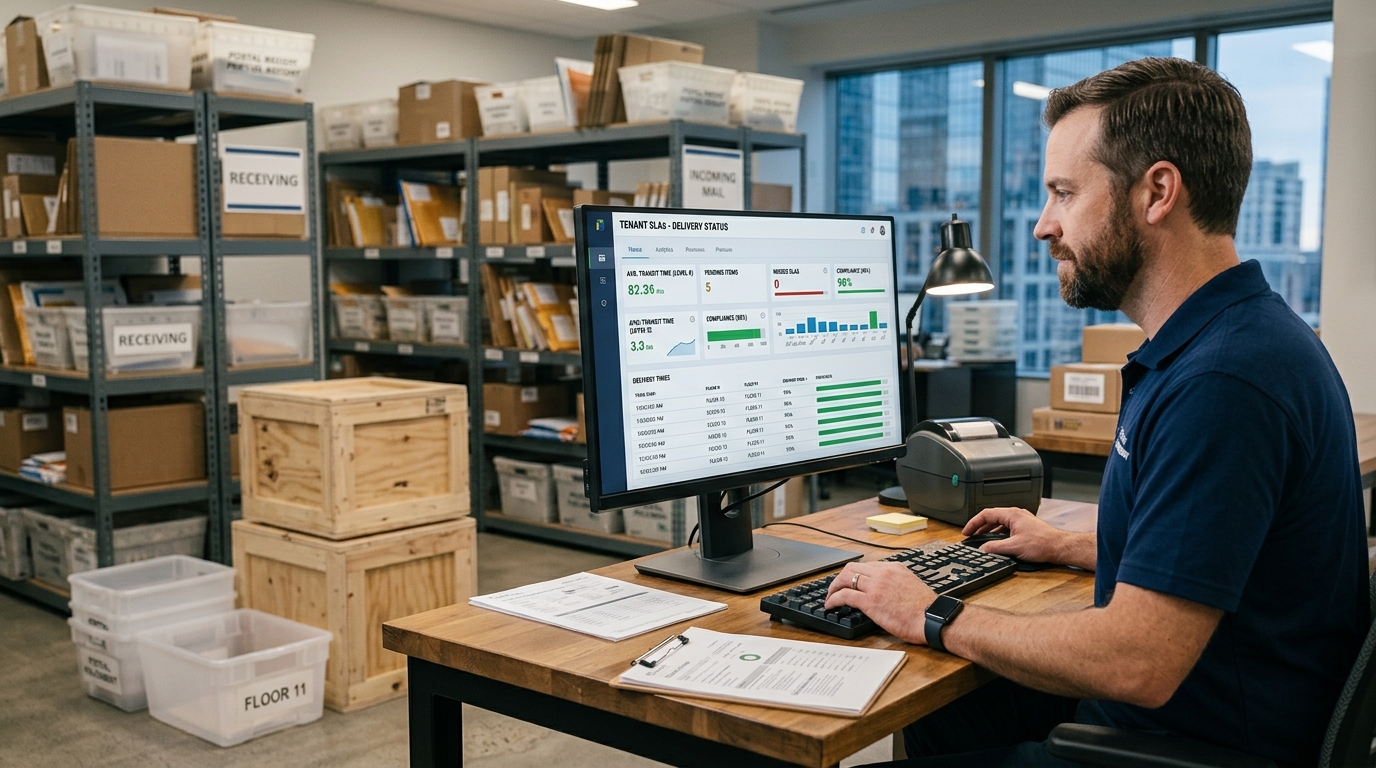
Adopting digital mailroom management enables teams to transition away from sluggish manual registers. Mobile devices equipped with optical character recognition scan package labels instantly, capturing recipient names and tracking numbers within seconds.
This rapid check-in method automatically matches incoming items to the internal company directory and sends instant pickup notifications. Staff can capture visual proof of delivery on arrival, confirming the physical condition of every container. Automated systems group multiple arrivals for a single recipient into a single notification, preventing inbox clutter and streamlining collection visits.
Automated Reminders and Liability Protocols
Long package retention times quickly exhaust available mailroom shelf space. Uncollected boxes sit for days or weeks when employees travel, work remotely, or forget their delivery notifications. Mailroom teams rely on structured automated workflows and clear chain-of-custody protocols to maintain high inventory turnover throughout the end-of-year rush.
Using modern package tracking software, office managers eliminate the headache of tracking down recipients across busy office campuses. Implementing mailroom management automation streamlines notification alerts, keeping shelves clear without constant manual staff effort.

- Initial Log Notification: The system sends an automated email or text message to the recipient the moment a package is scanned into the mailroom.
- First Reminder (24 Hours): An automated follow-up message reminds the employee to pick up their item before the end of the working day.
- Manager Escalation (48 Hours): Unclaimed package notifications escalate to department administrators to clear shelf space promptly.
- Digital Handoff: Recipients present a unique QR code or sign electronically on a mobile screen upon collection, generating an automated audit trail.
- Clear Abandonment Protocol: Packages remaining unclaimed after seven to ten business days automatically qualify for return-to-sender procedures.
Building Mailroom Operation Ready for Spikes

Navigating the annual Q4 volume surge successfully comes down to early preparation, clear workplace guidelines, and modern receiving technology. Mailroom teams that replace slow manual workflows with automated scanning systems eliminate room clutter, preserve workplace safety, and maintain complete inventory visibility throughout the holiday season.
Workplace managers can discover how Parcel Tracker software streamlines internal delivery workflows, speeds up intake processing, and maintains seamless receiving operations during peak shipping periods.
Expert FAQ: Corporate Mailroom Management During Q4
How can corporate mailrooms handle higher Q4 delivery volumes?
Implement mobile OCR scanning software to rapidly log incoming packages and automate pickup notifications for recipients.
What is the best policy for employee personal deliveries at work?
Set strict package size caps, mandate clear liability waivers, and enforce automated reminder schedules during peak holiday shopping.
Why do corporate mailrooms experience severe package bottlenecks during Q4?
E-commerce sales surges, holiday employee absences, and manual package logging cause uncollected box clutter and storage overflow.


.svg)