.svg)
Automating PO Number Extraction: How Mailroom Management Tech Is Revolutionizing B2B Receiving

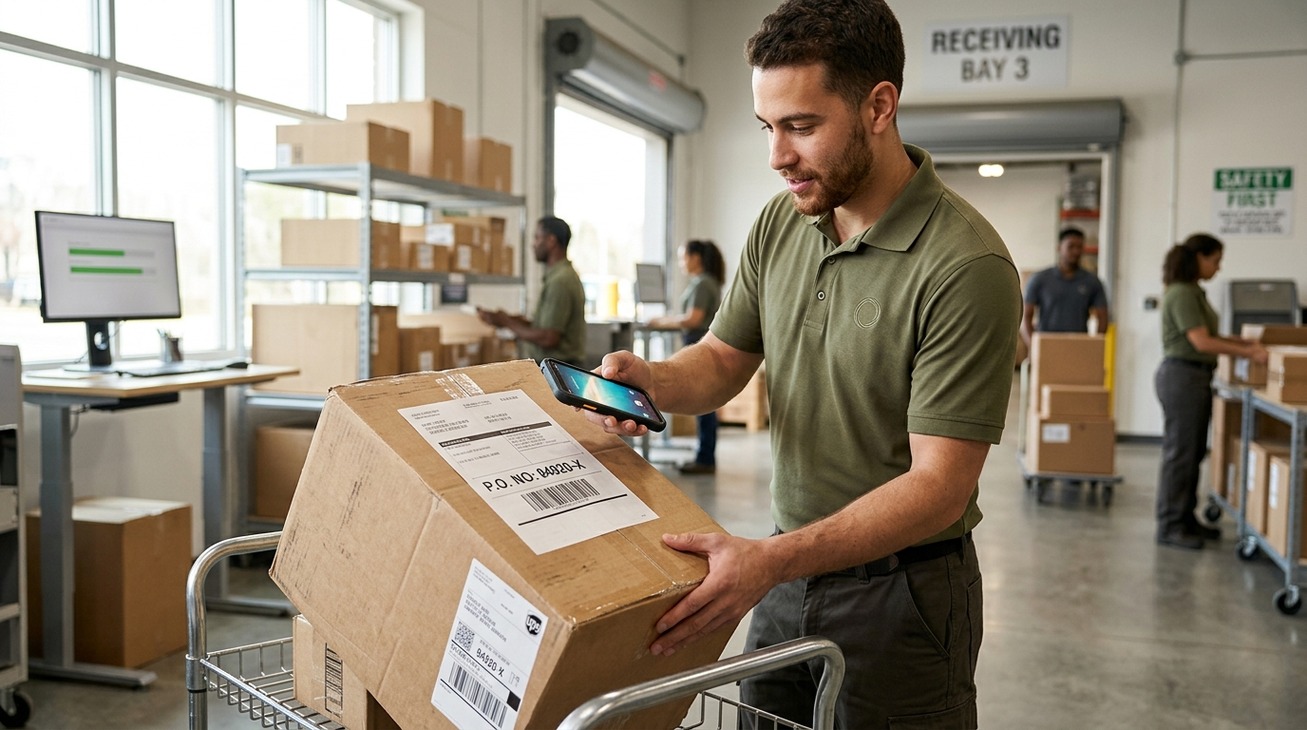
B2B mailrooms handle complex documentation that goes far beyond standard residential parcel management. While consumer deliveries focus on basic recipient names and address lines, corporate mailrooms require complete verification of Purchase Order (PO) identifiers, vendor information, and packing slip itemization.
Accurate logging ensures physical inventory matches internal procurement records and accounting software before goods move deeper into a facility. Modern companies are replacing manual logbooks with specialized digital scanning to capture high-volume shipment data at the point of arrival.
Upgrading mailroom workflows gives organizations real-time visibility into incoming inventory while eliminating human data-entry errors.
High-Stakes Bottlenecks in Manual PO Handling at B2B Mailrooms
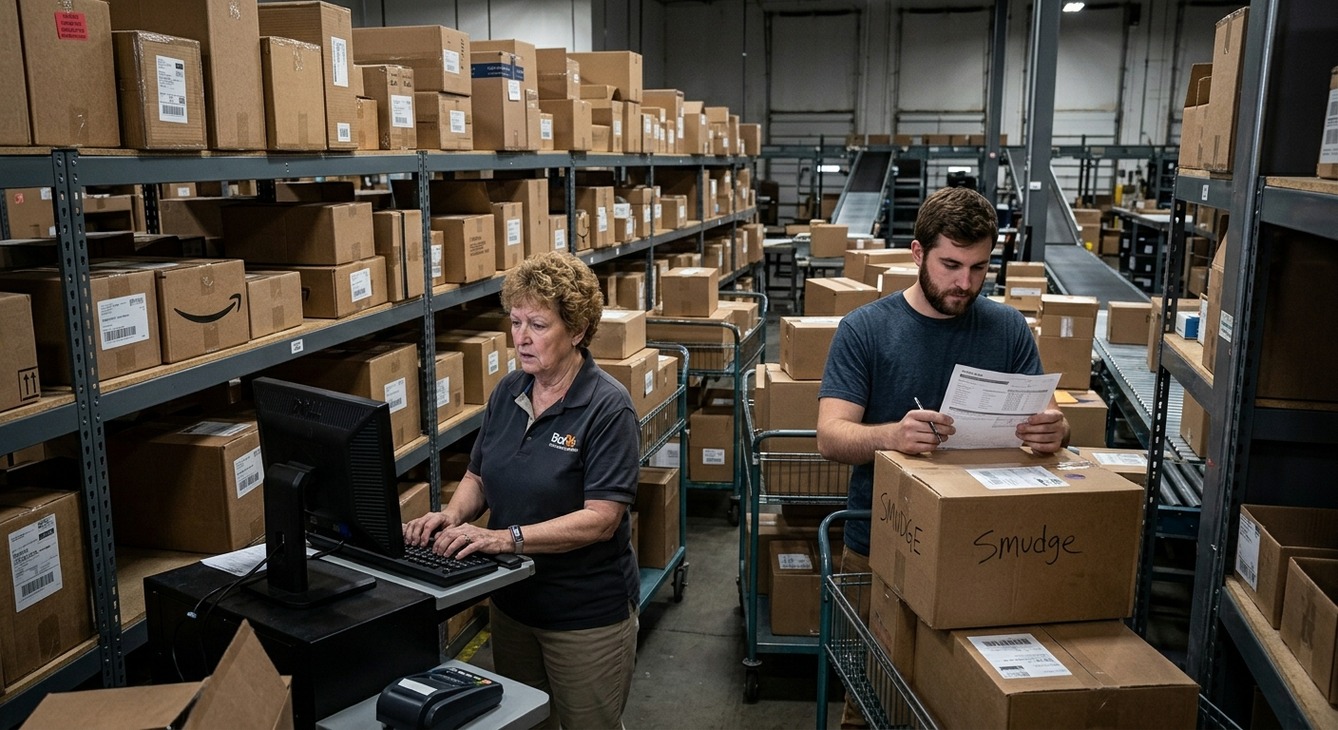
Inbound parcel management teams face significant delays when processing incoming shipments by hand. Staff members who manually cross-reference multi-digit PO strings line by line spend valuable time typing data into spreadsheets or inventory systems.
This manual process slows down package throughput and creates physical congestion on the mailroom floor. Data entry errors ripple through an entire organization.
Transposed numbers, misplaced packing slips, and smudged box labels create discrepancies between physical stock and digital records. These errors cause unpaid vendor invoices, inaccurate stock counts, and time-consuming reconciliation tasks for finance teams.
Specific sectors experience distinct challenges during intake:
- Manufacturing Facilities: Unrecorded PO data delays the delivery of raw components, replacement tooling, raw materials, or specialized machinery parts to assembly lines, disrupting production schedules and idling factory personnel.
- Healthcare Systems: Delayed tracking for medical supplies, surgical instruments, pharmaceuticals, or laboratory assets creates regulatory compliance risks, jeopardizes sterile storage timelines, and affects patient care schedules.
- Corporate Procurement Offices: Unmatched deliveries result in delayed vendor payments, missed early-payment discounts, strained supplier relationships, and accidental duplicate orders.
- Higher Education Campuses: Unverified PO entries for research equipment, lab chemicals, grant-funded materials, and department supplies create audit compliance gaps and delay critical academic projects.
- Government and Defense Buildings: Manual logging of multi-string procurement codes slows down mandatory security inspections, stalls chain-of-custody logging, and creates administrative backlogs across agencies.
Effective mailroom management addresses these challenges by establishing structured intake procedures that capture package data immediately upon arrival.
Advanced Optical Character Recognition Tailored for Inbound Logistics
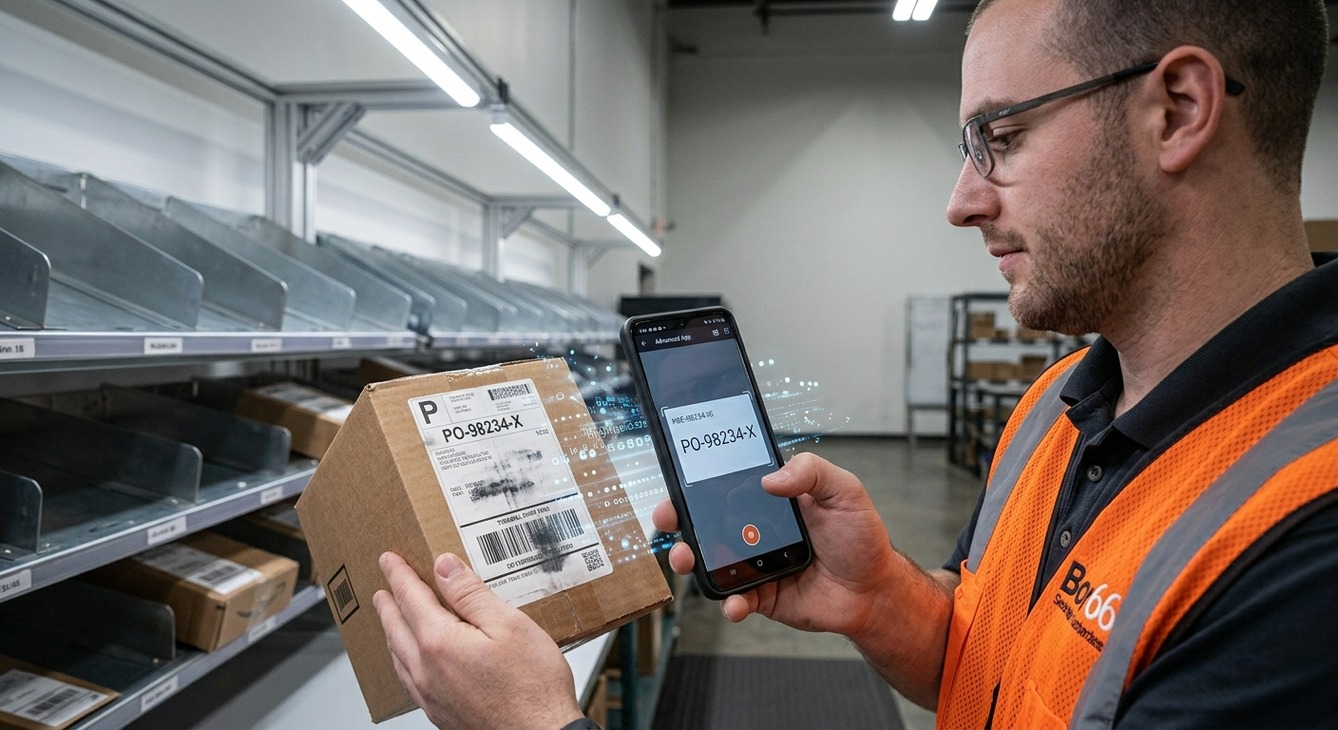
Standard desktop optical character recognition (OCR) tools often fail when applied to real-world shipping environments. Packaging material frequently arrives crumpled, thermal labels fade under heat, fonts vary by supplier, and packing slips feature irregular layouts.
Purpose-built mailroom vision models overcome these hurdles by identifying unstructured paperwork and package labels despite surface imperfections.
The process follows a simple progression:
- Package Arrival and Visual Capture: A worker uses a mobile app or handheld scanner to take a picture of the shipping label or packing slip upon entry.
- Specialized Mailroom OCR Engine: The software cleans up the image, fixes low lighting, corrects angled shots, and isolates numbers and letters.
- Automated Data Parsing and System Validation: The system extracts the PO string (such as PO-98234-X), checks it against expected patterns, and matches it with existing inventory files in milliseconds.
Modern scanning algorithms process complex alphanumeric sequences without requiring manual typing from staff. Automated data association links parsed PO values to several critical parameters:
- Carrier tracking numbers from major couriers, national postal networks, and regional freight handlers.
- Sender, manufacturer, and supplier profile data.
- Internal department routing codes, floor numbers, building designations, desk locations, and individual recipient profiles.
- Vendor account numbers and associated contract billing details.
- Package dimensions, weight records, and outer carton condition flags.
Edge-computing mobile tools clear up poor lighting, skewed camera angles, and scuffed text at the exact moment of delivery. Mobile scanning allows receiving personnel to verify package details anywhere on the mailroom floor, maintaining smooth movement throughout the facility.
Robust parcel management systems integrate these vision models to maintain accurate records across every stage of internal transit.
Scaling Supply Chain Performance with Advanced Data Workflows

Capturing verified procurement data at point-of-entry speeds up internal package routing, flags high-value freight immediately, and eliminates stock discrepancies. Automated data collection gives logistics leaders clear visibility into mailroom traffic patterns, peak arrival hours, carrier performance, and processing times.
Organizations looking to establish custom PO extraction rules and specialized scanning parameters benefit from higher-tier software solutions.
Advanced automation capabilities, including custom data mapping and direct system integrations, are available on the Pro and Enterprise tiers. These tiers support multi-site environments, enterprise facilities, and high-volume mailroom networks that require tailored intake configurations.
Turning Mailroom Tech into an Intake Asset

Manual keying in the mailroom creates unnecessary risk for modern supply chains. Automated PO number extraction establishes an accurate, data-driven entry point that keeps internal systems updated and inventory moving without delay.
Explore Parcel Tracker to upgrade your mailroom workflows and improve B2B operations.
Expert FAQ
What is automated PO number extraction in receiving software?
It is AI-powered OCR software that reads, extracts, and digitizes purchase order numbers from packaging and packing slips automatically.
How does logistics OCR read damaged or smudged PO numbers on delivery boxes?
Advanced vision models correct poor lighting, tilted angles, and scuffed text while checking character patterns against expected PO number structures.
Why is manual PO logging a financial risk for corporate mailroom intake?
Manual entry causes typos, delayed inventory updates, lost packing slips, and mismatched vendor invoices that lead to late payment penalties.
How does extracting PO numbers at the mailroom speed up invoice matching?
Instant digital PO logging completes the receiving leg of three-way matching so Accounts Payable can verify invoices immediately.
What business systems integrate with automated PO extraction software?
Extracted PO data syncs with Enterprise Resource Planning, Warehouse Management, and Accounts Payable systems.
Why should high-volume facilities upgrade to advanced OCR automation tiers?
Upgraded tiers offer custom field extraction, high-volume batch processing, and custom API connections for complex supply chains.



.svg)