.svg)
Predictive Mailroom Management: Using Historical Campus Data to Forecast Parcel Surges

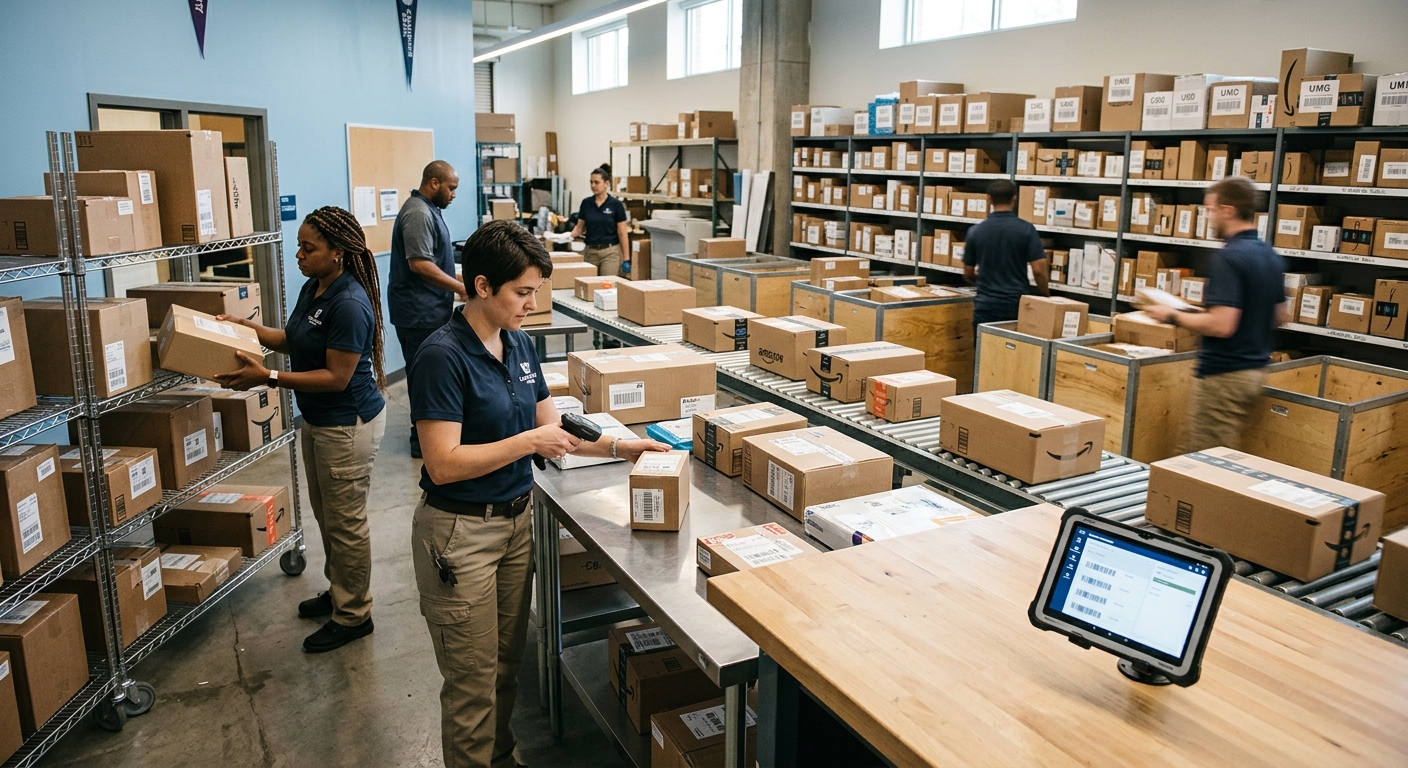
University mailrooms experience continuous growth of physical deliveries as e-commerce shopping remain high. With global delivery volumes projected to reach over 200 billion packages annually, university mail staff must navigate non-stop inbound shipments. Research from McKinsey & Company shows that 90% of online shoppers expect standard delivery within two to three days, creating frequent parcel-receiving cycles across lobbies and hallways. Further analysis by Deloitte indicates that fulfillment and last-mile processing remain top priorities for organizations maintaining high service standards.
Managing the rapid growth in deliveries requires moving away from outdated manual estimates. By evaluating previous semester patterns, mailroom managers can anticipate incoming spikes, build balanced work schedules, and ensure rapid distribution across every department. Effective mailroom management software provides the analytical visibility and daily tools needed to keep facilities organized during peak periods.
Key Indicators for Forecasting Delivery Surges
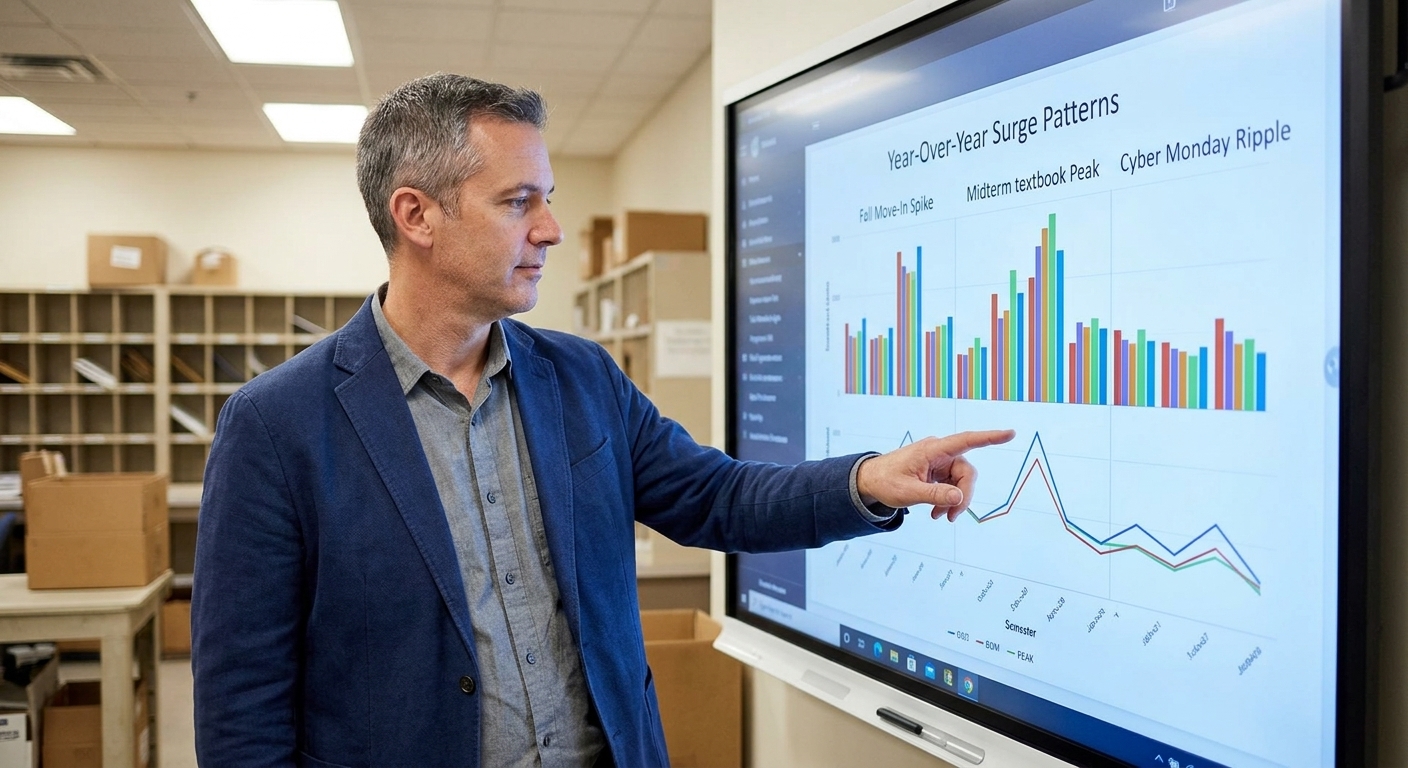
Predicting delivery spikes relies on analyzing distinct categories of historical data. Modern software for parcel management captures these metrics automatically, giving administrators clear guidance for upcoming schedules.
Semester Rhythms and Baseline Trends
Move-in week generates the highest volume of incoming parcels, personal items, and dorm room essentials. Midterm exams and end-of-term departures mark secondary spikes driven by study supplies and return shipping containers. Evaluating previous year-over-year counts establishes an accurate baseline for daily mailroom expectations.
E-Commerce Sales Events and Order Delay
Major retail promotions like Amazon Prime Day, Back-to-School discounts, and Cyber Monday create predictable delivery surges. Shipping carrier transit times typically result in a 48 to 72 hour lag between the event date and the arrival of items at campus mailrooms
Academic and Institutional Schedules
Student orientation dates, faculty textbook ordering deadlines, and university event calendars impact incoming package counts. Administrative purchasing schedules also create localized spikes in departmental parcel supplies throughout the school year.
6 Strategies to Handle Predicted Parcel Surges
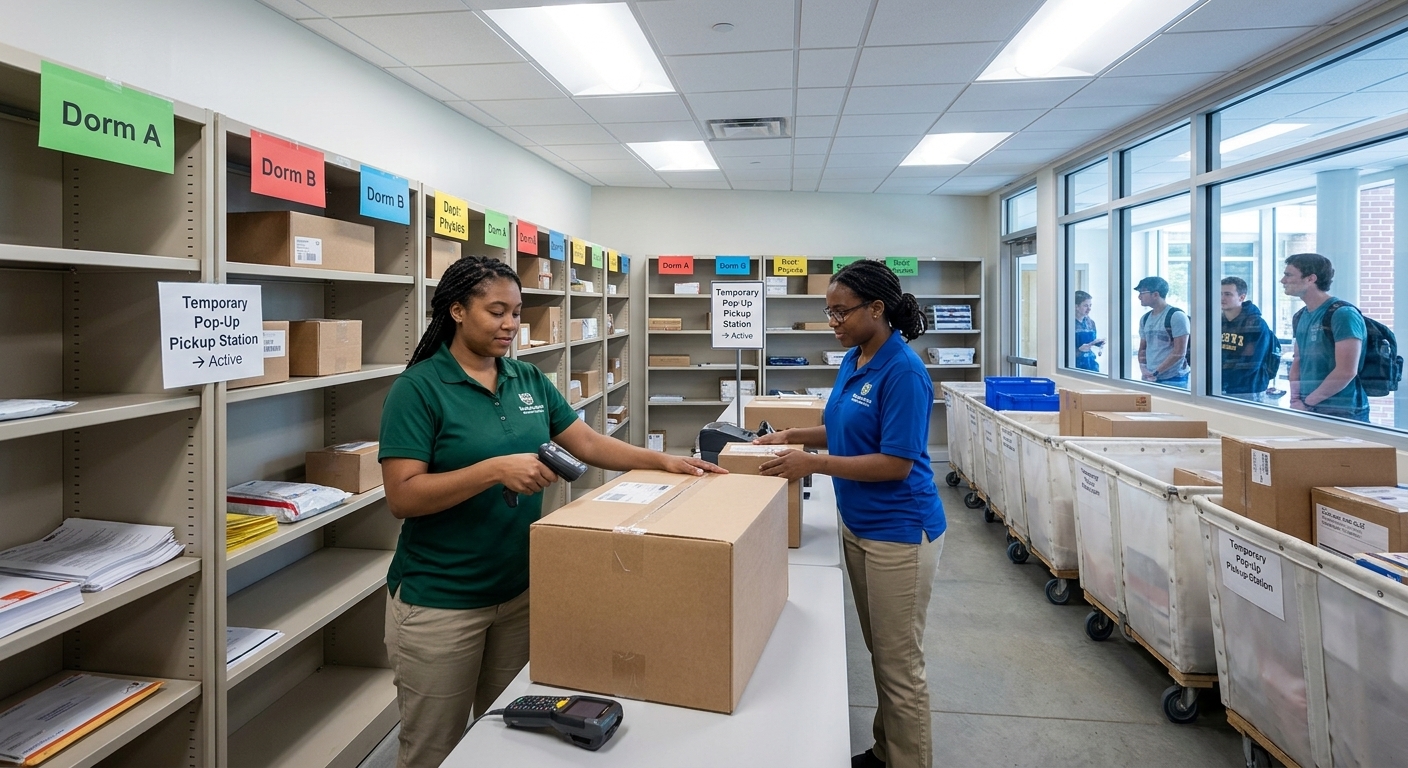
University facilities can implement efficient mailroom management to prepare mail-receiving staff and holding areas for upcoming delivery waves.
- Implement Dynamic Shift Overlaps - Schedule staff shifts to overlap during identified peak carrier parcel delivery windows rather than spreading hours evenly across the day.
- Reconfigure Storage Space Dynamically - Pre-stage temporary holding zones organized by resident hall or building location prior to major parcel delivery weeks.
- Issue Clearance Reminders - Send automated pickup notifications to students several days before expected surge events to clear existing mail shelf space.
- Establish Staggered Delivery Windows - Coordinate with primary delivery carriers to schedule staggered drop-off times across morning and afternoon hours.
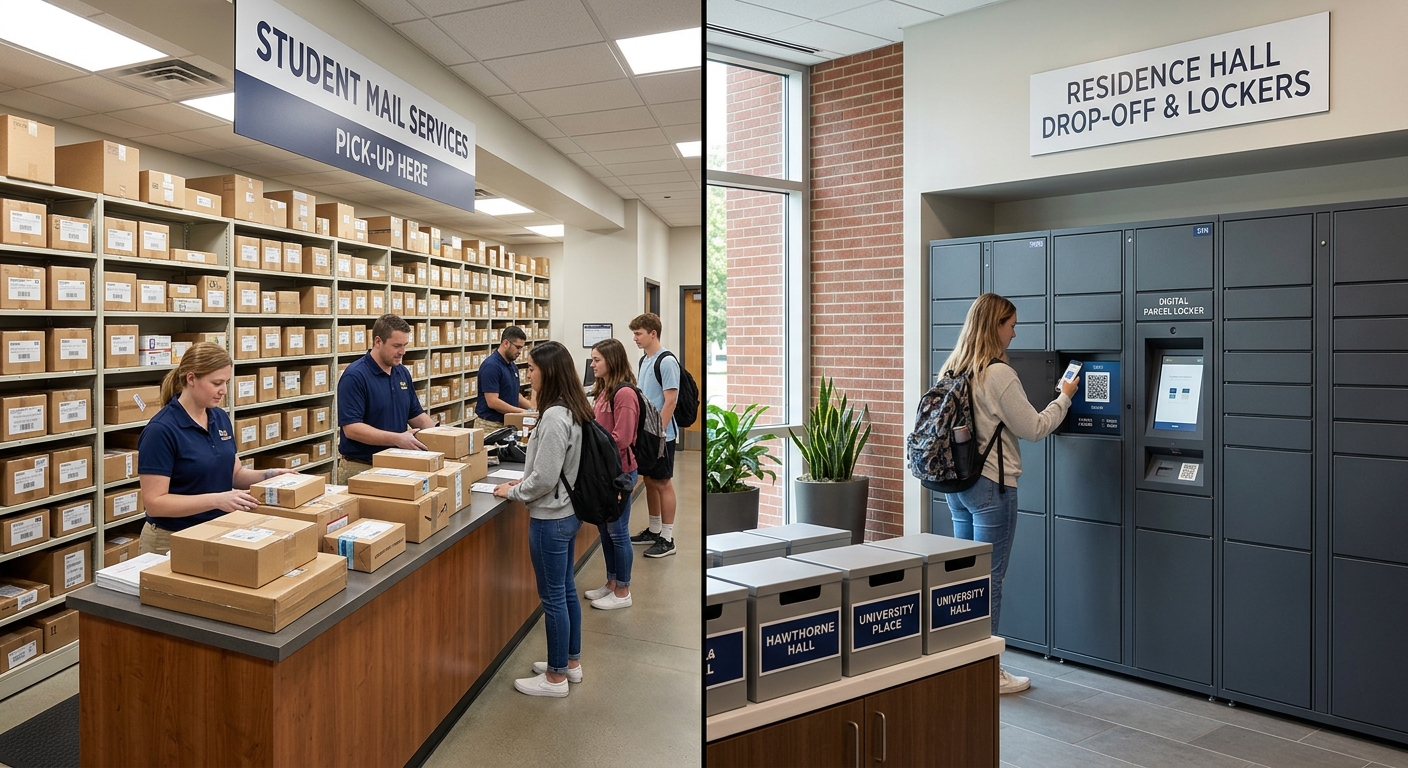
- Set Up Satellite Pickup Areas - Deploy temporary pickup stations or mail stops in high-density areas during move-in week to decentralize parcel distribution.
- Activate High-Volume Intake Workflows - Switch mailroom staff to rapid batch-scanning routines as daily inbound parcel counts cross set thresholds.
How Technology Enables Accurate Forecasting and Streamlined Handling
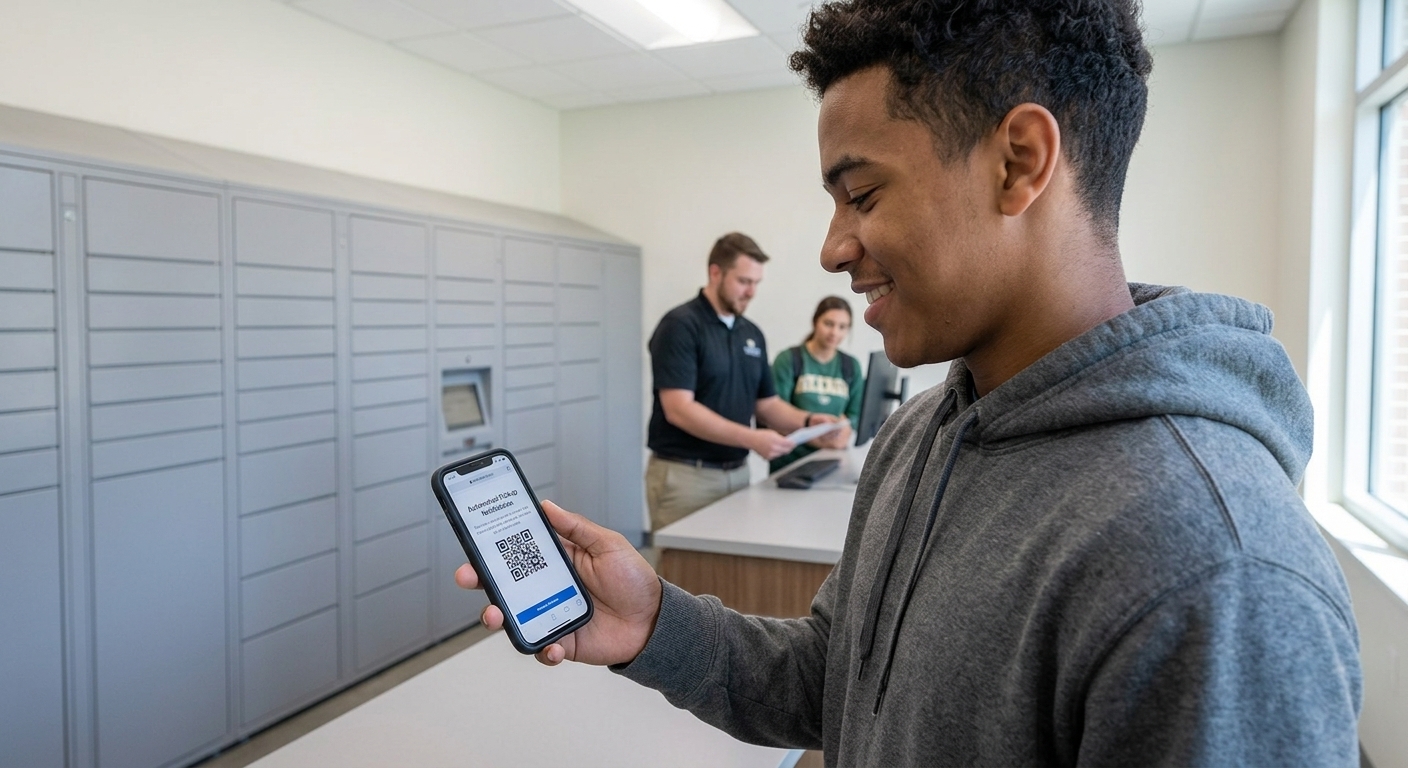
Dedicated mailroom tracking software serves two main functions during peak campus delivery events.
First, digital systems continuously record incoming parcel numbers, carrier arrival times, and recipient collection speeds. Built-in reporting dashboards organize this information into clear historical trends, allowing campus mailroom managers to spot patterns and plan staffing needs weeks ahead of time.
Second, digital tools speed up daily package processing when volume peaks. High-speed optical character recognition scans box labels instantly, auto-populates recipient details, and sends multi-channel pickup alerts. Recipient check-in processes move faster with digital signature capture and barcode scanning, keeping collection lines short and holding areas clear.
Building Campus Mailrooms Backed by Data
Combining historical data insights with digital tracking tools establishes an organized, predictable receiving framework. Campus facilities maintain consistent service standards, lower processing wait times, and protect staff from burnout during high-volume weeks.
Taking control of campus parcel volume starts with modernizing internal tracking processes. Organizations looking to upgrade receiving workflows can explore dedicated tools like Parcel Tracker to automate package scanning, monitor historical trends, and maintain seamless campus mail and parcel logistics.
Expert FAQ
How does historical campus data improve parcel surge forecasting?
Historical campus data identifies recurring delivery patterns across academic semesters, retail sales events, and move-in periods to project future parcel volumes.
What are the main triggers of campus parcel surges?
Campus parcel surges stem from fall move-in weeks, textbook adoption deadlines, major e-commerce sales events, and holiday shopping peaks.
Why should mailrooms switch from reactive to predictive scheduling?
Predictive scheduling prevents staff burnout, eliminates package backlogs, cuts wait times, and ensures efficient space utilization during peak volume delivery periods.
How does mailroom software streamline high-volume intake?
Modern mailroom software uses optical character recognition and batch scanning to log incoming packages instantly while sending automated pickup notifications.
What strategies reduce package dwell time in campus mailrooms?
Automated multi-channel notifications, scheduled pickup reminders, mobile check-in codes, and temporary pop-up stations accelerate recipient pickup rates.


.svg)