.svg)
Standardizing Internal Package Delivery Protocols for Facility Managers

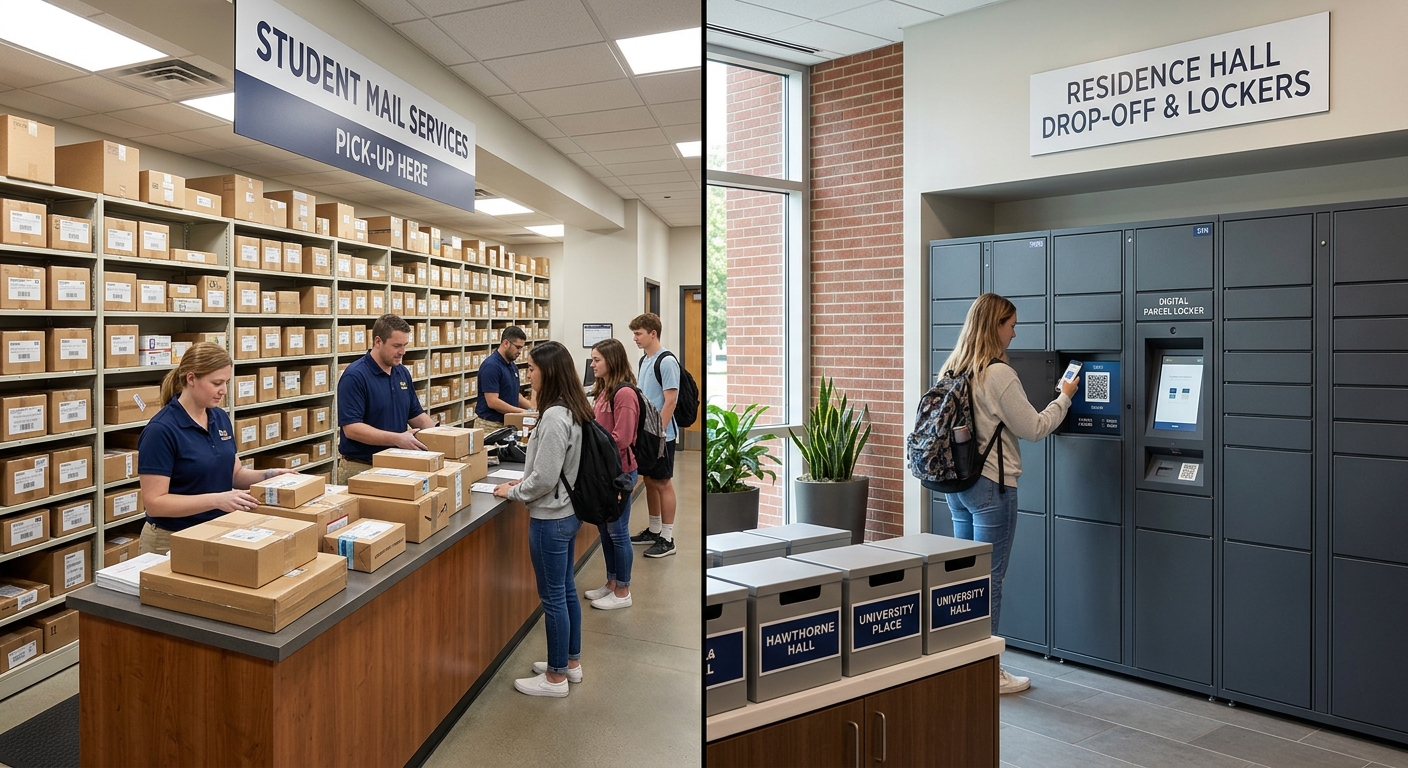
Incoming parcel volumes continue to climb inside multi-tenant offices and residential facilities. E-commerce orders, office equipment drop-offs, and daily courier drops constantly compete for physical floor space. Without clear rules for parcel intake, holding timelines, and pickup schedules, mailrooms quickly become cluttered, search times lengthen, and items go missing.
Establishing clear service-level agreements (SLAs) between building management and tenants provides a structured framework that keeps receiving areas organized while protecting property teams from liability. Standardized protocols let facility teams maintain complete chain-of-custody tracking from the mailroom to the recipient's desk.
The Value of Defined SLAs in Building Operations
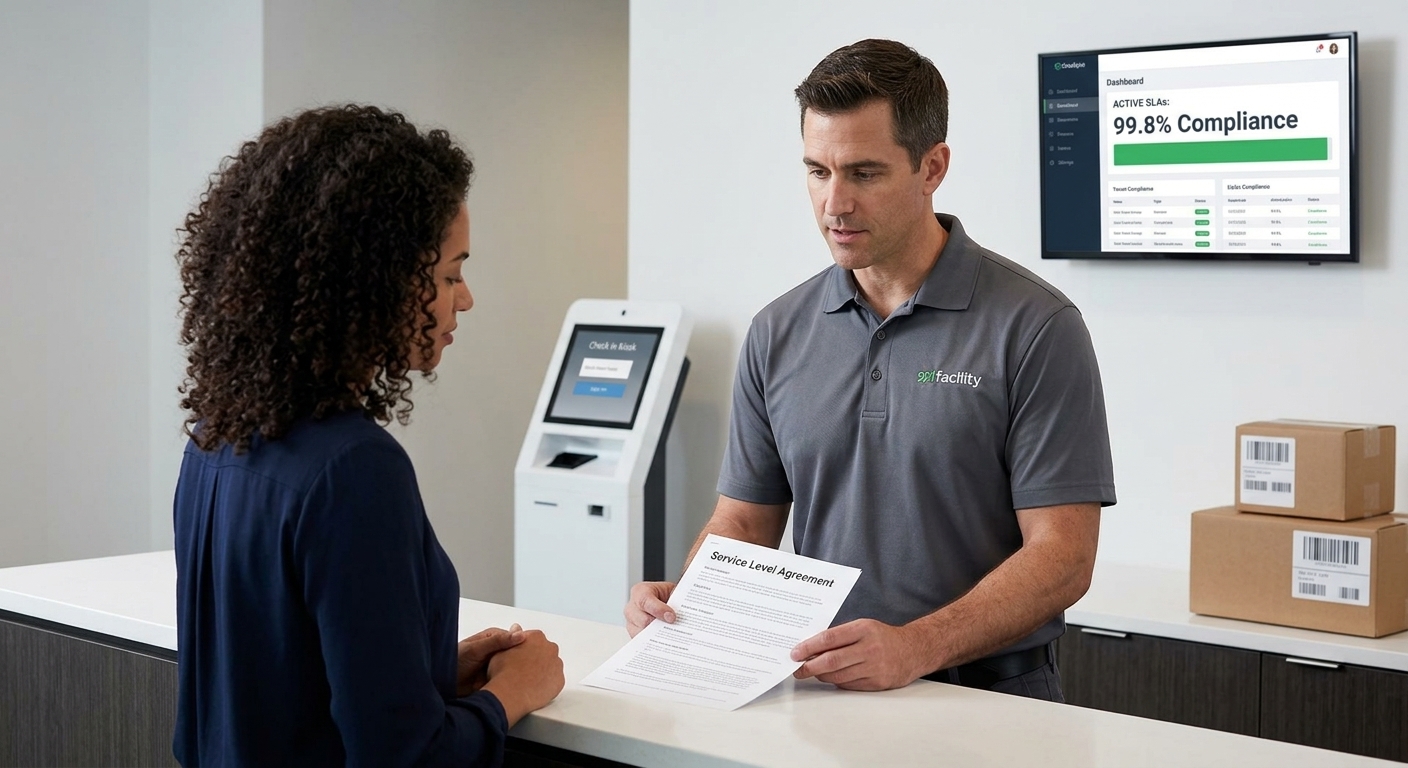
Managing incoming deliveries requires explicit boundaries. When tenants view the building mailroom as indefinite storage, facility teams face unnecessary spatial congestion and handling burdens.
Explicit SLAs create shared accountability between site management and tenant companies. These guidelines outline exactly when responsibility shifts from third-party couriers to facility staff, and finally to the end recipient.
Clear agreements create predictable mailroom workflows for staff while setting clear expectations for tenants on notification speed, holding periods, and pickup windows.
Establishing Clear SLA Boundaries
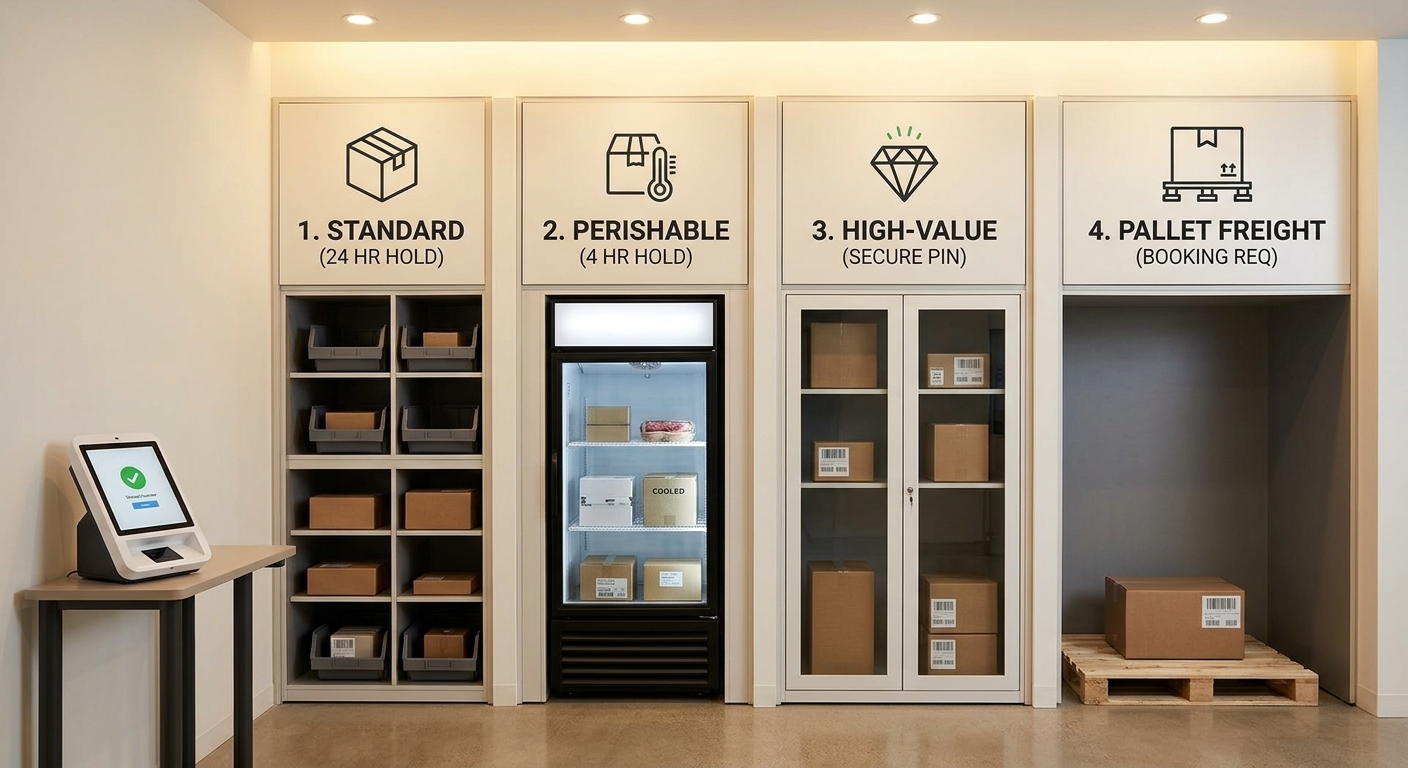
1. Defining the Chain of Custody
Building management must specify the exact point where courier liability ends and internal handling begins. Every inbound shipment needs a clear classification upon arrival:
- Standard Business Items: Regular office supplies, documents, and standard courier envelopes.
- Perishable Deliveries: Catering, fresh food subscriptions, and temperature-sensitive shipments requiring immediate cooling or pickup.
- High-Value Assets: Laptops, specialized electronics, and confidential legal documents requiring physical signatures upon pickup.
- Palletized Freight: Oversized deliveries or large furniture requiring advance mailroom booking and immediate tenant retrieval.
2. Setting Tiered Holding Windows
Holding times should reflect parcel classifications and available physical space.
Standard parcels usually receive a 24-hour to 48-hour holding window before follow-up reminders trigger. Perishable goods require shorter windows, often capped at 4 to 6 hours, after which facility staff may discard uncollected food items to preserve hygiene standards. High-value equipment requires secure lockup until an authorized representative signs for receipt.
Unclaimed items remaining past agreed timelines enter an abandonment protocol. Facilities can schedule return-to-sender processes or apply temporary storage fees after providing written notice at designated intervals.
3. Choosing Pick-up and Delivery Models
Facilities typically implement one of two primary distribution models based on building layout and security preferences:
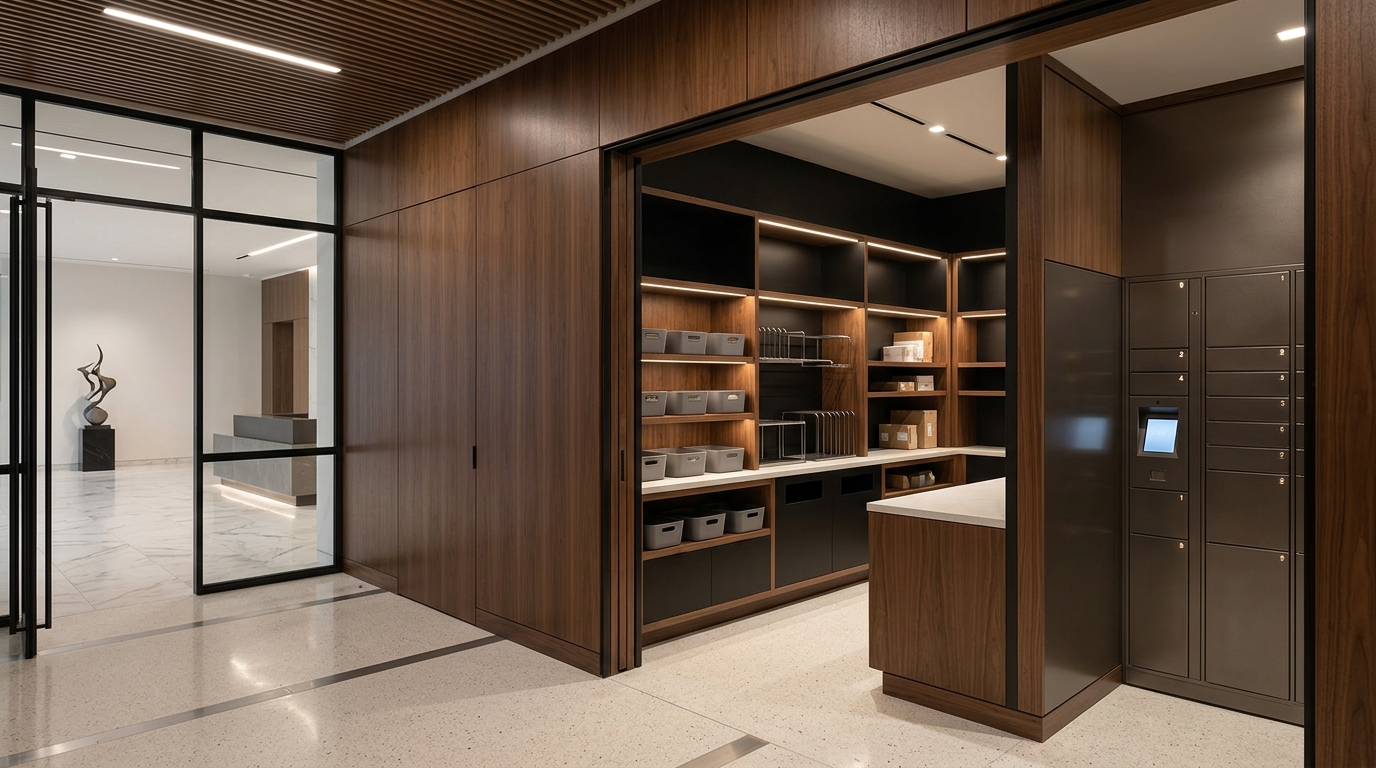
- Centralized Mailroom Pickup: Tenants retrieve items from a central mailroom during designated operating hours. Access controls, photo verification, or digital collection PINs confirm recipient identity.
- Internal Suite Routing: Facility staff deliver packages along a scheduled daily route, bringing parcels to individual tenant reception desks or secure drop-off zones on specific floors.
Execution Strategy: Onboarding Tenants and Enforcing Compliance
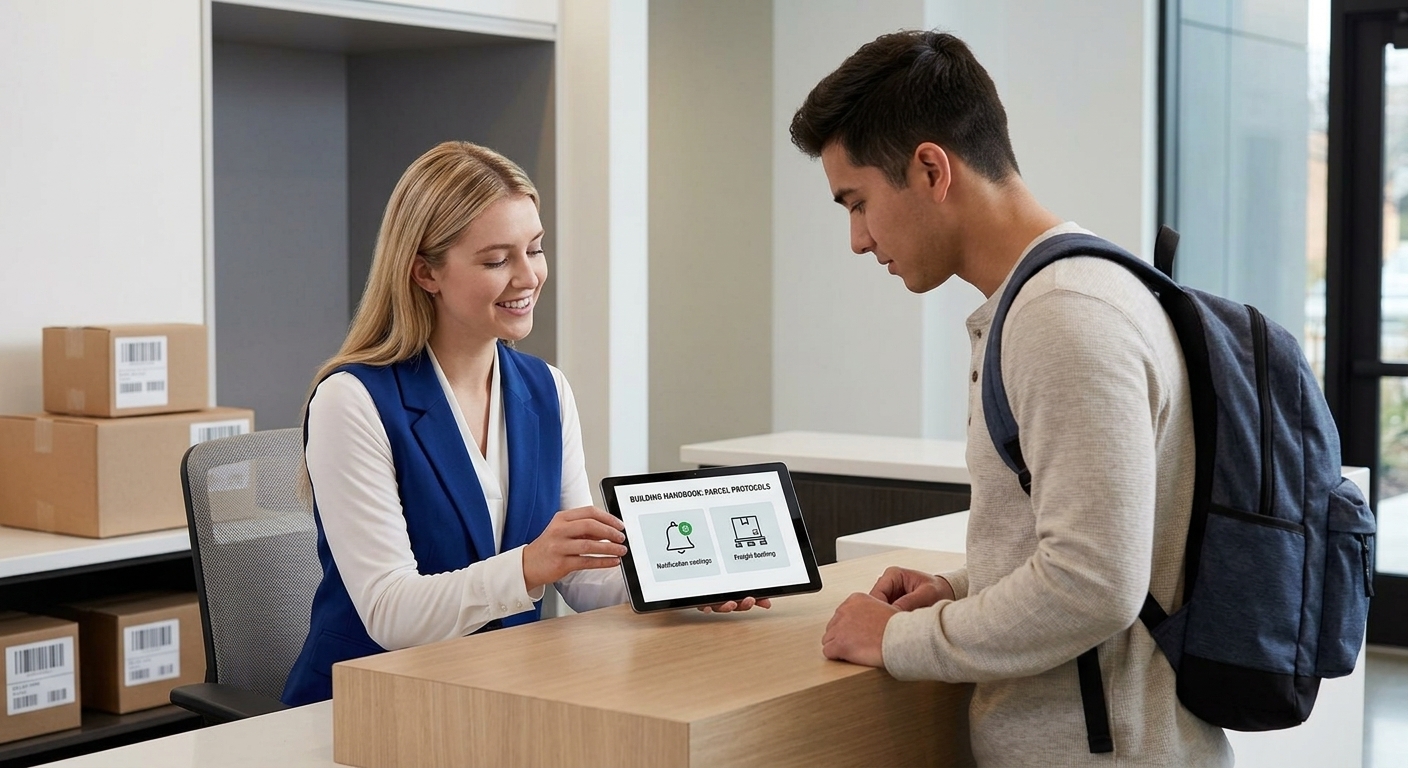
Integrating delivery guidelines into tenant lease addendums and building handbooks sets expectations before occupancy begins. During onboarding, tenant leads should receive written instructions detailing pickup hours, authorized recipient registration, and freight booking rules.
Effective mailroom management relies on consistent communication. Automated email or SMS alerts notify recipients immediately upon parcel log-in, reducing unnecessary inquiries to building staff. During predicted surge periods, mailroom management can send alerts requesting prompt parcel collection to keep receiving areas clear.
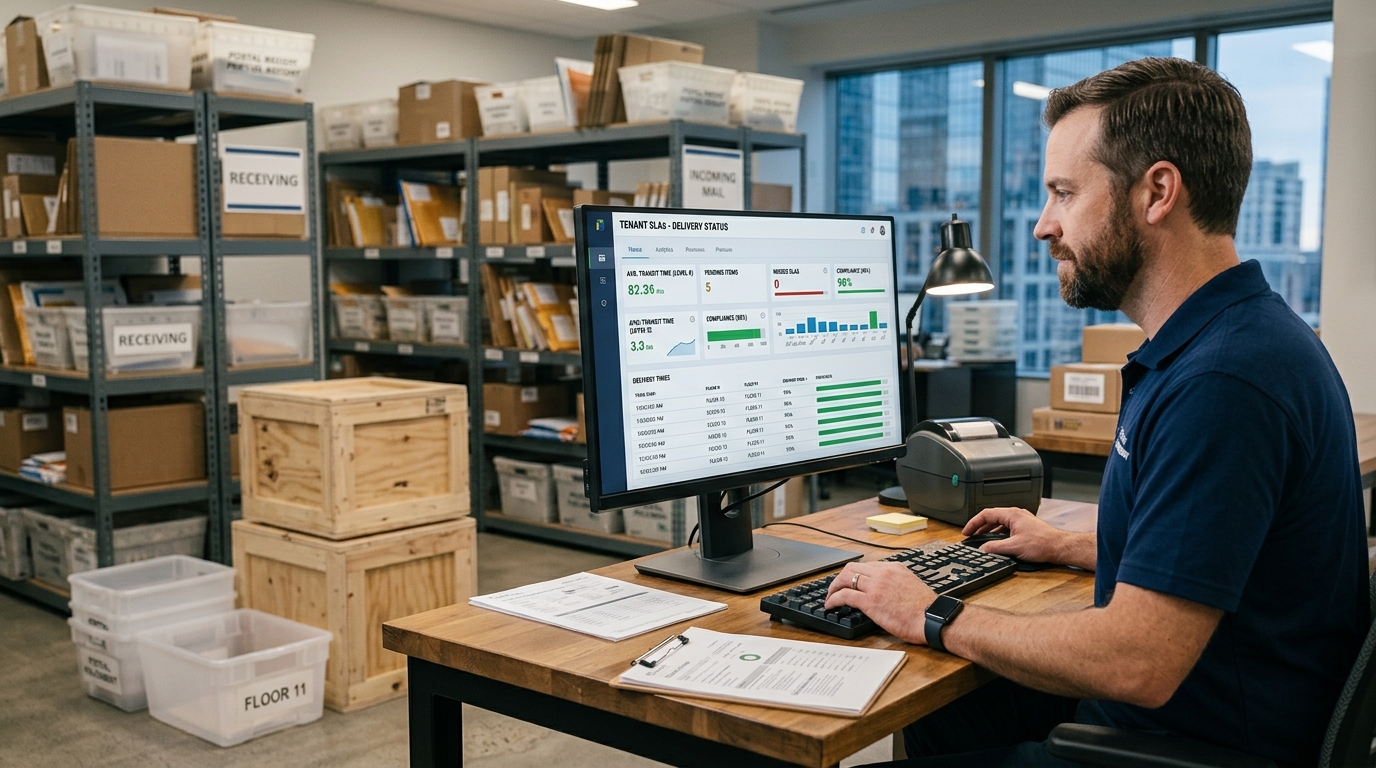
Mailroom managers maintain policy compliance by regularly tracking internal metrics:
- Average duration from carrier arrival to tenant notification
- Average parcel holding time before retrieval
- Frequency of unclaimed or abandoned items
- Peak volume hours across the business week
Reviewing these data points allows property managers to adjust staffing levels, refine storage layouts, and address recurring tenant delays.
Modernizing Building Operations for Frictionless Delivery
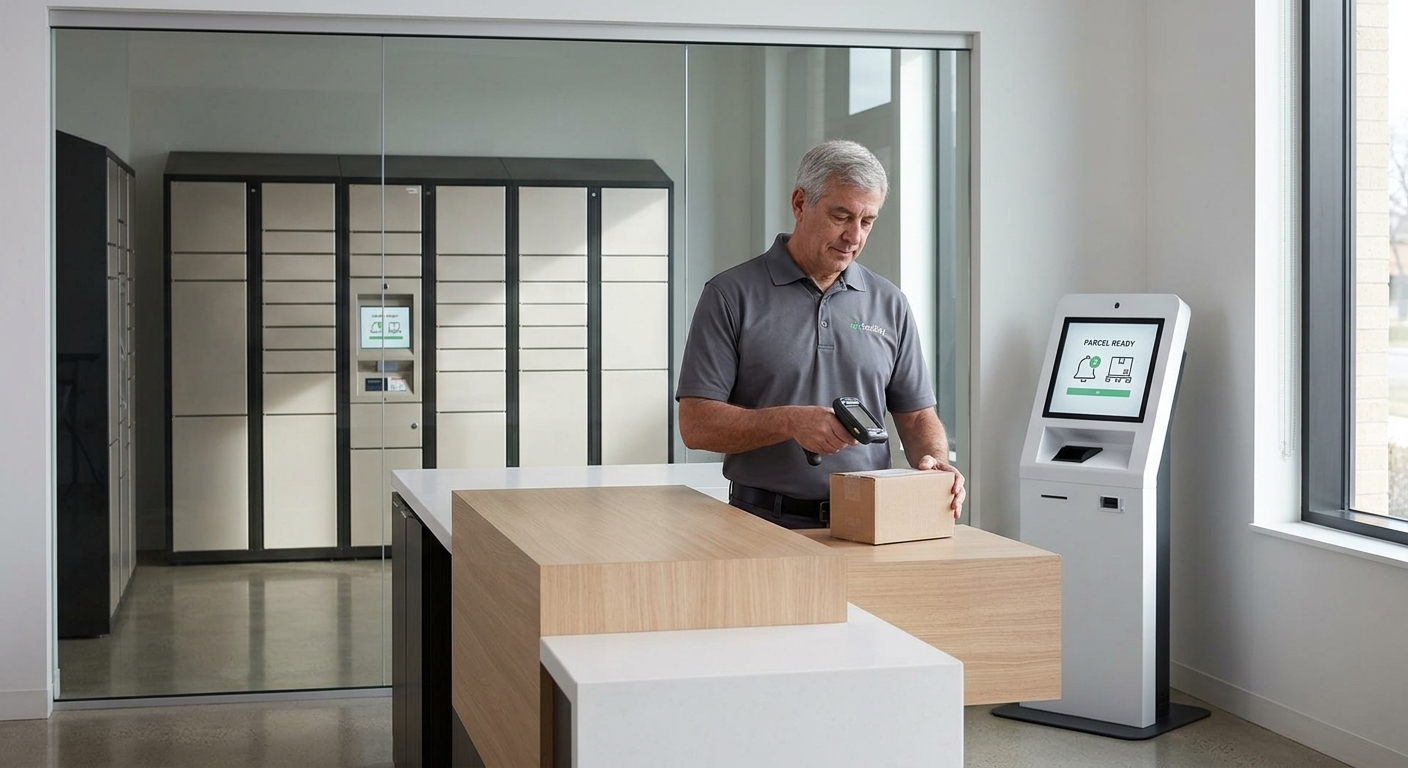
Manual logbooks and spreadsheets slow down package processing speeds and create gaps in accountability. Modern facilities rely on systematic tracking methods that log incoming items in seconds, capture digital signatures upon handover, and store historical logs for auditing.
Adopting comprehensive parcel management practices transforms high-volume receiving zones into organized distribution hubs. Combining clear service-level agreements with dedicated internal tracking ensures complete transparency from the loading dock to the recipient.
Implementing a purpose-built solution like Parcel Tracker helps facility managers automate internal notifications, capture instant proof of delivery, and maintain full chain-of-custody control across every square foot of the building.
Expert FAQ on Internal Parcel Delivery Protocols
How do facility managers enforce parcel holding times for commercial tenants?
Enforce parcel holding limits through clear lease addendums, automated reminder notifications, and structured daily surcharges for late pickups.
What is a service-level agreement for internal parcel delivery?
A parcel delivery SLA defines strict operational rules, chain of custody, notification timeframes, and holding limits for building management.
Why are standardized mailroom protocols essential for modern facilities?
Standardized protocols reduce lost package liability, eliminate mailroom space clutter, save administrative labor, and guarantee clear chain-of-custody tracking.


.svg)