.svg)
Surviving Peak Season Surges: Preventing Mailroom Burnout with High-Velocity Parcel Management


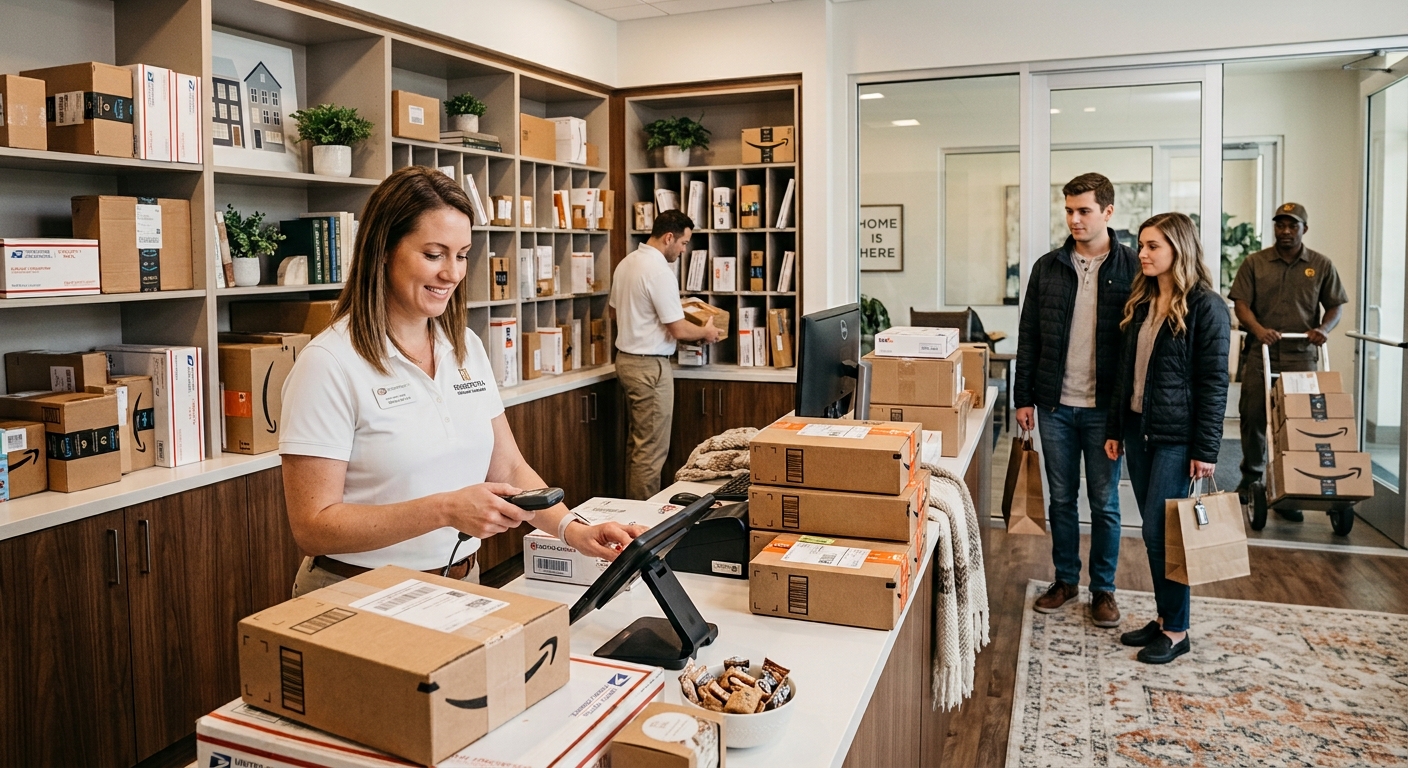
Peak delivery windows create tremendous strain across residential buildings, corporate offices, and university campuses. Events such as Black Friday, Cyber Monday, move-in weeks, and end-of-year holidays trigger massive spikes in delivery volumes. Facility teams find themselves navigating dense stacks of cardboard boxes while attempting to maintain order across busy reception areas.
Global commerce trends show a continuous upward trajectory in delivery expectations. Industry research indicates that annual parcel volume is expected to double by 2030. Modern facilities require fast, adaptive intake workflows to process this expanding volume smoothly while supporting frontline staff.
Effective mailroom management enables teams to handle high-density delivery periods smoothly. Modernizing intake protocols establishes a calm environment for building staff, preserving energy and ensuring accurate package tracking throughout heavy intake days.
Mailroom Burnout: How Peak Surges Strain Teams

High-volume influxes place significant physical and mental pressure on facility staff. Staff members often spend long hours bending down, lifting heavy boxes, and clearing cluttered walkways. Continuous manual entry increases fatigue, making it difficult to keep pace with arriving couriers.
Deciphering illegible handwriting on damaged shipping labels requires intense concentration. Sorting through identical cardboard boxes adds constant cognitive load. In addition, staff members frequently handle inquiries from anxious residents searching for urgent deliveries. Answering these inquiries repeatedly throughout the day takes attention away from processing incoming stock, building friction between team members and building occupants.
Relying on temporary staffing often brings additional challenges during busy weeks. Onboarding temporary workers requires dedicated supervision and training time during high-volume periods. Furthermore, unfamiliarity with internal layouts can lead to minor sorting mistakes, increasing overall processing time.
Manual logging protocols averaging three minutes per package create long check-in queues. Arriving couriers leave dozens of boxes simultaneously, filling entryways and staging areas. Transitioning to automated tools helps maintain steady workflow velocity during seasonal volume surges.
From 3 Minutes to 3 Seconds with AI OCR

Smartphones and mobile tablets offer a powerful alternative to traditional pen-and-paper logs or dedicated handheld scanners. Modern software equipped with AI-powered Optical Character Recognition (OCR) converts standard mobile cameras into high-speed scanning tools.
Smart camera scanning captures recipient names, room numbers, and tracking codes instantly from shipping labels, even when text is partially smudged or handwritten. Upon scanning, the system sends automatic notification alerts via SMS or email to the recipient. This automated dispatch informs occupants immediately, keeping front-desk interactions minimal and efficient.
Advanced parcel management technology delivers clear, measurable results for high-density properties:
- Substantial Logging Speedup: Staff members achieve a 2.6x faster parcel logging rate, helping teams stay ahead of incoming courier drop-offs.
- Drastic Time Reduction: Individual check-in times drop from 180 seconds down to roughly 3 seconds per item.
- Higher Data Accuracy: Digital OCR scanning eliminates manual typing errors and misread names.
- Instant Recipient Alerts: Automated notification dispatches clear out package inventory quickly by encouraging prompt pickup.
Batch Processing & Temporary Storage Systems

Maintaining clear physical space is essential when handling large volumes of incoming packages. Organizing deliveries into systematic workflows keeps staging areas clean and accessible.
- Courier Batch Sorting: Facility staff group incoming shipments by carrier, building section, or floor level prior to initiating digital scans. Sorting packages before logging simplifies multi-package pickups for individual recipients.
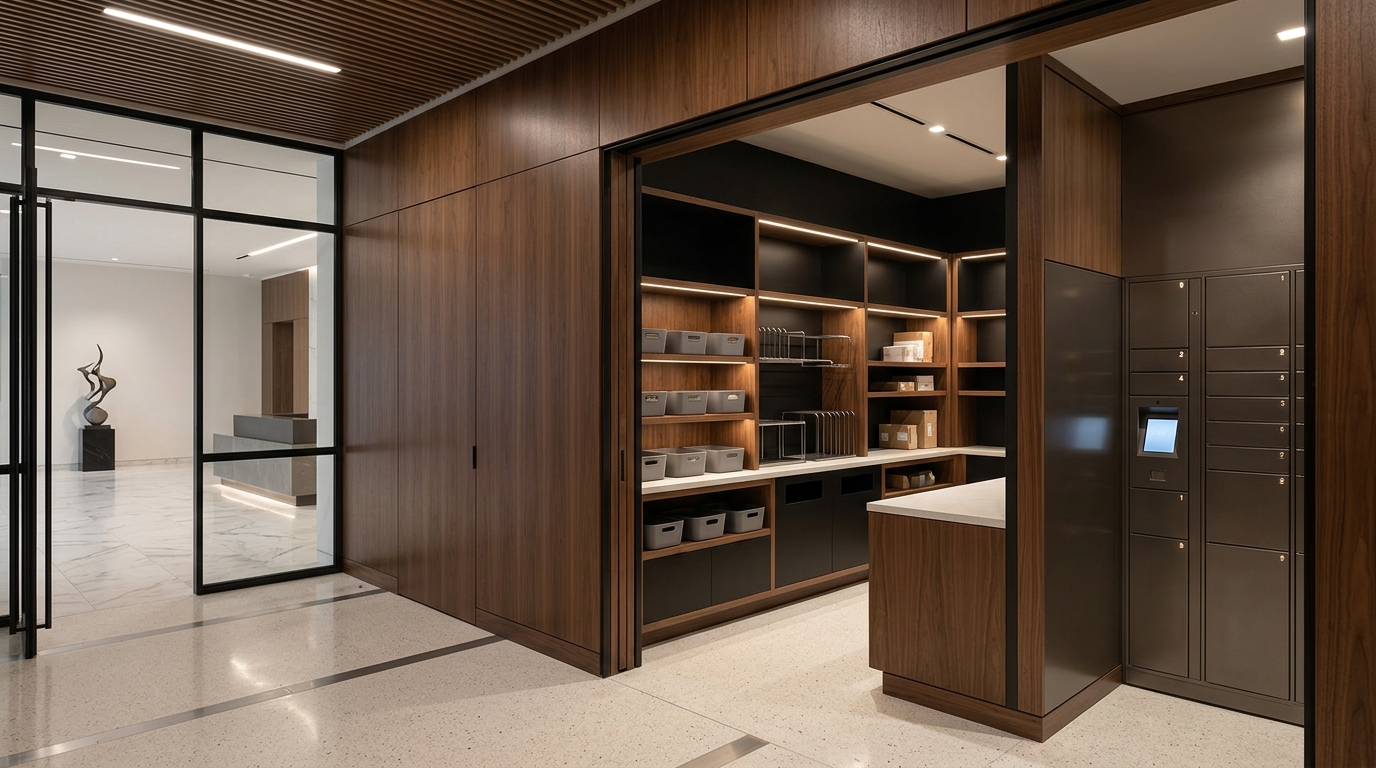
- Vertical Staging Zones: Utilizing mobile shelving units and high-density vertical racks maximizes available floor space during heavy weeks. Vertical organization keeps floor areas open, reducing physical hazards for workers.
- Dynamic Location Tagging: Assigning visual shelf or bin identifiers to digital package records allows staff to log items into specific temporary locations. Visual tagging ensures staff can retrieve stored items within seconds upon recipient arrival.
Empowering Teams with Frictionless Pickups

Separating courier arrival windows from recipient collection times creates an organized daily structure. Staff members spend morning hours focusing on swift intake scanning, while reserving afternoon windows for recipient collections.
Self-service collection kiosks allow recipients to retrieve items independently using unique QR codes. Implementing self-service kiosks achieves 3x faster collections per site, keeping reception desks free from long pickup queues.
Complete digital audit trails record every step from courier drop-off to final signature verification. Digital tracking provides clear proof of receipt, giving staff peace of mind and building trust across the community.
Building Scalable Infrastructure

Achieving stability during heavy shipping periods relies on streamlined workflows and smart digital tools. Automating package intake removes repetitive tasks, allowing facility teams to maintain high energy levels throughout peak seasons.
Modern software solutions empower staff to process incoming deliveries efficiently while maintaining accurate records. Adopting high-velocity workflows preserves team well-being and ensures consistent service quality all year round.
Modernize your intake workflow and protect your team this season with Parcel Tracker.
Expert FAQ
How does AI OCR technology speed up parcel logging in mailrooms?
AI OCR extracts recipient names and tracking data from shipping labels instantly using smartphone cameras, cutting logging to three seconds.
What causes mailroom staff burnout during peak delivery periods?
Burnout stems from high parcel volumes, tedious manual data entry, crowded physical spaces, lost package disputes, and prolonged line wait times.
Why is manual parcel logging inefficient during volume surges?
Manual logging requires typing tracking details and names into spreadsheets, averaging three minutes per package and creating severe intake bottlenecks.
What is temporary vertical location tagging in parcel management?
It dynamically links temporary visual shelf or bin codes to scanned digital parcel records, allowing instant retrieval during high-volume surges.
How do self-service kiosks reduce mailroom workload during peak seasons?
Self-service kiosks allow recipients to scan QR codes for independent package retrieval, cutting pickup queues and staff handoff tasks.


.svg)